5 Bratwurst Grilling Tips Every Tailgater Needs


 288 Comments


Why Brats Go Wrong at Tailgates
Bratwurst should be one of the easiest things on the grill, yet it’s one of the most commonly botched foods at any tailgate. You’ve seen it: split casings, charred outsides hiding dry, flavorless meat, or a brat that looks perfectly done and turns out raw in the middle.
The cause usually isn’t a lack of effort or a bad grill. It’s a lack of control. Bratwurst looks simple but is actually tricky to cook well. The casing reacts fast to heat, the fat inside feeds flare-ups, and the center has to reach a precise temperature without drying out. Push it too fast and the casing bursts; cook it too slow and it dries out.

Then there’s the tailgate itself. With people talking, drinks flowing, and three other things on the grill at once, it’s easy to lose track of what’s happening to your brats. That’s how small slip-ups turn into ruined sausages, and it’s exactly what the five tips below are built to prevent.
Tip 1: Skip the High Heat, Use Two Zones
The most common tailgate mistake is cranking the grill to max and throwing everything on together. That works for burgers, but it’s rough on bratwurst. High heat tightens the casing fast, pressure builds as the inside heats, and the casing splits, letting all those juices run out and leaving you with a dry brat.
The fix is to cook with two zones instead of one. Set up a cooler, indirect side and a hot side, and start your brats on the cooler side so they heat through gradually and evenly, with no burst casings. Once they’re cooked through, move them to the hot side just long enough to build color and a little crisp. You get the best of both: a juicy interior and a nicely browned outside, without gambling on a single blast of heat.
Tip 2: Keep Flare-Ups in Check
That two-zone setup does double duty, because bratwurst is fatty, and as that fat drips onto the flames it sparks flare-ups that scorch the outside long before the inside is anywhere near done. Left unchecked, flare-ups take control of the cook away from you in seconds.
The cooler zone is your safety valve here. The moment the flames jump, move the brats over to the indirect side and let things settle before sliding them back. It comes down to paying attention: stay aware of the fat and the flames, and you keep the upper hand instead of chasing burnt sausages.
Tip 3: Never Pierce the Casing
When you’re not sure whether a brat is done, it’s tempting to poke it with a fork or knife and take a look. Resist it. Every puncture opens the casing and lets the juices escape, and once they’re gone you can’t get them back, leaving the sausage dry no matter how carefully you cook the rest of the way.
Keep the casing intact and let it do its job of holding all that moisture in. The catch is that if you can’t cut into it to check, you need another way to know when it’s done, and that’s where most tailgates fall apart.
Tip 4: Cook to Temperature, Not Guesswork
Judging a brat by color or by how long it’s been on the grill is the single biggest reason they come out wrong. The outside can look perfectly cooked while the center is still underdone, and with the casing sealed, you can’t tell by looking. Bratwurst needs to reach an internal temperature of 160°F (71°C) to be safe, and that’s a number you have to measure rather than guess.
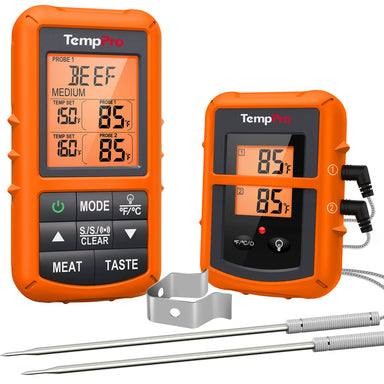
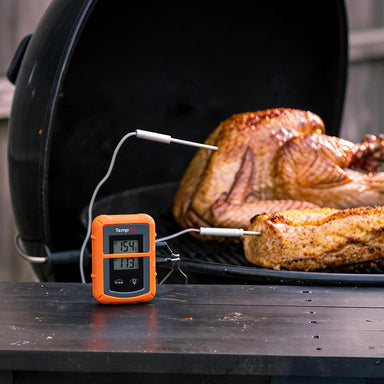
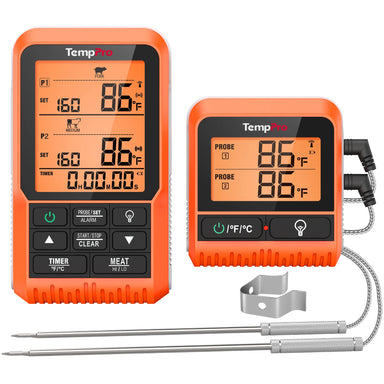
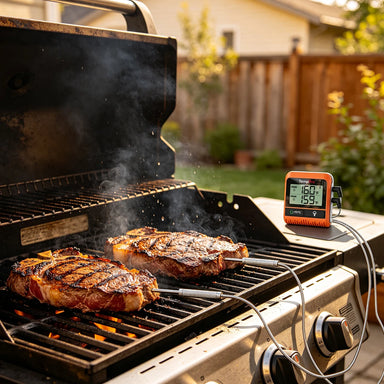
A leave-in thermometer like the TempPro TP08S 500FT Wireless Meat Thermometer settles it for good. It tracks the internal temperature of the brats and the heat of the grill at the same time, so you can see exactly when they hit 160°F without ever cutting in or hovering over the lid. No piercing, no guessing, just the number that tells you they’re ready.

Tip 5: Let It Watch the Grill for You
The hardest part of a tailgate isn’t the cooking, it’s the distraction. Between the game, the crowd, and the cooler, it’s easy to forget the grill entirely, and that’s how brats slide from perfect to overcooked. The trick is to stop relying on remembering to check.
This is where the TempPro TP08S fits the tailgate perfectly. Its 500-foot wireless range lets you walk away and still keep tabs on every brat, and its HIGH and LOW temperature alarms ping you the moment a sausage hits its mark or the grill runs too hot, so you only step in when there’s actually something to do. The built-in countdown and count-up timer helps you keep the brats, the burgers, and the sides all on track at once. Instead of standing guard over the grill, you get to enjoy the tailgate while it watches the brats for you.
Take Control and Brats Get Easy
Most people treat bratwurst as a casual, toss-it-on-and-hope kind of food, and most of the time it turns out okay. Occasionally it doesn’t, and that inconsistency is what makes grilling them feel like a gamble. The moment you switch from guessing to controlling the cook, the whole thing becomes predictable: you know when a brat is done, you know when to move it, and you know what’s landing in the bun.
None of it takes real skill, just a little control over the heat and a way to know what’s happening without hovering. Keep the heat moderate, work your zones, leave the casing alone, and cook to 160°F, and you sidestep almost every mistake that wrecks brats at tailgates. With the TempPro TP08S tracking the temperature, alerting you when it matters, and keeping your timing straight from across the lot, the guesswork disappears, and juicy, perfectly cooked bratwurst stops being luck and starts being something you can count on every time.

FAQ
Why do bratwurst split on the grill?
Because they’re cooked over heat that’s too high, which builds internal pressure until the casing bursts.
What temperature should bratwurst be cooked to?
An internal temperature of 160°F (71°C) for safe consumption.
Do I need a thermometer for bratwurst?
It’s not required, but it’s the most reliable way to avoid undercooking or overcooking.
Should I boil bratwurst before grilling?
It’s optional, and not necessary if you control the heat properly while grilling.
What’s the biggest mistake when grilling bratwurst?
Using high heat the entire time and not monitoring the temperature.


Comments


Recommended Products