5 Duck Confit Tips for Perfectly Tender French-Style Duck


 288 Comments


Duck confit, a French dish cooking in fat slowly, sounds like the kind of thing that belongs in a restaurant kitchen rather than yours. To be honest, the hard part isn’t the technique, it’s consistency.

One batch comes out tender and silky, the next is greasy, dry, or stringy, and it rarely feels like you did anything differently. That inconsistency doesn’t come from a lack of skill. It comes from a lack of control. Duck confit is about as temperature-sensitive as cooking gets, and because it plays out over several hours, a small drift early on can quietly ruin the whole thing. By properly controlling the temperature and paying more attention to the points I've listed below, you will certainly be able to make duck confit perfect and impressive.
Tip 1: Cure the Duck First
Confit starts a day before it ever meets the fat, with a salt cure. Salt draws water out of the duck, concentrates the flavor, and begins gently breaking down the muscle, which is what sets up that soft, yielding texture later on.
Rub the legs with salt and a few aromatics if you like, such as thyme, garlic, or bay, and let them sit for 12 to 24 hours in the fridge. Don't underestimate this step. The cure is quiet, hands-off work, but it does a lot of the heavy lifting.
Tip 2: Surround the Duck in Fat
What makes confit different from other dishes? The secret lies in cooking the duck submerged in fat rather than roasting it in air. The fat surrounds the meat, shields it from drying out, and transfers heat slowly and evenly, which is exactly what you want over a long, gentle cook. Any part left exposed to air is a part that can dry out or cook unevenly.
However, you don’t need to drown them in liters of duck fat to get there. A snug dish that keeps the fat level high, or even the duck’s own rendered fat in a sealed vessel, does the same job. The point isn’t the volume of fat, it’s making sure every surface is covered and shielded from the air.
Tip 3: Hold a Low, Steady Temperature
This is where most duck confit is lost, and it’s really three habits rolled into one: keep the heat low, keep it steady, and stop interfering with it.
The target range is 170 to 200°F (77 to 93°C), and holding it there for hours is the whole game. Go above it and the meat tightens, squeezes out moisture, and turns firm instead of silky. Drop below it and the fat stops rendering properly and the duck cooks unevenly. On top of that, every time you open the oven or lift the lid to check, heat escapes, the temperature dips, and the slow, even environment you’re trying to protect takes a hit. The goal is a stable temperature held for hours with as little interference as possible, which is difficult to do by eye and nearly impossible if you’re opening the door to look.
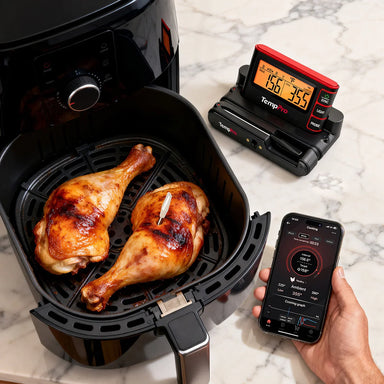
This is where a wireless leave-in thermometer changes the game. The TempPro TP972 TempSpike Plus wireless thermometer is ideal for long, low-temperature cooks. Its fully wire-free design features dual sensors that monitor both meat and ambient temperatures simultaneously. With a stable 600-foot Bluetooth range and an easy-to-read LCD base, you can track your cook from afar without opening the oven. Simply insert the probe into the thickest part of the meat up to the safety depth ring. Since it is IP67 waterproof and highly heat-resistant, it can safely sit in a fat bath for confit or sous vide—just make sure it isn't inserted too shallowly.

Tip 4: Crisp the Skin at the End
After hours in the fat, the duck is meltingly tender, but it isn’t finished. Confit that goes straight from the fat to the plate is soft all the way through, and it’s missing the contrast that makes the dish special. That comes from one last step: crisping the skin over high heat.

Lift the legs out, pat them dry, and sear them skin-side down in a hot skillet, or blast them under a hot oven, just until the skin turns deep and crackling. Timing matters here as much as it did during the slow cook. Too long and you dry out all that tenderness you worked for; too short and the skin never crisps. Done right, you get a caramelized, shattering exterior over rich, soft meat, which is the whole point of confit.
Tip 5: Serve Now or Store It Safely
Confit is best eaten shortly after crisping, while the skin is still crackling and the meat is hot and tender. If you’re making it ahead, though, one of the great things about confit is that it stores beautifully, and the flavor often improves after a few days.
The key is to store it safely. Before crisping, keep the cooked legs fully submerged in their fat in a sealed container in the fridge, so no part of the meat is exposed to air. Chilled and covered in fat this way, confit keeps for weeks, and you crisp the skin only when you’re ready to serve. Don’t leave cooked duck sitting in fat at room temperature, since sealing low-acid meat away from air at warm temperatures is exactly the condition to avoid. Cold storage is what makes the make-ahead version both convenient and safe.
Why Temperature Matters More Than the Recipe
Duck confit isn’t like most recipes. You’re coaxing a slow transformation over several hours, and because it plays out so slowly, tiny swings in temperature have hours to add up. That’s why the difference between silky and stringy usually comes down to how steadily you held the heat, and why continuous monitoring beats the occasional spot check.

It’s also what the TempPro TP972 TempSpike Plus is made for. It stays in the duck the whole cook, holds your low temperature without a single lid lift, and pings you the moment the heat drifts, so a four-hour confit asks almost nothing of you. Stop guessing at the heat and start measuring it, and duck confit goes from a dish you hope turns out to one you can repeat.
Want more truly wireless thermometers for cooks like this one? Browse the full range on our Smart Meat Thermometer collection page.
FAQ
Q1: What temperature should duck confit be cooked at?
Typically between 170 and 200°F (77 to 93°C) for slow, even cooking.
Q2: How long does duck confit take to cook?
Usually 2 to 4 hours, depending on size and temperature. Go by tenderness rather than the clock.
Q3: Why is my duck confit tough?
It was likely cooked too hot, or not long enough for the connective tissue to break down.
Q4: Do I need to fully submerge the duck in fat?
Every surface should be covered and shielded from air, though you don’t need an enormous volume of fat to manage that.
Q5: Can I cook duck confit faster?
Not without losing tenderness. Low and slow is what breaks the collagen down properly.
Q6: Can I put the thermometer probe in the oil?
Yes. The probe is IP67 waterproof and rated well beyond confit temperatures. Just insert it deeply, at least to the depth ring near the handle, so only the handle is exposed, which protects it through a long cook.
Q7: What makes the TempPro TP972 useful for this recipe?
It monitors temperature continuously without you opening the oven, so you can hold a steady low heat for hours.
Q8: Why is the skin not crispy after cooking?
Confit needs a separate high-heat step to crisp the skin just before serving.
Q9: Can I store duck confit?
Yes. Keep it fully submerged in fat in a sealed container in the fridge, and crisp the skin when you’re ready to serve.


Comments


Recommended Products