How to Cook a Greek-Style Leg of Lamb: 6 Easy Steps


 288 Comments


Preparing a leg of lamb that just falls apart when you put a fork to it is much different than preparing a leg of lamb that is merely cooked. For example, in a Greek-style preparation, your objective is to have very tender meat, rich in the flavors of garlic, lemon, olive oil, and herbs. In fact, you do not want to have to use too much force cutting into the lamb at the table; ideally, the meat should be so tender that you can simply pull it apart into many juicy pieces.
A large leg of lamb consists of various muscle groups and areas with varying levels of thickness. Because of these factors, using a recipe’s recommended cooking time may result in unevenly cooked parts.
In order to achieve the desired consistency, i.e., fall-apart, the best way to accomplish this is to apply slow roasting techniques along with a method of continuously monitoring the internal temperature of the lamb and physically testing its tenderness.
Table of Contents
6 Essential Steps to Cook a Greek-Style Leg of Lamb
Below are eight critical steps for preparing Greek-style leg of lamb that will literally fall apart at the table.
Step 1: Pick the Best Leg of Lamb
Before turning on your oven, your first choice is made.
Slow-cooking a leg of lamb with the traditional flavors of Greece means selecting a leg with a good deal of fat, not necessarily the thinnest cut possible.
Fatty portions contribute to added richness and flavor, especially after the lamb has been slowly cooking for hours. Fat also contains connective tissue within the meat itself. This type of tissue gradually breaks down as the lamb continues to cook. The breakdown of connective tissue is key in producing the desired fall-apart texture.
While bone-in lamb offers a dramatic presentation at the table, boneless lamb can also provide great results. However, due to their varied size and shapes, boneless lambs will not exhibit all of the same characteristics as bone-in lambs during cooking.

Regardless of whether you select bone-in or boneless lamb, take note of the size/thickness of the lamb. As stated above, larger legs do not contain equal amounts of meat and fat and therefore do not cook evenly. Therefore, it is crucial to monitor the lamb's temperature throughout the entire cooking time.
Step 2: Create Classic Flavors of Greece
Unlike slow-roasted BBQ, Greek-style lamb does not require numerous ingredients.
Garlic, lemon, olive oil and herbs form a classic combination of flavors common to Greek cuisine. Combine olive oil with crushed garlic, fresh lemon juice and chopped herbs, such as oregano and/or rosemary to create a flavorful base. To finish your seasoning blend, add salt and freshly ground black pepper.
As opposed to simply applying the seasoning directly to the surface of the lamb, make several incisions into the thicker parts of the lamb. Then insert some of your garlic/herb mixture into those cuts. Apply the remaining mixture to the surface of the lamb. Throughout the lengthy cooking period, these flavors combine with the rendered fat from the lamb and cooking juices to create a concentrated sauce that surrounds the meat.
Step 3: Add Liquids & Position Lamb for Long Cooking Time
Since you want a piece of meat that can remain moist for hours without drying out, it is beneficial to create an environment that keeps excess moisture trapped within the roasting pan.
Position the seasoned lamb in a roasting pan large enough to accommodate it comfortably. Based on your specific recipe needs, place sliced potatoes, additional cloves of garlic, lemon wedges, and/or sprigs of herbs around your lamb. Finally, pour sufficient water or broth into the bottom of your roasting pan. While it would be beneficial to fully immerse your lamb in liquids, this is not required. By adding liquid to the bottom of your roasting pan you are creating humidity in your oven while capturing meat juices, melted fats, herbs and seasonings from your lamb at the bottom of the pan.
Depending upon your recipe instructions, some recipes call for covering the lamb with foil at certain points in time prior to removing it from direct heat for longer periods of browning.
Step 4: Cook Slowly vs. Quickly
While high heat will certainly brown the outer layer of a piece of lamb rapidly, it cannot magically replace hours worth of controlled cooking time in regards to developing a tender texture from tough connective tissue.
For a Greek-style leg of lamb that falls apart at the table, time is what ultimately works to break down tougher connective tissue. So simply raising your oven temperature in an attempt to shorten cooking times if dinner is running late will likely prove unsuccessful.
However, simply relying on cooking time alone is not always successful either. The reasons include variations in thickness/size/fat distribution among legs of similar weights and potential variations in performance among different ovens.
Therefore, treat the cooking time provided in your recipe more as guidelines rather than hard-and-fast rules.
Step 5: Check Internal Temperature of Lamb
With any large piece of meat, especially a leg, determining exactly where to check its temperature can sometimes be challenging. Since there are multiple layers and areas within a leg of lamb where temperature could potentially vary significantly, you'll find it helpful to monitor more than one area.
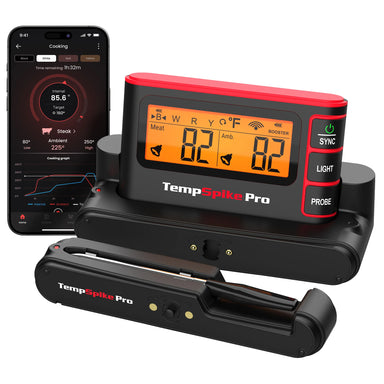
With the TempPro TempSpike XR TP862B Wireless Meat Thermometer, you'll be able to measure temperature in two distinct locations at once. The two color-coded wireless probes can be placed near substantial areas within your lamb providing insight into varying temperature levels across irregularly-shaped roasts. Insert the the probes deep into the legs of the lambs, avoid touch the bone.
Due to their full-wireless design, no cable runs between roasting pan and oven door, you'll find setting up this wireless meat thermometer particularly easy when working with large centerpieces such as leg of lamb.

Step 6: View Your Lamb from Anywhere Within 1Kft w/o an App
Greek-style leg of lamb can take hours to cook. There's no reason for you to stand in front of your stove during that time.
TempPro TempSpike XR TP862B utilizes RF signal transmission for ranges up to 1000ft. Consequently, you don't have to stay nearby when viewing the progress of your lamb. No application or account is needed for operation. The large receiver display shows information about both lamb temps and ambient temps enabling you to view how each area is progressing. Having this ability to visually track progress is especially valuable during long cooks since you'll have early warning signs indicating when it's time to start evaluating texture versus constantly opening the oven door.

FAQs about Cooking a Greek-Style Leg of Lamb
What herbs are commonly used for Greek-style leg of lamb?
Oregano and rosemary work particularly well with lamb. Garlic, lemon, olive oil, salt and black pepper create the rest of the classic flavor base.
Why is my slow-roasted lamb still tough?
If the lamb is cooked but remains difficult to pull apart, its connective tissue may need additional time to soften. Use a wireless meat thermometer to monitor the internal temperature to track its progress and a fork to evaluate the final texture.
Why use two probes for a leg of lamb?
A leg of lamb can vary considerably in thickness. Two probes allow you to monitor separate substantial sections and see whether they're cooking at different rates.
Does the TempPro TempSpike XR need Wi-Fi or an app?
No. The TempSpike XR uses RF technology and does not require an app, Wi-Fi connection or account.
How far does the TempSpike XR work?
The TempSpike XR provides up to 1,000 feet of wireless RF range, making it possible to monitor a long lamb roast while you're elsewhere around the home.


Comments

Recommended Products