How to Keep the Ideal Humidity for Nursery


 288 Comments


As a new parent, you want nothing but the best for your little one. You've carefully chosen the crib, picked out the softest blankets, and decorated the nursery with love. But there's one crucial factor that many parents overlook, the humidity level in your baby's room. With July in full swing across the United States, many regions are experiencing hot, humid weather, while others are dealing with air conditioning that can dry out indoor air. Either extreme can affect your baby's comfort, health, and sleep.
In this comprehensive guide, we'll explore everything you need to know about the ideal humidity for nursery environments, why it matters, how to monitor it, and which tools can help you maintain the perfect conditions for your newborn.
Why You Need to Monitor Nursery Temperature and Humidity
Newborns are incredibly delicate. Unlike adults, their bodies are still developing the ability to regulate internal temperature and manage hydration. This vulnerability makes the indoor environmental quality of their room highly impactful on their health and sleep quality.
Protecting Sensitive Infant Respiratory Systems
An infant's nasal passages are extremely narrow. When the humidity in nursery rooms drops too low, the air dries out their nasal membranes. This can lead to congestion, irritation, dry coughs, and even minor nosebleeds. Conversely, if the nursery humidity level is too high, it creates a breeding ground for mold, mildew, and dust mites, common triggers for infant allergies and asthma.
Preventing Dry Skin and Eczema
Baby skin is exceptionally thin and sensitive. Dry summer air, compounded by constant air conditioning, quickly saps moisture from their skin. Maintaining a good humidity level for nursery settings keeps their skin hydrated, preventing itchy patches, chapping, and painful eczema flare-ups.
Promoting Deeper, Safer Sleep
Babies sleep best when they are comfortable. A room that is too hot and humid can cause overheating, which is a known risk factor associated with Sudden Infant Death Syndrome (SIDS). Meanwhile, a room that is too dry can cause throat irritation, leading to frequent nighttime wake-ups. Achieving the best humidity level for nursery spaces ensures your baby breathes easily and sleeps through the night.

What is the Ideal Humidity for Nursery Rooms?
What exactly are the numbers you should target? Pediatricians and safety experts generally recommend the following guidelines:
|
Metric |
Recommended Range for Infants |
|
Nursery Humidity Level |
30% to 50% (Ideally keeping 40% to 50% for maximum respiratory comfort) |
|
Nursery Temperature |
68°F to 72°F (20°C to 22°C) |
During the peak of July, maintaining the target humidity for nursery rooms can be tricky. When your A/C runs continuously, the humidity level for nursery spaces can easily drop below 30%. On rainy or highly humid summer days, turning off the A/C might cause the humidity to spike above 60%. Keeping a reliable humidity nursery monitor on hand is the only way to know the true conditions of your baby's room.
What to Look for in an Indoor Hygrometer
If you are planning to purchase a hygrometer to track your home's air comfort, you shouldn't just grab the cheapest analog dial on the shelf. Because baby safety is on the line, look for these essential performance features:
Sensor Accuracy: This is non-negotiable. Look for devices equipped with reputable, industrial-grade sensors (such as Swiss-made sensors) that offer high accuracy of temperature and humidity.
Smart Connectivity: As a busy parent, you can't constantly walk into the nursery to read a screen, especially when your baby is sleeping. A Bluetooth-enabled hygrometer allows you to monitor conditions from your phone from the living room or your own bedroom.
Alert Notifications: Look for a device with a companion app that sends instant push notifications if the climate falls outside of your safe, pre-set thresholds.
Clear Display with Soft Backlight: If you do check the room during a nighttime feeding, you need a screen that is highly visible but won't wake a sleeping baby with harsh blue light.
How to Monitor Humidity in Nursery
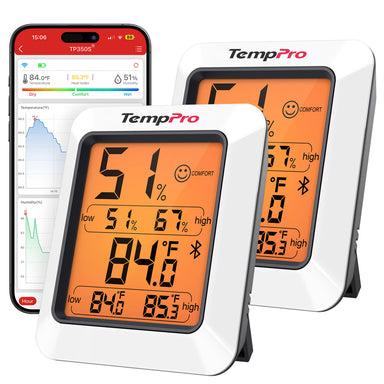
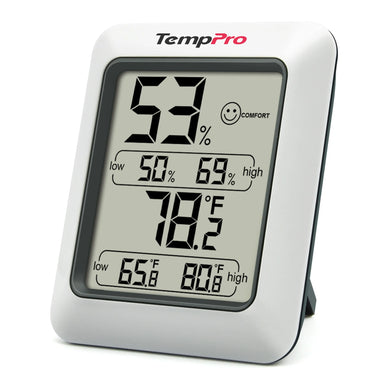
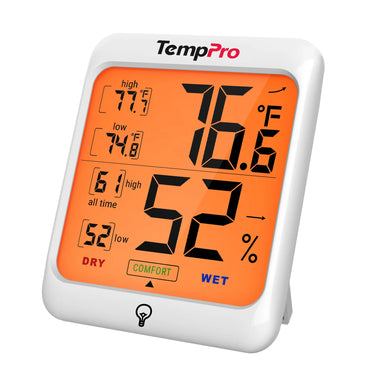
If you want to effortlessly maintain a good humidity for nursery rooms, the TempPro TP359 Bluetooth Indoor Hygrometer Thermometer is the ultimate tool. Engineered with parents in mind, it combines professional-grade accuracy with everyday convenience.
Key Features of the TempPro TP359:
- Swiss Sensirion High-Precision Sensor: The TP359 features a highly accurate Swiss-made sensor capable of detecting even the slightest environmental shifts, measuring temperature within 0.5℉ and humidity within 2%.
- 260-Foot Bluetooth Range: Using advanced Bluetooth 5.0, the TempPro TP359 lets you monitor your baby's room from up to 260 feet away. You can easily check the ideal humidity nursery levels from your kitchen, backyard, or master bedroom.
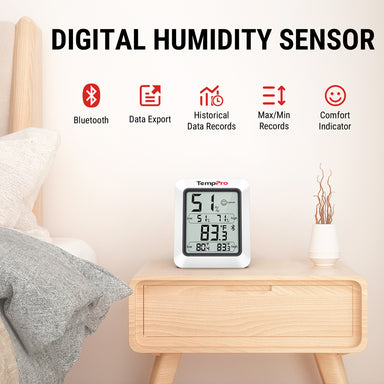
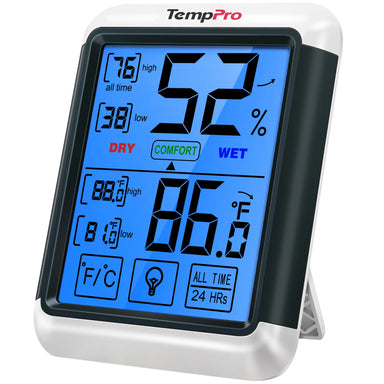
- Smart App Alerts & Comfort Indicators: Through the companion app, you can pre-set your safe target zones. If the A/C dries out the room or a humid summer storm pushes levels too high, your phone will instantly alert you. The on-screen display also features quick indicators (Dry, Comfort, Wet) so you can assess the air quality at a glance.
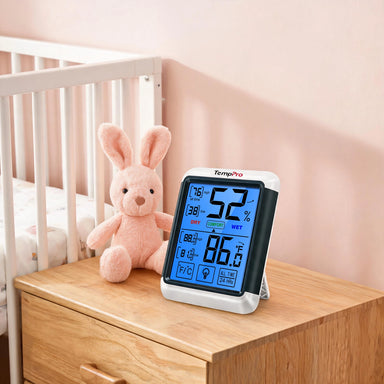
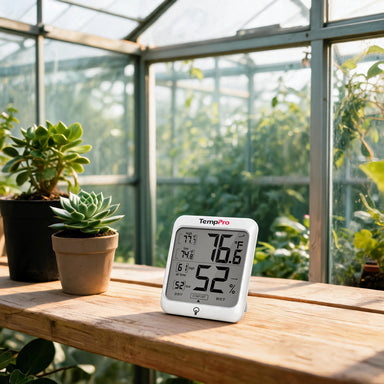
- 3.5-Inch Backlit LCD Screen: The large display is easy to read, and the soft, warm-colored backlight allows you to check the status during midnight check-ins without disturbing your infant's sleep.
- Smart Graphs & 2-Year Data Export: Visualize your home's climate trends with dynamic, real-time temperature and humidity graphs. Zoom in on a specific hour or view the big picture over an entire year. Plus, export up to 2 years of history whenever you need a detailed record.

Practical Tips to Adjust and Optimize Your Nursery Climate
Once you have your TempPro TP359 set up, you can take active control of your indoor air quality:
If the Nursery Humidity is Too Low (Below 30%):
Run a Cool-Mist Humidifier: This is the safest way to add moisture to a baby's room. Ensure you clean it regularly to prevent mold growth.
Place a Bowl of Water Near (But Safe From) Heat Sources: Letting water naturally evaporate can gently boost local moisture.
If the Nursery Humidity is Too High (Above 55%):
Use a Dehumidifier: Keep a compact, quiet dehumidifier in the room to pull excess moisture out of the air.
Ensure Proper Airflow: Keep the nursery door cracked open to allow air to circulate with the rest of the house, and run a ceiling fan on low (ensuring it does not blow directly onto the baby).
FAQs about Maintaining Ideal humidity in Nursery
Q1: What is the absolute best humidity for nursery rooms during the summer?
The ideal nursery humidity for newborn babies and infants is between 30% and 50% (ideally target 40% to 50%). This range keeps their nasal passages comfortable and skin hydrated without encouraging mold growth.
Q2: Can a dry room cause my baby to get sick?
While dry air itself does not contain viruses, it dries out the protective mucus membranes in your baby's nose and throat. When these barriers are dry, they are less effective at trapping airborne germs, making your child more susceptible to common summer colds.
Q3: Where is the best place to put the TempPro TP359 in the nursery?
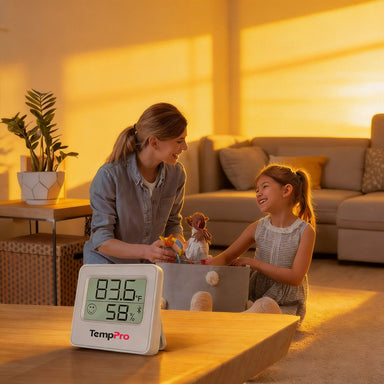
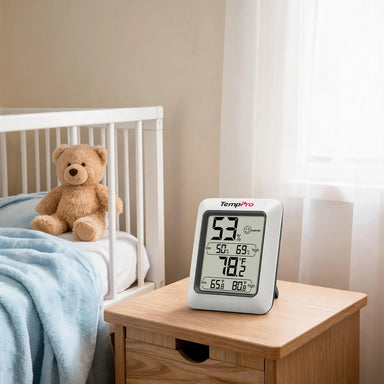
For the most accurate reading, place the hygrometer on a shelf or mount it on the wall close to the crib, but out of your baby's reach. Avoid placing it directly next to humidifiers, drafty windows, air vents, or in direct sunlight, as these locations can warp the readings.
Q4: Why is a cool-mist humidifier recommended over a warm-mist one?
Pediatricians strictly recommend cool-mist humidifiers for nurseries. Warm-mist models contain heating elements that can cause accidental burns if tipped over by an active baby or toddler.

Final Thoughts
Creating a healthy, comfortable, and safe sleep space is one of the greatest gifts you can give your growing child. By understanding the ideal humidity for nursery spaces and actively monitoring it with a highly accurate tool like the TempPro TP359 Bluetooth Indoor Hygrometer Thermometer, you can protect your baby from the harsh effects of dry summer air. Set up your nursery climate safety net today and enjoy the peace of mind that comes with knowing your baby is breathing easy all summer long.


Comments
You May Also Like


Recommended Products