What Is the Best Humidity Level for Dogs?


 288 Comments


As dog owners, we spend a lot of time thinking about what goes into our furry best friends, like premium kibble, fresh water, and the best veterinary care money can buy. But how often do we think about the air they breathe?
The indoor climate of your home plays a massive role in your dog's overall health, energy levels, and comfort. Just like us, dogs are sensitive to changes in the air, but unlike us, they can't change their clothes or adjust the thermostat when they get uncomfortable. Understanding how humidity and dogs interact is a crucial part of responsible pet ownership.
So, what is the best humidity level for dogs, how does it affect their health, and how can you effortlessly maintain the perfect indoor climate? Let's dive into everything you need to know about dogs and humidity.
Why Indoor Climate Matters to Your Dog
Dogs experience the world differently than humans. While we sweat from our skin to cool down, dogs rely almost entirely on panting and the sweat glands in their paw pads to regulate their body temperature. This makes their internal cooling system highly dependent on the quality of the surrounding air.
When we talk about humidity for dogs, we are talking about how much moisture is trapped in the air.
- If the humidity is too high: The air is saturated with water vapor. When your dog pants, the moisture on their tongue cannot evaporate efficiently. As a result, their natural cooling mechanism fails, putting them at a high risk for overheating and heatstroke.
- If the humidity is too low: The air becomes bone-dry. This strips moisture away from your dog's skin, eyes, and respiratory tract, leading to non-stop itching, dry paws, hacking coughs, and static shock.

What is the Ideal Humidity for Dogs
For the vast majority of adult dogs, the ideal humidity for dogs falls between 40% and 60%. Within this golden window, your dog's respiratory system functions smoothly, their coat retains its natural oils, and their risk of developing skin infections drops drastically.
The Dangers of High Humidity (>60%)
High humidity creates a breeding ground for pests and fungi. If your house consistently feels like a tropical rainforest, your dog may suffer from:
- Yeast and Skin Infections: Excess moisture gets trapped in thick fur and floppy ears, leading to itchy yeast infections and painful hot spots.
- Allergy Flare-ups: Dust mites and mold spores thrive in damp conditions, triggering chronic scratching and watery eyes in allergic dogs.
- Fleas and Ticks: These parasites reproduce much faster in humid conditions.
The Dangers of Low Humidity (<40%)
Dry winter air or excessive air conditioning can drop humidity levels down to dangerous lows, causing:
- Irritated Airways: Dry air irritates the lining of your dog's trachea, making them more susceptible to respiratory bugs like kennel cough.
- Flaky, Itchy Skin: You'll notice your dog constantly scratching, licking their paws, or developing dandruff.
The Exception to the Rule: Newborn Puppies and Incubators
While 40% to 60% is perfect for adult dogs, the rules change completely when dealing with breeding, whelping, and vulnerable newborn litters. Humidity for newborn puppies is a matter of life and death.
Newborn puppies cannot regulate their own body temperature or retain moisture well during their first few weeks of life. They are highly susceptible to dehydration and chilling. Because of this, breeders often utilize specialized whelping boxes or electronic puppy incubators to keep them alive.
Managing a Puppy Incubator Setup
When setting up a controlled environment for a vulnerable litter, you must precisely monitor the puppy incubator humidity level:
- Week 1: The incubator humidity for puppies should be kept relatively high, usually between 55% and 65%, to prevent their delicate skin and respiratory systems from drying out.
- Week 2 and Beyond: You can gradually lower the puppy incubator humidity toward the standard adult range as they grow stronger.
Crucial Breeding Tip: If the humidity for puppy incubator environments spikes too high (above 70%), it can cause condensation inside the unit, leading to bacterial growth and respiratory infections in the puppies. Conversely, if it drops too low, the puppies can dehydrate rapidly. Keeping a strict eye on the humidity for dogs at this fragile stage is paramount.
How to Effortlessly Monitor Your Pet's Environment
You can't manage what you don't measure. Many pet parents make the mistake of assuming that if they feel comfortable, their dog must feel comfortable too. However, because dogs live closer to the floor where cold air sinks and dust collects, their microclimate can be vastly different from yours.
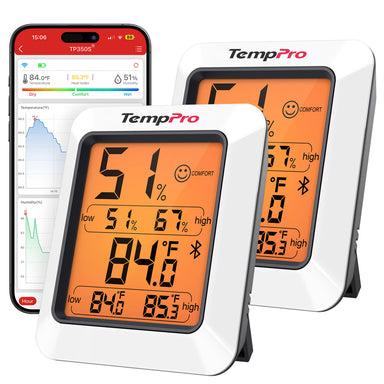
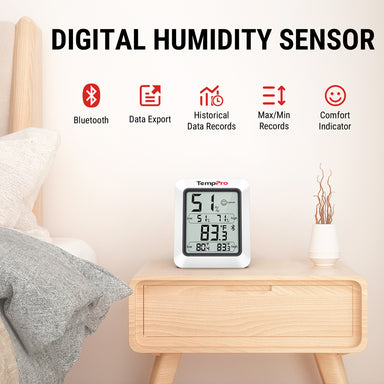
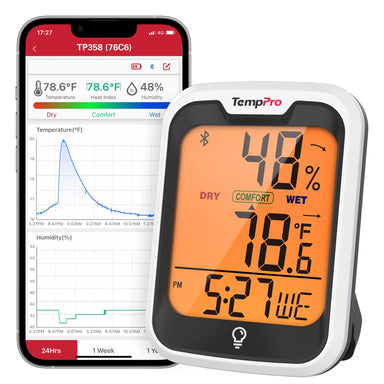
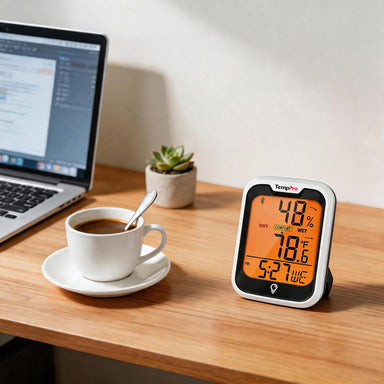
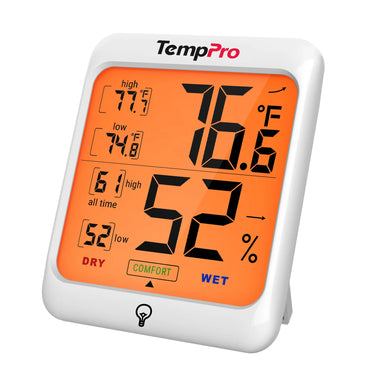
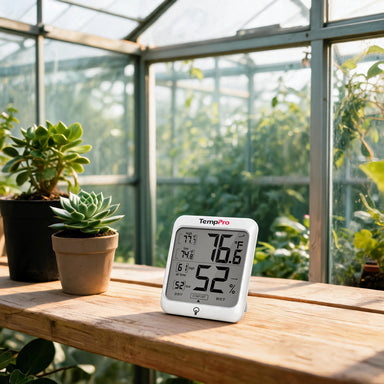
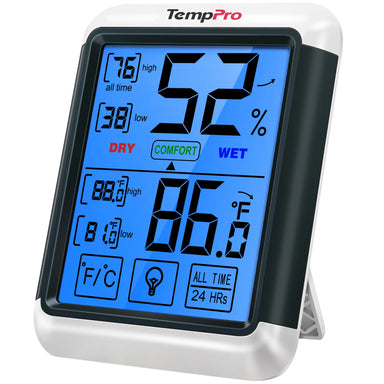
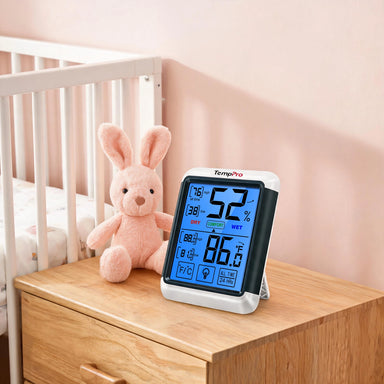
The most effective way to eliminate the guesswork is by deploying a dedicated smart sensor like the TempPro TP359 Bluetooth Indoor Hygrometer Thermometer. It can be placed right next to your dog's favorite sleeping crate, inside a whelping room, or directly next to a puppy incubator.
Why the TempPro TP359 is a Game-Changer for Pet Parents:
- Wireless Convenience: It continuously monitors indoor temperature and relative humidity, beaming the data directly to a clear, easy-to-read display or your smartphone.
- High Accuracy: With precision sensors, you'll know exactly what's happening in your dog's environment whether it's too dry, too humid, or just right.
- Instant Alerts: You can set custom comfort zones (e.g., 40% to 60% humidity). If a sudden summer heatwave spikes the humidity, or a winter furnace dries out the house, the device alerts you immediately.
- Historical Data Tracking: It allows you to track trends over time. If you notice your dog scratches more on days when the humidity drops below 35%, you have the data you need to make changes.
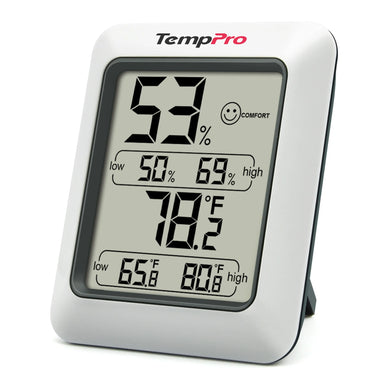
- Easy-to-Read Display: The large, backlit screen shows current readings at a glance, and many models track min/max values so you can see how conditions have changed over time.

Practical Tips to Create the Perfect Climate for Your Dog
Once your TempPro TP359 shows you the reality of your indoor climate, you can use these practical steps to fix it.
If Your Home Is Too Humid:
- Run a Dehumidifier: Place a dehumidifier in the room where your dog spends the most time. Fun Fact: While specialized reptile owners sometimes use a mini dehumidifier for reptiles to control small enclosures, these ultra-compact mini-dehumidifiers can also be repurposed by breeders to perfectly balance moisture levels inside a custom puppy incubator setup without taking up valuable space!
- Maximize Airflow: Use ceiling fans and keep interior doors open to prevent stagnant, heavy air from pooling on the floor where your dog rests.
- Groom Regularly: Brushing your dog removes trapped undercoat moisture, allowing their skin to breathe and preventing hot spots.
If Your Home Is Too Dry:
- Deploy a Cool-Mist Humidifier: Running a cool-mist humidifier adds safe moisture back into the air. Avoid warm-mist humidifiers, as they can pose a burn risk if your dog accidentally knocks them over.
- Incorporate Healthy Oils: Talk to your vet about adding Omega-3 fish oils to your dog's diet during dry winter months to protect their skin barrier from the inside out.
- Hydrate, Hydrate, Hydrate: Ensure your dog always has access to multiple bowls of fresh, cold water. Dry air increases their daily water requirement.

Indoor Climate Checklist for Dog Owners
Keep your home perfectly balanced by keeping this quick reference guide in mind:
| Life Stage / Scenario |
Optimal Temperature |
Optimal Humidity Level |
Key Tool / Remedy |
|
Healthy Adult Dogs |
68°F - 75°F (20°C - 24°C) |
40% - 60% |
AC / Standard Humidifier |
|
Newborn Puppies (Week 1) |
85°F - 90°F (29°C - 32°C) |
55% - 65% |
Puppy Incubator + TempPro TP359 |
|
Elderly / Arthritic Dogs |
72°F - 76°F (22°C - 24°C) |
45% - 55% |
Orthopedic bed kept away from damp floors |
FAQs About the Humidity Level for Dogs
Q1: Can high humidity cause my dog to pant excessively?
Yes, absolutely. High humidity prevents moisture from evaporating efficiently from your dog's tongue when they pant. If the air is saturated, their natural cooling mechanism fails, causing them to pant heavily in a desperate attempt to lower their core body temperature.
Q2: What are the signs that my house is too dry for my dog?
If your indoor humidity drops below 40%, you will likely notice your dog scratching or biting their skin frequently, developing flaky dandruff, licking their paws, or dealing with a dry, hacking cough. Increased static electricity when you pet them is also a major red flag.
Q3: How do I know if my dog is suffering from humidity-related skin issues?
Look out for constant scratching, red or inflamed patches of skin (known as hot spots), a greasy coat, or a strong "musty" odor coming from their fur or floppy ears. These are classic signs of yeast or bacterial infections triggered by excess moisture trapped in their coat.
Q4: Is a humidifier or a dehumidifier better for dogs?
It depends entirely on your current climate and the readings on your hygrometer. If your TempPro TP359 Bluetooth Indoor Hygrometer Thermometer reads below 40% (common in dry winters or heavily heated homes), you need a cool-mist humidifier. If it reads consistently above 60% (common in damp summers or basements), you need a dehumidifier.
Q5: Why is humidity so critical for newborn puppies in an incubator?
Humidity for newborn puppies is vital because their fragile bodies cannot regulate temperature or retain hydration on their own. If the puppy incubator humidity is too low, they will dehydrate and fade rapidly. If it is too high, dangerous bacteria can bloom inside the enclosure.
Q6: Can I use a regular room humidifier for a puppy incubator setup?
No, a standard room humidifier is too powerful and will flood a small incubator with too much condensation. Instead, utilize a small, controlled moisture delivery system or a mini dehumidifier for reptiles inside the whelping room to balance the surrounding air ambiently.
Q7: Do different dog breeds require different humidity levels?
While the general golden rule is 40% to 60%, flat-faced breeds (Brachycephalic dogs like French Bulldogs, Pugs, and Boxers) are much more sensitive to high humidity because their compromised airways make it even harder for them to cool down via panting. They thrive closer to a steady 45% to 50% humidity.
Q8: Does running the air conditioning help lower humidity for dogs?
Yes, modern home air conditioning units naturally pull moisture out of the air as they cool the room. Running your AC during a sweltering summer heatwave is one of the easiest ways to bring high indoor humidity down to a safe level for your pets.
Q9: Can high humidity cause breathing problems in senior dogs?
Yes. Heavy, moisture-laden air forces dogs to work harder to breathe. For elderly dogs or those suffering from pre-existing heart conditions, asthma, or collapsing tracheas, high humidity can dangerously exacerbate their respiratory distress.
Q10: Where is the best place to put a hygrometer to get an accurate reading for my dog?
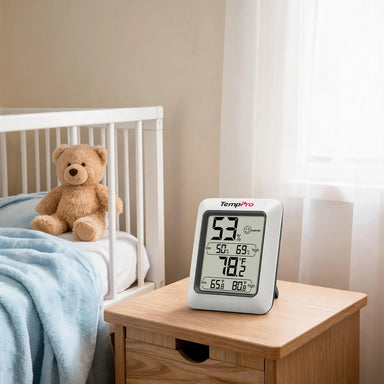
Place your TempPro TP359 at the exact height where your dog spends most of their time, such as right next to their favorite dog bed or crate. Avoid placing it high up on a wall, directly under an air vent, or in direct sunlight, as these spots will give you inaccurate readings of your dog's actual microclimate.
Final Thoughts
Your dog's environment directly impacts their happiness, health, and longevity. By taking a proactive approach to humidity for dogs, you protect them from chronic skin irritation, dangerous overheating, and seasonal respiratory issues.
Don't rely on guesswork to keep your best friend safe. Invest in an accurate, reliable monitor like the TempPro TP359 Bluetooth Indoor Hygrometer Thermometer to keep a watchful eye on their environment. When you take control of your indoor air quality, you aren't just adjusting numbers on a screen, you are giving your dog the comfortable, healthy, joyful life they truly deserve.


Comments

Recommended Products