What is the Best Humidity Level for Home in Summer?


 288 Comments


When mid-summer rolls around, many homeowners brace themselves for scorching heatwaves and thick outdoor humidity. We crank up the central air conditioning, seal the windows, and assume our families are safe from the elements. However, many people notice subtle warning signs around the house: the air inside feels heavy or sticky, basement walls smell faintly musty, children wake up with stuffy noses, or the AC seems to run non-stop without making the house truly comfortable.
The culprit often isn't the air temperature, but the humidity in the summer. Controlling your house humidity level in summer is one of the most effective, yet frequently overlooked, ways to protect your family's respiratory health, preserve your home's structural integrity, and trim your monthly energy bills.
In this comprehensive guide, we will explore the ideal climate targets for your home, how to manage moisture effectively, and why monitoring your indoor air quality is the ultimate secret to a healthy, comfortable summer.
What is the Best Humidity Level for Home in Summer?
To put it simply, the best humidity level for home in summer is between 30% and 50% relative humidity (RH), with 45% being the sweet spot for most households.
Environmental protection agencies and health experts agree that maintaining an ideal indoor humidity in summer below 50% is crucial. When indoor humidity in summer creeps above 50% or 60%, your home transforms into an ideal breeding ground for dust mites, mold spores, and airborne bacteria. Conversely, if humidity drops below 30%, the air becomes overly dry, irritating children's skin and nasal passages.
Recommended Summer Indoor Climate Targets
|
Location / Room |
Target Relative Humidity (RH) |
Target Temperature |
Why It Matters |
|
Living Spaces (Bedrooms, Living Room) |
30% – 50% (40-45% Ideal) |
68°F – 75°F |
Ensures respiratory comfort, quality sleep, and energy efficiency. |
|
Basements & Crawl Spaces |
30% – 50% (Must stay below 50%) |
65°F – 70°F |
Prevents mold spore growth, wood rot, and musty odors in subterranean areas. |
|
Nursery & Kids' Bedrooms |
40% – 50% |
68°F – 72°F |
Protects sensitive skin and keeps delicate airways clear. |
Finding the best indoor humidity level in summer requires balancing comfort with health precautions. Keeping your household within this range ensures the best humidity for home in summer conditions.

Why You Must Control Summer Humidity for Family Health
Why should you care so deeply about the optimal indoor humidity summer target? High moisture levels inside your home impact far more than just comfort:
Mold and Dust Mite Control
Mold spores thrive when relative humidity exceeds 60%. Dust mites—one of the leading triggers for pediatric asthma and seasonal allergies—absorb moisture directly from the air and flourish when summer humidity stays high. Maintaining the proper indoor humidity summer standard stops these allergens from reproducing.
Cooling Efficiency & Lower Energy Bills
Moist air holds onto heat far longer than dry air. When humidity in the summer builds up inside your home, the air feels hot and "sticky," prompting you to turn the AC down several degrees lower than necessary. Keeping the ideal home humidity in summer allows your sweat to evaporate naturally, making 74°F feel crisp and refreshing rather than muggy.
Protecting Home Assets
Excess moisture doesn't just stay in the air, but it settles onto hard surfaces. Over time, poor house humidity level in summer management causes hardwood floors to warp, drywall to soften, paint to peel, and basement storage boxes to rot.
Managing Special Zones: The Basement Challenge
When managing your home's moisture, subterranean areas deserve special attention. Finding the best humidity level for basement in summer spaces is a major hurdle for American families.
Because basements are cooler than above-ground living areas, warm air entering from outside cools down quickly. Cold air cannot hold as much moisture as warm air, causing the relative humidity in your basement to skyrocket.
To achieve the best humidity level for house in summer structures overall, your basement must stay strictly below 50% RH. If left unchecked, basement moisture will migrate upstairs, degrading your overall ideal humidity in home summer balance.
How to Maintain the Proper Humidity Level in Summer
Achieving the best indoor humidity in summer months requires a simple combination of smart HVAC habits and moisture control techniques:
Run Your Air Conditioner Consistently: Central AC units don't just cool the air—they act as whole-house dehumidifiers. Ensure your thermostat fan setting is set to "AUTO" rather than "ON" so condensed water drains out rather than being blown back into your rooms.
Deploy Dedicated Dehumidifiers: In damp basements or laundry rooms, run a portable dehumidifier to maintain the best humidity for house in summer standards.
Use Exhaust Fans: Always turn on bathroom exhaust fans during showers and kitchen hoods while cooking to vent moisture directly outdoors.
Inspect Weatherstripping: Seal gaps around windows and doors to prevent humid summer outdoor air from infiltrating your air-conditioned living space.
How to Measure Humidity Level in Your House in Summer
You can adjust your thermostat or turn on a dehumidifier, but how do you know if you've hit the best indoor humidity for summer health? Human bodies are notoriously bad at estimating humidity; we often confuse air temperature with moisture levels.
To accurately maintain the best humidity level for summer comfort, every household needs an accurate, real-time climate monitoring device.
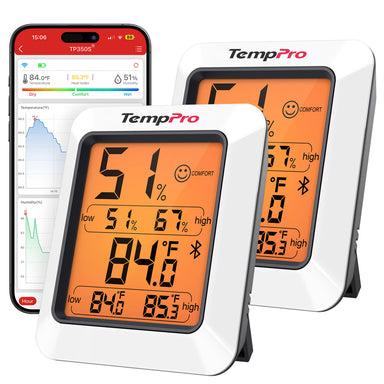
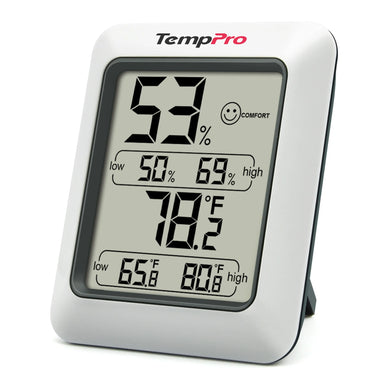
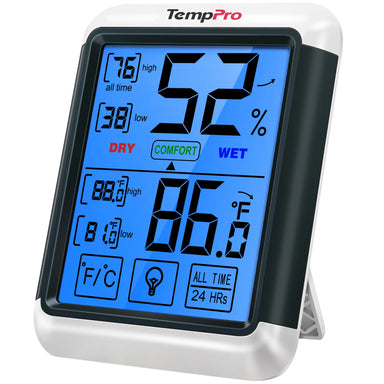
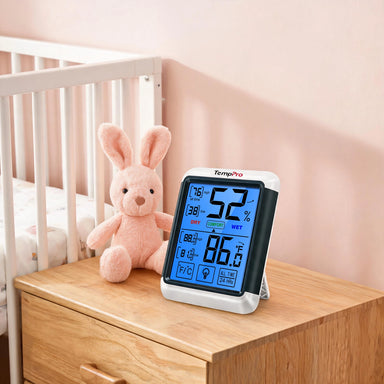
If you're serious about maintaining the ideal indoor humidity in summer, the TempPro TP359 Bluetooth Indoor Hygrometer Thermometer is built specifically for busy parents who need precision, simplicity, and continuous monitoring.

Why the TempPro TP359 is Ideal for American Homes:
260ft Long-Range Bluetooth Connectivity
Instead of walking down to the basement or checking every bedroom manually, the TempPro TP359 connects wirelessly to your smartphone via Bluetooth 5.0. You can check humidity and temperature levels from up to 260 feet away while relaxing in the living room or cooking dinner.
High-Precision Swiss-Made Sensirion Sensors
Accuracy matters when preventing mold growth. The TempPro TP359 utilizes industry-leading Swiss Sensirion sensors, providing ultra-precise temperature readings within ±0.9°F and humidity readings within ±2% RH, refreshing every 10 seconds.
Dynamic Air Comfort Indicator & Clear Screen
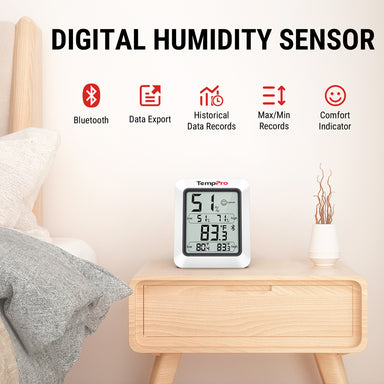
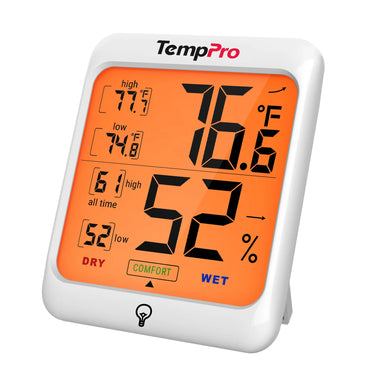
Featuring a bright 3.5-inch LCD backlit display, the screen clearly displays a visual comfort bar (DRY / COMFORT / WET). At a glance, you can instantly tell whether room conditions have drifted away from the best humidity level for house in summer parameters.
Instant Smart App Notifications & Data History
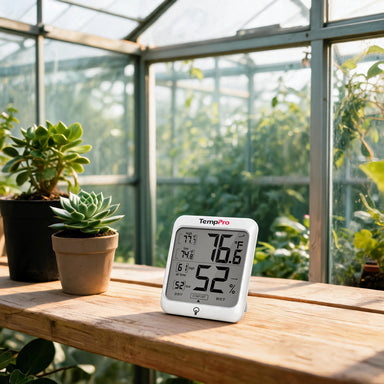
Set custom temperature and humidity alerts in the TempPro Sensor app. If your basement humidity spikes above 50% or your nursery gets too warm overnight, your phone receives an immediate alert. Plus, store up to 1 year of historical climate data to track seasonal performance trends.
FAQs about Keeping Ideal Humidity Level in Summer
Q1: What is the ideal indoor humidity in summer for sleep?
The best indoor humidity level in summer for a bedroom is between 40% and 50%, paired with a indoor temperature of 65°F to 68°F. This prevents dry throats while stopping sweat build-up, ensuring restful sleep for both adults and babies.
Q2: Why does my house feel humid even with the AC running?
If your AC unit is oversized for your home, it will cool the air too quickly ("short-cycling") without running long enough to pull moisture out of the air. Alternatively, your AC fan might be set to "ON" instead of "AUTO," blowing moisture off the evaporator coil back into your living space.

Q3: Is 60% humidity too high for a house in the summer?
Yes. An indoor humidity in summer reading of 60% or higher creates high risks for mold growth, dust mite proliferation, and uncomfortable sticky skin. You should use a dehumidifier or adjust your AC to bring it back under 50%.
Q4 : Can low humidity make me sick?
Yes. When the ideal humidity for summer drops too low (below 30%), it can dry out your mucous membranes, making you more susceptible to respiratory infections. It can also cause dry, itchy skin, nosebleeds, and scratchy throats.
Q5 : What is the ideal indoor humidity in summer for a baby's room?
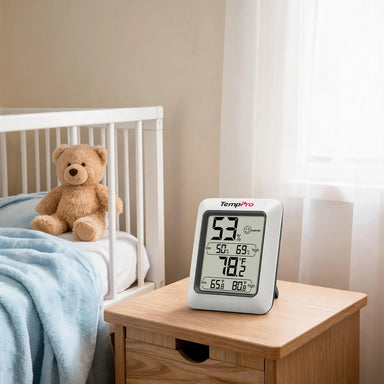
For babies, the ideal humidity in home summer is around 40% to 50%. This range helps protect tiny lungs from respiratory irritation while preventing the growth of mold and dust mites that can trigger allergies.
Final Thoughts
Maintaining the best humidity for home in summer living doesn't have to be a guessing game. By understanding your home's moisture levels and using smart tools like the TempPro TP359 Bluetooth Indoor Hygrometer Thermometer, you can protect your children's health, safeguard your house, and enjoy a truly comfortable, cool summer.


Comments

Recommended Products