5 errores que arruinan el pollo Jerk


 288 Comments


Por qué el pollo Jerk es un desafío
El pollo jerk es uno de esos platos que todo el mundo dice que puede hacer, hasta que realmente lo intenta. A primera vista parece sencillo: sazonar el pollo, ponerlo en la parrilla, cocinarlo. ¿Qué tan difícil puede ser?
Más difícil de lo que parece. Lo que la mayoría de la gente saca de la parrilla no sabe en absoluto a lo que imaginaban, ya sea por un humo áspero, falta de sabor, o un condimento que eclipsa todo lo demás. La receta no suele ser el problema, y la mezcla de especias tampoco. El problema es el control.
El pollo jerk es un plato agresivo por diseño. La marinada está cargada de azúcares, hierbas y especias, y todo eso reacciona fuertemente al calor, por lo que el exterior puede quemarse en poco tiempo mientras el interior aún lucha por cocinarse. A menos que mantengas un control constante de la temperatura de tu parrilla, pasas toda la cocción luchando contra el plato en lugar de guiarlo. Por eso, los pequeños errores se convierten en grandes, y los cinco siguientes son los que separan una decepción quemada y seca de la auténtica experiencia.

Error 1: Calor directo alto todo el tiempo
Esta es probablemente la forma más rápida de arruinar el pollo jerk. La marinada está llena de azúcar que se carameliza rápidamente y se quema aún más rápido, por lo que si usas calor directo alto de principio a fin, el exterior se carboniza mucho antes de que el interior se cocine. Terminas con lo peor de ambos mundos: un exterior quemado y amargo y un centro crudo o poco cocido.
La solución es tratar tu parrilla como dos zonas en lugar de una. Diferentes áreas de cualquier parrilla funcionan a diferentes temperaturas, y el pollo jerk necesita ese rango. Cocínalo principalmente a fuego indirecto y controlado para que se termine de cocer de manera uniforme, luego muévelo a fuego más alto cerca del final para el dorado y el chamuscado que realmente deseas. Trabajar las zonas de esta manera también evita que los destellos quemen el pollo y te permite corregir el rumbo a tiempo, antes de que un pequeño problema se convierta en una cena arruinada.
Error 2: Marinar en exceso
Algunos pollos jerk se sabotean mucho antes de llegar a la parrilla, allí mismo en la marinada. Es tentador asumir que más tiempo en esa mezcla audaz y picante significa más sabor, pero a partir de cierto punto, ocurre lo contrario. Si dejas el pollo demasiado tiempo, la marinada comienza a descomponer la textura de la carne y a llevar el sabor de audaz a abrumador, mientras que todo ese azúcar extra en la superficie solo hace que sea más probable que se queme una vez que se expone al calor.
Dos o tres horas son suficientes, y toda la noche está bien. Más allá de eso, empiezas a perder el equilibrio que hace que el plato funcione. Prepara bien la marinada y el calor, y el resto se reduce a cómo manejas el pollo en la parrilla.
Error 3: Voltear demasiado o muy poco
La frecuencia con la que volteas importa más de lo que parece. Si giras el pollo constantemente, nunca permites que se forme una costra adecuada; si lo dejas demasiado tiempo en un lado, ese lado se quema mientras el otro queda crudo. Ninguna de las dos opciones te lleva a donde quieres estar.
El punto ideal es voltear de manera constante y deliberada, lo suficiente para cocinar ambos lados de manera uniforme, pero no tan a menudo como para interrumpir la formación de la costra. El pollo jerk requiere atención en este punto. No es un plato que puedas dejar y desatender, por lo que el siguiente error atrapa a tanta gente.
Error 4: Adivinar en lugar de medir
Aquí es donde la mayoría de la gente pierde el pollo. Lo dan por hecho basándose en el tiempo, en el aspecto o en el instinto, pero el pollo jerk es una de las cosas más difíciles de leer a simple vista. La marinada oscura y con muchas especias mancha la superficie, así que cuando parece hecho, puede que esté demasiado cocido o todavía crudo por dentro. El pollo debe alcanzar una temperatura interna de 165 °F (74 °C), y ese es un número que simplemente no se puede ver.
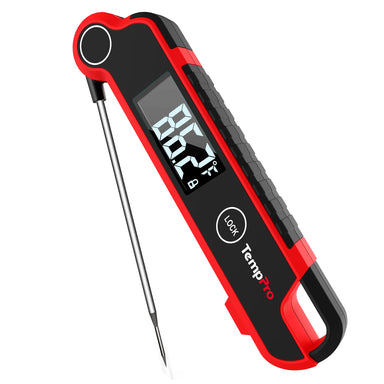
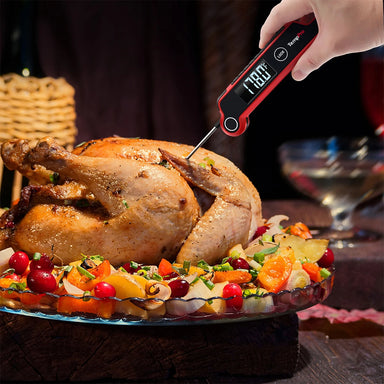
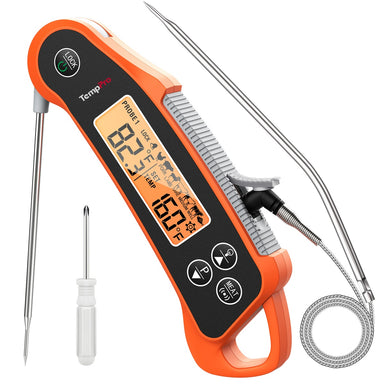
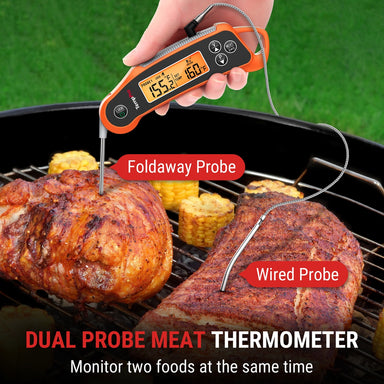
Un termómetro rápido y preciso elimina las conjeturas. El Termómetro de lectura instantánea TempPro TP622 Lightning le proporciona una lectura interna precisa en aproximadamente medio segundo, con una precisión de ±0,5 °F, para que sepa exactamente cómo está el pollo. Esa velocidad importa más de lo que parece: con un termómetro lento, el pollo sigue cocinándose mientras espera un número, y en una cocción rápida y con mucho azúcar, esos pocos segundos pueden ser la diferencia entre jugoso y demasiado cocido. Una lectura rápida en la parte más gruesa y las conjeturas desaparecen.

Error 5: Cocinar en exceso para estar seguro
Irónicamente, el miedo al pollo poco cocido lo arruina más que cualquier otra cosa. Preocupada por la seguridad, la gente deja el pollo más tiempo, solo para asegurarse, y cada minuto extra después de que está listo expulsa la humedad y deja la textura seca y fibrosa.
Aquí está la parte que la mayoría de la gente pasa por alto: la seguridad se trata de alcanzar la temperatura interna correcta, no de sobrepasarla. Una vez que el pollo alcanza los 165 °F, es seguro y está en su mejor punto, y no hay nada que ganar cocinándolo más tiempo. Con una lectura precisa en mano, puedes retirarlo en el momento exacto y cocinar con confianza en lugar de miedo, que es el objetivo principal.
Si controlas el calor, el pollo Jerk se vuelve fácil
En esencia, el pollo jerk se reduce a una cosa: controlar el calor, desde las zonas de tu parrilla hasta la temperatura interna final. Si lo dominas, todo lo demás encaja. La marinada se carameliza en lugar de quemarse, el interior se cocina completamente mientras el exterior se carboniza lo justo, y el sabor audaz resulta equilibrado en lugar de amargo o seco como un hueso.
Nada de esto requiere una habilidad especial, solo atención y una forma de saber lo que realmente está pasando en lugar de adivinar. Ahí es donde el TempPro Lightning TP622 se gana su valor, con una lectura rápida y precisa, además de una gran pantalla retroiluminada, activación y suspensión por movimiento, y un cuerpo impermeable con certificación IP67 diseñado para trabajos de parrilla desordenados. Si controlas el calor, el pollo jerk deja de ser una apuesta y se convierte en algo que puedes poner en la mesa, perfectamente, cada vez.

Preguntas frecuentes
¿Por qué el pollo jerk se quema tan fácilmente?
Porque la marinada contiene azúcar, que se carameliza y se quema rápidamente bajo altas temperaturas.
¿A qué temperatura se debe cocinar el pollo jerk?
El pollo debe alcanzar una temperatura interna de 165 °F (74 °C) para ser seguro para el consumo.
¿Necesito un termómetro para el pollo jerk?
No es obligatorio, pero es la forma más fiable de evitar cocinarlo demasiado o dejarlo crudo.
¿Puedo cocinar pollo jerk sin parrilla?
Sí. También funciona en el horno o en una sartén, aunque controlar el calor sigue siendo igual de importante.
¿Cuál es el mayor error al cocinar pollo jerk?
Usar fuego alto todo el tiempo y depender de suposiciones en lugar de la temperatura.


Comentarios
También te puede interesar


Productos recomendados