7 consejos para asar bulgogi y conseguir un sabor perfecto


 288 Comments


Por qué el bulgogi es fácil de arruinar
El bulgogi parece lo más simple del mundo. Carne finamente cortada, un adobo dulce y salado, una parrilla caliente, y listo. ¿Verdad?
Esa es exactamente la razón por la que tanta gente lo hace mal. Lo tratan con indiferencia, lo ponen en la parrilla, lo voltean unas cuantas veces y esperan que sepa a la barbacoa coreana que tanto les gusta. Lo que suelen obtener, en cambio, es lo contrario: bordes quemados, carne cocinada de forma irregular, un glaseado dulce que se vuelve amargo y carne que se seca casi al contacto.

No es el adobo, y no es el corte. Es el control del calor. El bulgogi se cocina rápido, y el azúcar del adobo se carameliza aún más rápido, por lo que la línea entre un caramelizado perfecto y quemado es cuestión de segundos. Si a eso le añadimos lo finas que son las lonchas, casi no hay margen de error. Eso es lo que hace del bulgogi un plato en el que unos pequeños ajustes lo cambian todo, y la mayoría de esos ajustes se reducen a controlar el calor desde la primera loncha hasta el último lote.
Consejo 1: Corta en lonchas finas y uniformes
Un buen bulgogi empieza por cómo se corta la carne, no por lo que cuesta. El chuletón (ribeye) es muy apreciado por su marmoleado, y esa grasa mantiene la jugosidad, pero el grosor de la loncha importa mucho más que el precio de la etiqueta. Las lonchas finas se cocinan en un instante y absorben el adobo, mientras que las más gruesas se cocinan lentamente y pierden ese equilibrio entre caramelización y ternura.

Igualmente importante es mantener todas las lonchas iguales. Si cortas algunas piezas más finas que otras, obtendrás una mezcla de carne hecha de más y carne cruda en la misma tanda. Las lonchas uniformes se cocinan al mismo ritmo, y esa consistencia es lo primero que te da un control real sobre el resultado.
Consejo 2: No adobes en exceso
Es tentador pensar que un remojo más largo significa un sabor más profundo, pero con el bulgogi eso juega en tu contra. El adobo se basa en azúcar, salsa de soja y aromáticos, y cuanto más tiempo permanece la carne en él, más degrada el azúcar la estructura de la carne y más rápido se carameliza y quema al entrar en contacto con el calor.
Tres o cuatro horas son suficientes, y durante la noche está bien. Si te pasas de eso, estarás deshaciendo tu propio trabajo, cambiando el sabor por una textura blanda y un adobo que se quema demasiado rápido. El objetivo es sazonar la carne, no saturarla. Una vez que la carne está cortada y adobada, el resto de la batalla se libra en la parrilla.
Consejo 3: Comprueba primero la temperatura de la superficie
Aquí es donde la mayoría de los cocineros arruinan el bulgogi antes de que se ponga la primera pieza. Encienden la parrilla o calientan la sartén, asumen que está lista, y no lo está. El bulgogi necesita una superficie lo suficientemente caliente como para caramelizar el azúcar rápidamente, pero no tan caliente como para quemarse al contacto, y ese rango es imposible de juzgar a mano. Demasiado frío y te perderás la caramelización que define el plato; demasiado caliente y los azúcares se queman al contacto.
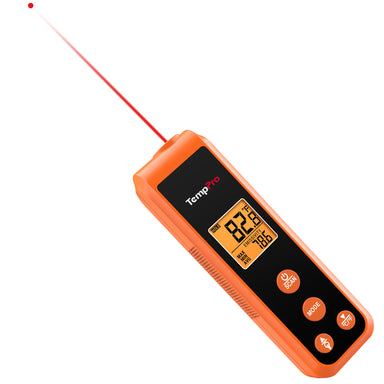
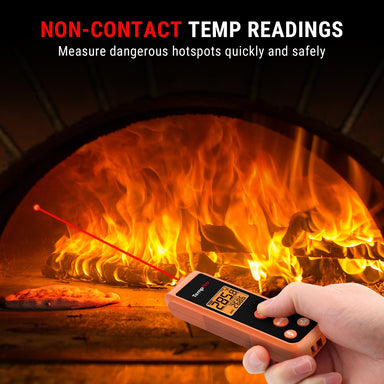
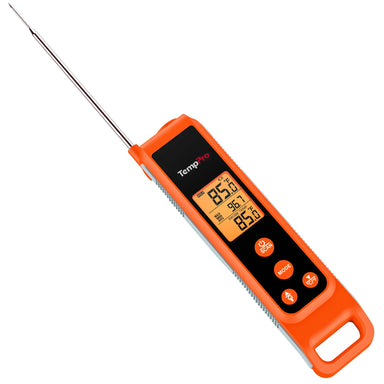
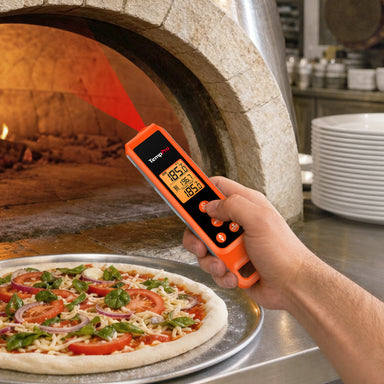
Para el bulgogi, el punto óptimo se sitúa alrededor de 200 a 230 °C (400 a 450 °F) en la superficie de cocción. ElTermómetro de doble láser TempPro TP450 es lo que confirma que realmente estás ahí. Su puntería de doble láser y su emisividad ajustable te dan una lectura precisa de la superficie en aproximadamente medio segundo, así que en lugar de adivinar si la parrilla o la sartén está lista, lo sabes antes de que la carne la toque. Esa única lectura es a menudo la diferencia entre un bulgogi quemado y un bulgogi perfectamente caramelizado.

Consejo 4: No atiborres la parrilla
Una vez que la superficie está lista, la forma más rápida de estropearlo es apilar demasiada carne a la vez. Una parrilla atiborrada baja la temperatura, se acumula humedad y la carne empieza a cocinarse al vapor en lugar de dorarse. En el momento en que el bulgogi se cuece al vapor, pierdes el sellado, la caramelización y la textura que lo hacen digno de comer.
Trabaja en lotes más pequeños y dale a cada pieza espacio para respirar para que el calor pueda hacer su trabajo. Lleva un poco más de tiempo, pero la diferencia en el resultado final es difícil de exagerar.
Consejo 5: Observa la caramelización
El adobo es lo que hace especial al bulgogi, y también lo que lo hace difícil, porque el azúcar que le da ese sabor característico pasa de dorado a quemado en segundos. Lo que buscas son bordes dorados, una superficie ligeramente crujiente y un aroma rico, no carne amarga y ennegrecida.
Debido a que esa ventana es tan corta, un tiempo de reacción lento te cuesta el lote. Una lectura rápida con el TempPro TP450 en medio segundo te permite detectar una superficie que se está calentando demasiado y reducir el calor antes de que los azúcares se pasen de la raya. Cuanto más rápido puedas ver cómo se mueve la temperatura, más fácil será mantenerte en el lado correcto.

Consejo 6: Voltea rápido y sé constante
El bulgogi no es un plato para dejarlo y olvidarse. Se cocina más rápido que casi cualquier otra cosa que pongas al fuego, a menudo en uno o dos minutos, lo que significa que exige toda tu atención durante todo el proceso. Estás volteando rápidamente, moviendo las piezas y ajustando el calor sobre la marcha.
Si te alejas aunque sea brevemente, volverás a encontrar carne hecha de más o quemada. La comida que se cocina rápido simplemente no te da el lujo de irte, y el bulgogi es de lo más rápido que hay.
Consejo 7: Mantén la consistencia en cada tanda
Cocinar "a ojo" puede dar un buen resultado de vez en cuando, pero no te dará el mismo resultado dos veces, y con algo tan rápido y sensible al calor como el bulgogi, de vez en cuando no es suficiente. La solución es cocinar basándose en lo que realmente se ve en la superficie, en lugar de lo que se asume que está sucediendo.
Aquí es donde el TempPro TP450 se gana su lugar en toda una cocción, no solo en la primera tanda. Su lectura sin contacto te permite seguir de forma segura cómo cambia la temperatura de la superficie con el tiempo, detectar las zonas calientes que queman una esquina mientras otra se retrasa, y devolver el calor al mismo punto antes de que entre cada nueva tanda, con lecturas MAX, MIN y AVG para mantener la precisión. En lugar de esperar que tu segunda tanda salga como la primera, puedes asegurarte de que así sea.
Todo se reduce al control del calor
La mayoría de la gente asume que el bulgogi vive y muere por el adobo. No es así. Vive y muere por el calor. Una vez que controlas la temperatura de la superficie, todo lo demás encaja: el adobo se carameliza como debe, la carne se mantiene tierna y los sabores resultan equilibrados en lugar de abrumadores. Sin ese control, ni siquiera los mejores ingredientes pueden salvar el plato, y con él, incluso los más simples pueden saber como si hubieran salido de la parrilla de un restaurante.
Nada de esto requiere una técnica avanzada. Requiere concentración y precisión: cortar uniformemente, marinar con moderación, controlar la temperatura de la superficie, darle espacio a la carne y mantenerse atento al calor en tiempo real. El TempPro TP450 elimina las conjeturas de la parte que más dificulta a la mayoría de la gente, brindándote datos precisos y en tiempo real sobre lo más importante. Controla eso y el bulgogi deja de ser una apuesta para convertirse en algo que puedes clavar cada vez.

Preguntas frecuentes
¿Por qué el bulgogi se quema tan fácilmente?
Porque el adobo contiene azúcar, que se carameliza rápido y luego se quema igual de rápido a fuego alto.
¿Cuál es la mejor temperatura para cocinar bulgogi?
Una superficie caliente de unos 200 a 230 °C funciona bien, pero controlar esa temperatura de la superficie importa más que cualquier ajuste del dial.
¿Necesito un termómetro para el bulgogi?
No es obligatorio, pero hace que sea mucho más fácil mantener un calor constante y te ayuda a evitar que se queme.
¿Puedo cocinar bulgogi en una sartén en lugar de una parrilla?
Sí. Una sartén plana o una plancha funcionan bien siempre que el calor esté bien controlado.
¿Cuál es el mayor error al asar bulgogi?
Atiborrar la superficie y no controlar la temperatura.


Comentarios
También te puede interesar


Productos recomendados