8 formas de evitar que el pastel de carne se seque


 288 Comments


El pastel de carne parece ser infalible. Se mezclan todos los ingredientes en un bol, se meten en un molde y el horno hace el resto. Sin embargo, es una de las cenas más fáciles de la semana que puede salir mal, y el resultado habitual es un pastel de carne seco, desmenuzable y un poco decepcionante.
La mayoría de las veces la receta no es la culpable, y tampoco el condimento. El pastel de carne seco casi siempre se debe a dos cosas que se controlan en el mostrador y en el horno: la cantidad de humedad que permanece en la carne y lo caliente que se pone antes de sacarlo.

He aquí por qué esto importa. Una vez que la carne de res se muele, pierde gran parte de su capacidad natural para retener agua. Si se supera su temperatura interna ideal, comienza a expulsar esa humedad, y no hay forma de recuperarla una vez que se ha ido. Es por eso que pequeños errores como mezclar en exceso, cocinar en exceso o juzgar mal el punto de cocción se notan tan claramente en la rebanada final.
La buena noticia es que cada uno de esos errores es fácil de evitar. Aquí hay ocho cosas que marcan la diferencia.
1. No elija carne demasiado magra
La carne molida extra magra parece la opción saludable, pero le juega en contra en un pastel de carne. La grasa es lo que mantiene el pastel tierno y húmedo, así que cuando no hay suficiente, la textura se vuelve seca y pesada.
Para la carne de res, una mezcla 80/20 es el punto ideal. Hay suficiente grasa para mantener cada rebanada jugosa, pero no tanta como para que el pastel se vuelva grasoso. Si elige una carne más magra que eso, estará luchando contra la sequedad antes de que el molde llegue al horno.
2. Mezcle menos
Mezclar en exceso es uno de los errores más comunes al preparar pastel de carne. Cuanto más se trabaja la carne, más se descompone su estructura, y un pastel de carne densamente empacado se hornea duro en lugar de tierno.
Mezcle solo hasta que los ingredientes estén uniformemente combinados, luego deténgase. En el momento en que todo parezca incorporado, su trabajo está hecho.
3. Agregue un aglutinante
Un buen pastel de carne necesita un poco de ayuda para retener la humedad, y ahí es donde entran los aglutinantes. Las migas de pan, la leche y los huevos atrapan el agua dentro del pastel y la mantienen allí mientras se hornea. Si se omiten, la carne pierde humedad rápidamente, lo que es un camino directo a una rebanada seca y desmenuzable.
4. Cocine a temperatura, no por tiempo
Aquí es donde muchos cocineros se equivocan. Las recetas dan un tiempo de cocción, pero ese número es solo una guía aproximada. Las peculiaridades del horno, el tamaño de su pastel y lo apretado que lo empacó, todo cambia la velocidad de cocción. Para cuando el temporizador suena, el pastel ya puede estar listo. La temperatura le dirá mucho más que el reloj.
5. Use un termómetro
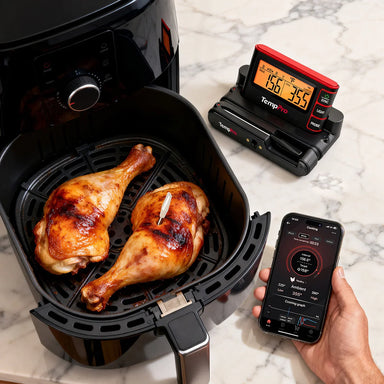
El pastel de carne tiene un margen de cocción estrecho, y la forma más segura de acertar es con un termómetro. Para la carne de res molida, debe apuntar a 160°F en el centro.
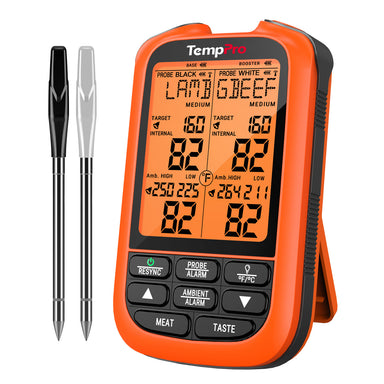
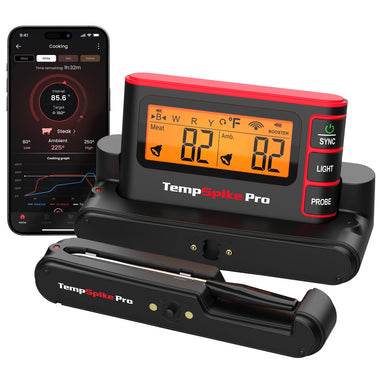
Una sonda inalámbrica como la TempSpike XR TP863B 2000FT facilita este proceso. Su conexión RF alcanza hasta 2000 pies, por lo que puede controlar la temperatura desde cualquier lugar de la casa sin abrir la puerta del horno cada pocos minutos. Menos puertas abiertas significa un calor más constante y sin pasarse de la marca. En lugar de adivinar, sabrá el momento exacto en que su pastel de carne está listo.

6. Vigile también el horno
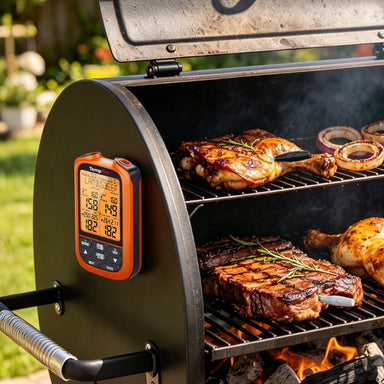
La mayoría de la gente controla la carne y olvida el horno, pero la temperatura del horno es igual de importante. Si el suyo funciona caliente, cocinará el pastel más rápido de lo esperado y lo secará antes de que se dé cuenta.
El TempSpike XR utiliza dos sondas exactamente por esta razón. Una lee el centro del pastel mientras la otra rastrea el calor ambiente dentro del horno. Con ambos números frente a usted, es fácil detectar un horno descontrolado y ajustarlo antes de que arruine la cena.
7. Déjelo reposar
El paso final es el que la gente se salta con más frecuencia, y les cuesta caro. Recién salido del horno, los jugos dentro del pastel aún se están moviendo. Si lo corta inmediatamente, se derramarán sobre la tabla de cortar en lugar de permanecer en la carne.
Deje que repose unos minutos y esos jugos se asentarán de nuevo en el pastel. Cuando finalmente lo corte, obtendrá una rebanada más jugosa, una forma más limpia y un sabor más pleno. Si se salta el reposo, deshará gran parte del cuidado que puso en todo lo demás.
8. Deje que sus herramientas hagan el trabajo
Cocinar pastel de carne debe sentirse controlado, no complicado, y eso es exactamente para lo que está construido el TempSpike XR. No hay una aplicación que descargar ni nada que configurar. Las sondas codificadas por colores hacen obvio qué lectura es cuál, la pantalla es lo suficientemente grande como para verificarla de un vistazo, y el alcance de 2000 pies le permite alejarse mientras se cocina.

Juntos, esos detalles eliminan las conjeturas de la parte que suele salir mal. Una vez que tiene el control de toda la cocción, un pastel de carne consistentemente húmedo deja de ser suerte y comienza a ser una rutina.
Preguntas frecuentes sobre el pastel de carne
P1: ¿Por qué mi pastel de carne sale seco?
Generalmente porque está demasiado cocido, hecho con carne demasiado magra, o ambas cosas.
P2: ¿A qué temperatura debe cocinarse el pastel de carne?
Para la carne de res molida, apunte a una temperatura interna de 160°F.
P3: ¿Necesito un termómetro para el pastel de carne?
Puede arreglárselas sin uno, pero un termómetro es la forma más fiable de evitar cocinarlo en exceso.
P4: ¿Debo cubrir el pastel de carne mientras se cocina?
Depende de la receta. Cubrirlo al principio puede ayudar a retener la humedad.
P5: ¿Cuál es el mayor error al hacer pastel de carne?
Cocinar por tiempo en lugar de por temperatura.


Comentarios
También te puede interesar


Productos recomendados