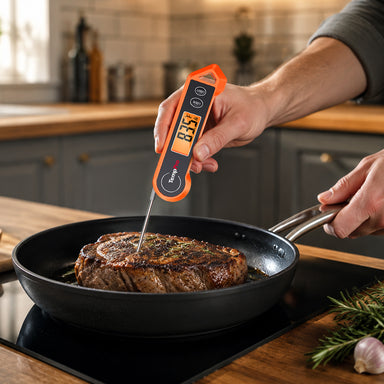
Evita estos 18 errores al usar un termómetro de carne de lectura instantánea


 288 Comments


Cuando cocinas para tu familia, especialmente para los niños, la seguridad alimentaria no es opcional. El pollo poco cocido, las hamburguesas mal asadas o las chuletas de cerdo secas son más que decepcionantes; pueden representar riesgos reales para la salud. Es por eso que muchos cocineros caseros confían en un termómetro de carne de lectura instantánea para asegurarse de que las comidas sean seguras y deliciosas.
Sin embargo, simplemente poseer un termómetro de cocina de lectura instantánea no garantiza resultados perfectos. Muchas personas cometen errores sin saberlo que conducen a lecturas inexactas, alimentos demasiado cocidos o incluso comidas inseguras.
Errores comunes al usar un termómetro de carne de lectura instantánea
En esta guía, analizaremos 15 errores comunes que debe evitar al usar un termómetro de cocina de lectura instantánea, explicaremos por qué son importantes y le mostraremos exactamente cómo usar su termómetro correctamente.
Error 1. No insertar la sonda lo suficientemente profundo
Uno de los errores más comunes es insertar el termómetro de carne de lectura instantánea justo debajo de la superficie de la carne. La capa exterior se calienta más rápido que el centro, por lo que obtendrá una lectura falsamente alta.
Para evitar este error, inserte siempre la sonda en la parte más gruesa de la carne. Para cortes grandes como asados o pollos enteros, empuje la sonda hasta el centro. Si no está seguro, pruebe en varios puntos y use la lectura más baja como guía final.
Error 2. Tocar hueso o grasa
Si la sonda toca hueso, cartílago o grandes bolsas de grasa, la lectura será inexacta. El hueso conduce el calor de manera diferente y puede mostrar una temperatura más alta que la carne real.
Cuando use el termómetro de cocina de lectura instantánea correctamente, coloque la sonda en tejido muscular puro. Evite las capas de grasa visibles y manténgase alejado del hueso.
Error 3: Tocar la sartén o la parrilla
Si la sonda metálica toca una sartén caliente o la parrilla, su termómetro de alimentos de lectura instantánea puede mostrar una temperatura más alta que la carne misma. Eso puede hacerle creer que su comida está lista cuando el interior aún está poco cocido.
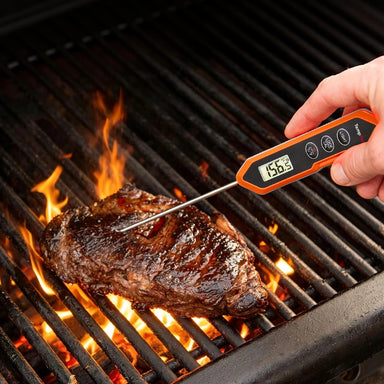
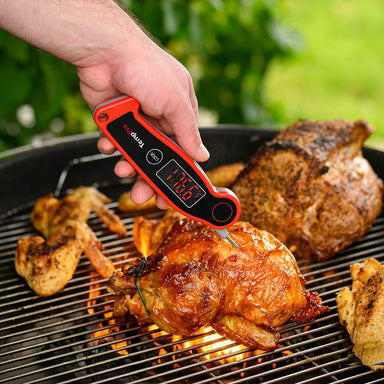
Para evitar esto, mueva suavemente la sonda hasta que sienta que está solo en la carne. En la parrilla, inserte la sonda desde arriba o desde un lado para que no descanse sobre la rejilla.
Error 3: No esperar lo suficiente para una lectura estable
Incluso un termómetro de carne de lectura instantánea rápido necesita uno o dos segundos para medir con precisión. Algunas personas insertan la sonda, miran rápidamente y la sacan antes de que el número se estabilice. Esto puede conducir a lecturas inconsistentes y alimentos poco cocidos.
Para evitar esto, inserte la sonda y espere hasta que los números dejen de cambiar o disminuyan significativamente. En un buen termómetro de cocina de lectura instantánea, esto solo lleva unos segundos. Si el número sigue subiendo, mantenga la sonda en su lugar hasta que se estabilice.
Error 4: Medir demasiado pronto o demasiado tarde
Comprobar la temperatura solo al final, o después de haber cocinado demasiado la comida, no ayuda mucho. Por otro lado, medir demasiado pronto y detener el proceso de cocción demasiado pronto puede dejar la comida poco cocida.
Para evitar este error, comience a comprobar la temperatura unos minutos antes de que crea que la comida podría estar lista. Por ejemplo, si espera que las pechugas de pollo se cocinen en 20 minutos, comience a comprobar a los 15-17 minutos. De esta manera, podrá encontrar el momento perfecto en lugar de pasarse constantemente.
Error 5. No limpiar el termómetro entre usos
La contaminación cruzada es un problema grave, especialmente al preparar comidas para niños. Después de insertar su termómetro de alimentos de lectura instantánea en carne cruda, límpielo a fondo antes de usarlo nuevamente. Use agua caliente con jabón o toallitas con alcohol. Nunca coloque una sonda sucia en alimentos cocidos.
Error 6. Ignorar el tiempo de reposo
Muchas carnes continúan cocinándose después de ser retiradas del fuego. Si mide inmediatamente y sirve de inmediato, los jugos pueden derramarse y la textura puede verse afectada. Después de alcanzar la temperatura segura, deje reposar la carne. Por ejemplo, el cerdo debe reposar al menos 3 minutos después de alcanzar los 145°F. Durante este tiempo, la temperatura interna puede aumentar ligeramente.
Error 7: Usarlo como un termómetro de inserción permanente
Un termómetro de alimentos de lectura instantánea está diseñado para insertarse brevemente y luego retirarse. Algunas personas lo dejan accidentalmente en el horno o en la parrilla, tratándolo como un termómetro de carne de inserción permanente. Esto puede dañar el dispositivo si no está diseñado para una exposición continua a altas temperaturas.
Para evitar este error, siempre lea las instrucciones de su termómetro de carne. Con un modelo de lectura instantánea, insértelo solo cuando quiera tomar una lectura, luego retírelo inmediatamente. Si necesita un monitoreo constante para asados o ahumadores de cocción lenta, use un termómetro de carne de inserción permanente dedicado además de su modelo de lectura instantánea.
Error 8. No calibrar el termómetro
Incluso el mejor termómetro de carne puede perder precisión con el tiempo. Para probar la calibración, use el método del agua helada: llene un vaso con hielo y agua, espere 30 segundos y luego inserte la sonda. Debería marcar 32°F. Si no lo hace, ajústelo según las instrucciones del fabricante.

Error 9. Confiar en el color en lugar de la temperatura
Muchas personas asumen que el pollo está listo cuando se ve blanco o que las hamburguesas son seguras cuando están marrones por dentro. Esto no es fiable.
Confirme siempre la cocción de los alimentos utilizando un termómetro de cocina de lectura instantánea. El color no es un indicador seguro.
Error 10. Comprobar solo un punto
La temperatura puede variar en diferentes áreas del mismo corte de carne. Inserte el termómetro de cocina de lectura instantánea en varios puntos, especialmente para cortes gruesos. Utilice la lectura más baja para determinar la cocción.
Error 11. Medir alimentos finos incorrectamente
Los alimentos finos como hamburguesas, filetes de pescado o pechugas de pollo requieren una técnica especial. Inserte la sonda desde el lado en lugar de desde la parte superior. Esto permite que el sensor se asiente completamente dentro de la carne para una lectura precisa.
Error 12: Cortar la carne para comprobar el punto de cocción
Algunos cocineros abren la carne y luego insertan el termómetro de carne de lectura instantánea en la superficie cortada. Esto libera muchos jugos y puede secar la carne. La superficie expuesta también se enfría más rápido, lo que puede cambiar ligeramente la lectura.
Para evitar este error, inserte el termómetro de lectura instantánea para cocinar en la carne intacta siempre que sea posible. Para filetes, pechugas de pollo o chuletas de cerdo, inserte desde el lado hacia el centro. Para asados, inserte desde el extremo hacia la parte más gruesa. Solo corte la carne después de estar seguro de que ha alcanzado la temperatura correcta.
Error 13. Olvidarse de secar la sonda
La humedad en la sonda puede afectar ligeramente las lecturas y puede introducir contaminación. Después de limpiar, seque la sonda con una toalla limpia antes de usarla.
Error 14: Ignorar la cocción residual
La cocción residual significa que la temperatura interna de los alimentos continúa aumentando durante varios minutos después de retirarlos del fuego. Si cocina un asado o un filete hasta su temperatura objetivo final en la parrilla o en el horno, puede terminar demasiado cocido después de reposar.
Para evitar este error, planifique un ligero aumento de temperatura después de cocinar. Para cortes de carne más grandes, retírelos del fuego unos pocos grados por debajo de su objetivo final y déjelos reposar. Use su termómetro de cocina de lectura instantánea para rastrear tanto la temperatura cuando retira los alimentos del fuego como después de unos minutos de reposo.
Error 15. No guardarlo correctamente
Dejar el termómetro de carne de lectura instantánea cerca de un quemador caliente, en un estante de la parrilla o en condiciones húmedas puede dañar los componentes electrónicos y hacer que las lecturas sean menos precisas con el tiempo. El trato brusco o la caída del termómetro también pueden afectar su rendimiento.
Para evitar esto, guarde su termómetro en un cajón, colgado o en un estuche protector lejos del calor directo o la humedad. Manéjelo con cuidado y evite colocarlo cerca de llamas abiertas o en lugares muy calientes durante largos períodos.
Error 16: No leer la pantalla claramente
A veces, las personas leen mal la pantalla debido a la mala iluminación, los números pequeños o los reflejos. Si tiene prisa o intenta leer en un ángulo incómodo sobre una parrilla caliente, es fácil confundir 145°F con 135°F.
Para evitar esto, elija un termómetro con una pantalla clara, retroiluminada y dígitos grandes. Al tomar una lectura, colóquese de manera que pueda ver la pantalla de frente. Si está oscuro o humeante, encienda la retroiluminación si su termómetro la tiene. Tómese un segundo extra para verificar el número antes de tomar una decisión.

Error 17. Ignorar el mantenimiento de la batería
Una batería débil puede causar una respuesta lenta o lecturas incorrectas. Reemplace las baterías según sea necesario y tenga repuestos a mano.
Error 18: No conocer la temperatura segura
Incluso cuando las personas usan un termómetro de cocina de lectura instantánea, a veces no saben qué temperatura buscan. Adivinar la temperatura objetivo anula el propósito de tener un termómetro.
Para evitar este error, aprenda las temperaturas internas mínimas seguras básicas recomendadas por las pautas de seguridad alimentaria. Por ejemplo, las aves de corral generalmente se cocinan a 165 °F, la carne molida a al menos 160 °F y la mayoría de los cortes enteros de carne de res o cerdo se pueden disfrutar de manera segura a temperaturas más bajas según su preferencia. Consulte las tablas del USDA o tenga una guía de temperatura en su cocina. Al usar un termómetro de cocina de lectura instantánea, confirme siempre que está alcanzando la temperatura objetivo correcta.
Por qué el TempPro TP620 es una elección inteligente
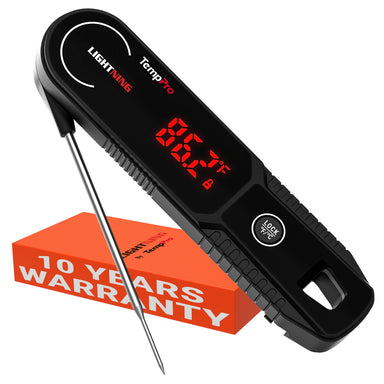
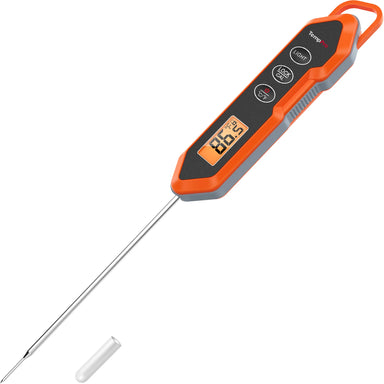
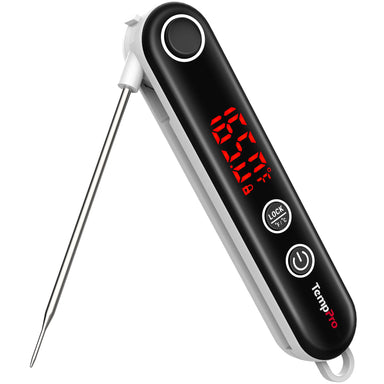
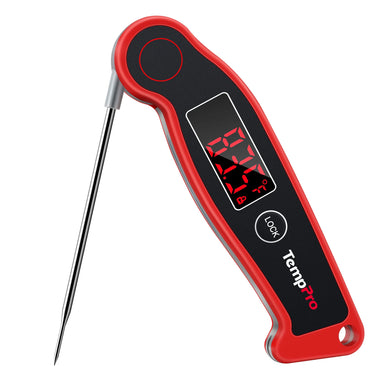
Si desea evitar estos errores, tener un termómetro de carne de lectura instantánea de alta calidad marca una gran diferencia. El termómetro de carne de lectura instantánea TempPro TP620 está diseñado para familias que valoran la seguridad, la precisión y la comodidad.
Características clave
- Tiempo de respuesta ultrarrápido: El TP620 ofrece lecturas en aproximadamente 2-3 segundos. Esto significa menos pérdida de calor y controles de cocción más rápidos.
- Alta precisión: Con sensores de temperatura precisos, proporciona lecturas fiables con una precisión de ±0.9°F, lo que le ayuda a cocinar carne de forma segura sin cocción excesiva.
- Pantalla retroiluminada grande: La pantalla brillante y fácil de leer facilita la comprobación de temperaturas incluso en una cocina con poca luz o en una barbacoa nocturna.
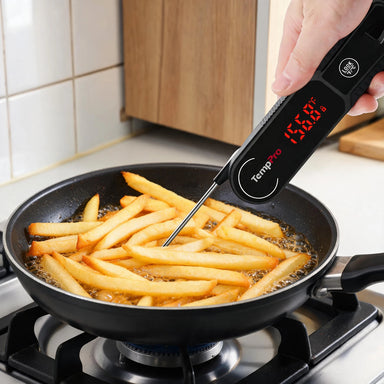
- Pantalla giratoria automática de 180°: Lea la temperatura desde cualquier ángulo, perfecta para esas posiciones incómodas sobre una estufa caliente.
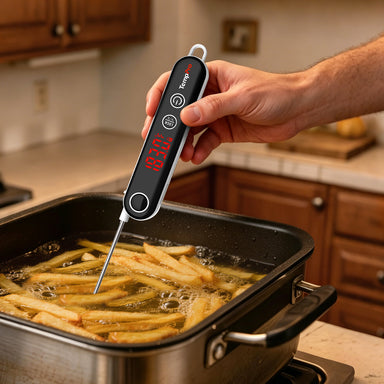
- Disponible para diferentes estilos de cocción: Funciona para barbacoas, asados, fritos, ahumados y más.
- Diseño impermeable: La limpieza fácil bajo el grifo ayuda a mantener la higiene, especialmente importante al preparar alimentos para niños.
- Sonda plegable para mayor seguridad: El diseño de sonda plegable protege el sensor y hace que el almacenamiento sea seguro y compacto.

¿Quién debería usar el TempPro TP620?
El TempPro TP620 es ideal para:
- Padres que cocinan para niños pequeños
- Familias preocupadas por la salud
- Parrilleros de patio trasero
- Anfitriones de fiestas
- Cocineros principiantes que quieren confianza
- Chefs caseros experimentados que valoran la precisión
Ya sea que esté asando hamburguesas en verano o un pavo para el Día de Acción de Gracias, este termómetro de alimentos de lectura instantánea le brinda tranquilidad.
Consideraciones finales
Cocinar para su familia debe ser una alegría, no una fuente de estrés. Un termómetro de carne de lectura instantánea es una de las herramientas más sencillas que mejora drásticamente tanto la seguridad como el sabor. Pero debe usarse correctamente. Al evitar estos 18 errores comunes e invertir en una herramienta confiable como el termómetro de carne de lectura instantánea TempPro TP620, puede servir comidas que sean:
- Seguras
- Jugosas
- Perfectamente cocidas
- Sin preocupaciones
Para las familias que se preocupan profundamente por la salud, la calidad y el sabor, dominar el uso correcto de un termómetro de cocina de lectura instantánea es un pequeño paso que marca una gran diferencia. Cocinar de forma segura es cocinar de forma inteligente y su familia no merece menos.


Comentarios
También te puede interesar


Productos recomendados