10 consejos sobre el brisket que los pitmasters usan para hacer la barbacoa perfecta


 288 Comments


La carne de res separa al "parrillero ocasional" de la persona que realmente sabe lo que está haciendo. Esto se debe a que la carne de res no presenta mucha complejidad, sino cada paso en falso. No puedes apurarla. No puedes fingir. No puedes adivinar cómo hacerla. Un pequeño error en el control de la temperatura de los alimentos, el tiempo y/o el manejo de la humedad se muestra en el producto terminado. Por lo tanto, un gran número de personas terminan con una carne de res que se ve fantástica por fuera y que se deshace de manera inadecuada, está seca en algunos puntos o termina siendo muy dura en otros.
En pocas palabras, no hay duda de si la carne de res es gratificante de controlar y castigadora de adivinar. Una vez que aprendes cómo la cocinan los maestros parrilleros, el proceso se vuelve significativamente más predecible.
Consejos útiles para asar carne de res
Elige un mejor corte de carne de res
No todos los cortes de carne de res se cocinan de la misma manera. Empezar con el equivocado lo hace todo más difícil.
Una buena carne de res tendrá un marmoleado visible (las vetas blancas) y será relativamente suave y flexible al levantarla. La flexibilidad suele significar que la carne de res tiene una mejor distribución de la grasa. La grasa protege la carne durante el largo proceso de cocción. Una buena carne de res tendrá tanto una punta como una porción plana. Idealmente, elegirías un corte que equilibre ambas porciones, en lugar de un corte que se incline hacia un lado u otro.
Seleccionar un mejor corte de carne no garantiza el éxito, pero elimina uno de los principales obstáculos antes de comenzar.
Recorta para la funcionalidad, no para la apariencia
Recortar un brisket no es simplemente para que parezca más limpio. Es para afectar cómo se cocina.
- Hay dos extremos al recortar:
- Dejar demasiada grasa impide que el condimento penetre en la carne y ralentiza la transferencia de calor
- Recortar demasiado agresivamente elimina la capa protectora y causa sequedad
El objetivo es encontrar un equilibrio. Deja suficiente grasa para proteger la carne y recorta la grasa excesiva que nunca se derretirá.
La cantidad de grasa que dejes afectará la uniformidad con la que se cocina tu brisket durante varias horas.
Lento y a baja temperatura supera a rápido y a alta temperatura
Quizás el error más común que cometen los cocineros de brisket novatos es intentar cocinar el brisket más rápido.
El brisket no está diseñado para cocinarse rápidamente. Cocinar un brisket a una temperatura más alta puede reducir el tiempo total de cocción, pero comprometerá tanto la textura como la humedad. Cuando se cocina a fuego lento y bajo, el tejido conectivo se descompone lentamente. Esto es lo que le da al brisket sus características tiernas distintivas.
Mantener temperaturas constantes durante un período prolongado de tiempo es lo que produce un resultado confiable.
Controla tanto las temperaturas internas como las ambientales
Monitorear solo la temperatura interna de la carne es insuficiente. Monitorear la temperatura alrededor del brisket es igualmente importante.
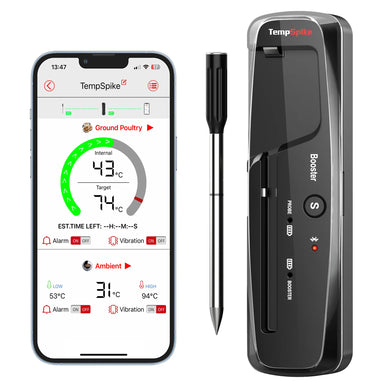
Aquí es donde el Termómetro de Carne Wi-Fi TempSpike Pro entra en juego. Con la capacidad de enviar temperaturas de alimentos y temperaturas ambiente a través de Wi-Fi y Bluetooth, puedes monitorear tu brisket desde cualquier lugar, manteniendo una conexión constante. Independientemente de si estás en interiores o exteriores, siempre tendrás acceso a datos en tiempo real.
El TempSpike Pro incluye tres sondas internas y una sonda ambiental. Esta combinación te proporciona una vista completa de cómo se está cocinando tu brisket. En lugar de depender de una sola lectura, recibirás múltiples lecturas de diferentes ubicaciones, lo que te proporcionará una representación más precisa de la uniformidad con la que se está cocinando tu brisket. Evitar una cocción desigual es más fácil con esta mayor visibilidad.
Los datos en tiempo real, las alertas y las estimaciones de cocción te brindan la capacidad de confiar en información precisa, eliminando las conjeturas. El TempSpike Pro te proporciona la visibilidad necesaria para producir constantemente un buen brisket.

Comprende el estancamiento y no entres en pánico
En algún momento durante la cocción, la temperatura de tu brisket dejará de subir. Esto se conoce como estancamiento.
El estancamiento ocurre cuando la humedad que se evapora de la superficie del brisket enfría la carne. Muchos cocineros novatos creen que algo ha salido mal e intentan subir el fuego. En la mayoría de los casos, subir el fuego solo causará más problemas.
Se requiere paciencia. Deja que el estancamiento pase de forma natural o usa el envoltorio si es necesario. Comprender esta fase elimina la necesidad de realizar cambios innecesarios que pueden afectar negativamente el resultado final.
Utiliza el envoltorio según sea necesario
Envolver el brisket no es obligatorio, sin embargo, puede ser beneficioso.
El envoltorio ayuda a superar el estancamiento y a retener la humedad. Sin embargo, el envoltorio también afecta el desarrollo de la corteza. El uso del momento adecuado te proporciona control tanto sobre la textura como sobre la velocidad de cocción de tu brisket.
El momento es clave:
- Si envuelves demasiado pronto, sacrificarás la corteza
- Si esperas demasiado, te perderás los beneficios del envoltorio
El TempSpike Pro te proporciona la capacidad de monitoreo en tiempo real para determinar cuándo es el momento de envolver tu brisket.
Cocina según la temperatura, no según el tiempo
Cada brisket se cocina de manera diferente. Hay numerosos factores que influyen en el tiempo que tarda en cocinarse, incluyendo:
- El tamaño del brisket
- La cantidad de grasa dentro del brisket
- Las condiciones del ahumador
Por eso, cocinar basándose en el tiempo produce resultados poco fiables.
En lugar de cocinar según el tiempo, cocina hasta que se alcance la temperatura interna deseada. El TempSpike Pro proporciona lecturas de temperatura extremadamente precisas con una desviación máxima de ±0,5 °F. Con el termómetro de carne inalámbrico TempSpike Pro, puedes basar tus decisiones en datos factuales, en lugar de estimaciones. Cocinar según la temperatura elimina una de las mayores variables asociadas con la cocción del brisket.

Deja reposar tu carne de res el tiempo suficiente
El reposo no es opcional. Es parte del proceso de cocción. Después de varias horas de cocción, los jugos internos de la carne de res requieren tiempo para redistribuirse. Retirar la carne de res demasiado pronto hace que estos jugos fluyan fuera de la carne, lo que resulta en un acabado más seco de lo deseado.
Proporcionar a la carne de res tiempo suficiente para reposar estabiliza la carne. Esta transición de una buena cocción a una excelente cocción es lo que proporciona el reposo.
Utiliza el equipo correcto para mejorar la consistencia
El brisket es un proyecto de cocción prolongada. Requiere atención constante. Por lo tanto, no debes depender del monitoreo y ajuste manual de la temperatura.
El TempSpike Pro está diseñado específicamente para proyectos de cocción prolongada como el brisket. La duración de la batería del TempSpike Pro está diseñada para soportar períodos prolongados. Además, el TempSpike Pro tiene un diseño modular que permite configuraciones de sonda flexibles. Las sondas codificadas por colores te permiten monitorear múltiples secciones del brisket, independientemente de que el humo oscurezca tu visibilidad.
Al confiar en:
- Datos en tiempo real
- Alertas
- Tiempos de cocción estimados
Eliminas el estrés asociado con el monitoreo y ajuste constante, lo que mejora tu capacidad para proporcionar resultados consistentes.
Prioriza la repetibilidad sobre la perfección
Los pitmasters no están adivinando. Están repitiendo un proceso que funciona.
El objetivo final no es crear una carne de res perfectamente cocida. El objetivo final es producir constantemente buena carne de res. Esto solo es posible cuando mantienes el control sobre los elementos que dictan la calidad, que son la temperatura, el tiempo y la consistencia.
Una vez que eliminas la dependencia de las conjeturas y utilizas datos precisos, la carne de res deja de ser impredecible. Se convierte en algo que puedes ejecutar con confianza.
Preguntas frecuentes sobre cómo asar carne de res
P1. ¿A qué temperatura debe cocinarse la carne de res?
La mayoría de los briskets se terminan entre 195 y 205 °F, dependiendo de la textura y la preferencia.
P2. ¿Por qué la carne de res se vuelve dura?
Generalmente por cocción insuficiente o por no dejar suficiente tiempo para que el tejido conectivo se descomponga.
P3. ¿Necesito un termómetro inalámbrico para la carne de res?
No es obligatorio, pero mejora mucho la consistencia al permitir un monitoreo continuo sin abrir el ahumador.
P4. ¿Cuánto tiempo debe reposar la carne de res después de cocinarla?
Al menos 1 hora, pero reposos más largos pueden mejorar aún más los resultados.
P5. ¿Cuál es el mayor error al cocinar carne de res?
Confiar en el tiempo en lugar de la temperatura, lo que lleva a resultados inconsistentes.
Consideraciones finales
La carne de res no es complicada. Es simplemente implacable. Si intentas acelerar el proceso de cocción o adivinar cómo hacerlo, se revelará. Sin embargo, una vez que estableces el control sobre la temperatura, manejas el tiempo de manera efectiva y utilizas el equipo adecuado, el proceso se vuelve mucho más manejable.
El Termómetro de Carne Wi-Fi TempSpike Pro te permite establecer ese control al proporcionar retroalimentación continua, conectividad constante y lecturas de temperatura precisas durante todo el proceso de cocción. Una vez que alcanzas este nivel de control, la carne de res se convierte menos en un desafío y más en un proceso repetible.


Comentarios
También te puede interesar


Productos recomendados