Temperatura interna del char siu: Cerdo asado chino perfecto en casa


 288 Comments


Prepara un char siu cantonés perfectamente dulce, pegajoso y tierno en casa. El secreto es la temperatura. Descubre la cifra exacta en la que la mayoría de los cocineros se equivocan.
Si alguna vez has pasado por delante de una barbacoa china en el Barrio Chino, ya conoces el char siu (叉燒), aunque no sepas su nombre. Es ese cerdo asado de color carmesí y aspecto lacado que cuelga sobre el mostrador, cortado al momento para servir sobre arroz o metido en un esponjoso bao. El nombre significa literalmente "asado al tenedor" en cantonés, un guiño al antiguo método de ensartar tiras de cerdo marinado en tenedores largos y asarlas sobre fuego abierto.

Para ser un plato con tanta mística de restaurante, el char siu es sorprendentemente fácil de preparar en un horno doméstico. El adobo se basa sobre todo en ingredientes de despensa. La técnica es sencilla. Y, sin embargo, los cocineros caseros fallan constantemente. Sacan un cerdo que está seco y fibroso o chamuscado por fuera y crudo por dentro.
La diferencia entre un char siu digno de restaurante y una decepción triste y correosa suele reducirse a una sola cosa: la temperatura interna. Si aciertas con la cifra adecuada para tu corte de carne, el resto de la receta es muy permisiva. Si te equivocas, no habrá adobo en el mundo que pueda salvarlo. Pero con la tecnología actual, la temperatura se puede controlar con precisión: un termómetro de carne inalámbrico elimina las conjeturas por completo.
Primero vamos a repasar el plato, el sabor y las temperaturas exactas que convierten un trozo de cerdo en el auténtico manjar.
Tabla de contenidos
Una breve historia del Char Siu
La gran cocina nunca es solo técnica. Cuando conoces la historia detrás de un plato, lo preparas con un poco más de cuidado, y de alguna manera eso se nota en el plato.
Char siu (叉燒) significa "asado al tenedor", en referencia al antiguo método de ensartar cerdo sazonado en tenedores largos y asarlo al fuego, una técnica con raíces en la cocina china que se remonta a miles de años atrás. No siempre fue dulce: las primeras versiones eran saladas y con predominio de la soja, hasta que los cocineros empezaron a glasear el cerdo con miel o maltosa y a asarlo una segunda vez, en parte para deleitar a los niños en la mesa. Ese glaseado brillante y con bordes de caramelo se convirtió en la versión que conquistó al mundo.
El corte también cambió, pasando del famoso cerdo graso de mediados de siglo en Hong Kong al cerdo más magro y veteado (梅頭, mui tau) que todavía se ve colgado en los escaparates de las asaderías hoy en día. Durante generaciones, el char siu fue un pequeño lujo. En tiempos difíciles, tenerlo en la mesa significaba que era un buen día, y llegó a ser tan querido que se integró en el ritmo de la vida familiar cantonesa. Desde los puestos de los mercados húmedos hasta las cocinas con estrellas Michelin, sigue siendo el plato que sabe a hogar.
Cuándo prepararlo
El char siu es uno de esos platos raros que encaja igual de bien como cena entre semana que como estrella de una cena con invitados. Algunas de mis formas favoritas de servirlo:
- Sobre arroz, con un chorrito del glaseado reservado y un poco de bok choy blanqueado: este es el clásico char siu fan que a todos les encanta.
- En panes bao o bollos al vapor, lo que lo convierte en un aperitivo que gusta a todo el mundo.
- Picado en arroz frito, lo mein o sopa de fideos, el char siu es el arma secreta en innumerables platos cantoneses, y se congela maravillosamente.
Como el tiempo de cocción activo es inferior a una hora, los resultados superan con creces el esfuerzo. La única habilidad real que requiere es el control de la temperatura.

Por qué falla el Char Siu y cómo lo soluciona la temperatura
Antes de pasar a la receta, enumeremos las tres formas en las que suele fallar el char siu, porque cada una de ellas es un problema de temperatura disfrazado.
- El cerdo queda seco. Esta es la queja número uno, y suele significar que la carne se sobrecocinó. El cerdo pierde humedad rápidamente una vez que supera su temperatura objetivo, y no se puede recuperar esa humedad. La solución no es más adobo. Debes conocer tu temperatura exacta para retirarlo del fuego y detener la cocción ahí.
- El glaseado se quema antes de que el interior esté listo. El adobo del char siu está cargado de azúcar, y el azúcar se chamusca a altas temperaturas de horno. Si cocinas solo por tiempo o abres el horno constantemente para comprobarlo, o bien carbonizarás el exterior hasta que amargue, o lo sacarás demasiado pronto. La solución es controlar la temperatura interna de forma continua para saber exactamente cuándo barnizar y cuándo retirar, sin tener que jugar a las adivinanzas frente a la puerta del horno.
- Elegiste el corte equivocado y lo cocinaste como si fuera otro. Este es el punto más engañoso. El char siu se puede preparar con varios cortes, y cada uno tiene una temperatura objetivo completamente distinta. Trata un hombro de cerdo graso como un solomillo magro (o viceversa) y quedarás decepcionado sin importar lo bueno que sea tu adobo.
(Ese tercer punto merece su propia sección, porque es lo más útil de todo este artículo).
Guía de temperatura interna del Char Siu
Si te llevas algo de este artículo, que sea esto: la temperatura ideal para retirar la carne del fuego depende totalmente del corte de cerdo que elijas. El mínimo de seguridad recomendado por el USDA para cortes enteros de cerdo es de 145°F (63°C) seguido de un reposo de 3 minutos. Todos los objetivos de la guía siguiente cumplen o superan este valor. Las diferencias no son por sacrificar la seguridad en favor de la textura, sino por conseguir la mejor textura una vez que ya estás en la zona segura.
|
Corte de cerdo |
Temperatura de retiro |
¿Por qué? |
|
Solomillo / lomo de cerdo (magro, moderno, rápido) |
145°F (63°C) + 3 min de reposo |
Muy poca grasa. Un grado más allá de esto y se seca rápidamente. |
|
Hombro / cuello / presa de cerdo (la elección tradicional) |
160~170°F (71~77°C) |
Alto contenido de colágeno y grasa. El tejido conectivo necesita fundirse para volverse tierno y jugoso. |
|
Panceta de cerdo (la versión decadente) |
195~203°F (90~95°C) |
Mucha grasa para fundir; necesita alcanzar una temperatura mucho más alta para volverse sedosa en lugar de gomosa. |
¿Por qué una diferencia tan grande? Todo se reduce a la grasa y el colágeno. Un solomillo magro casi no tiene nada que fundir, así que lo retiras al mínimo de seguridad para mantenerlo jugoso. Un hombro o cuello de cerdo tradicional, el corte que realmente usan la mayoría de los asadores, está lleno de colágeno que solo se funde en gelatina a partir de los 160°F, que es exactamente lo que da al auténtico char siu esa textura tierna pero fácil de cortar. Si subes la temperatura de un corte graso, mejora; si haces lo mismo con un corte magro, se arruina.
Las cifras de la tabla anterior son temperaturas internas, leídas por una sonda de termómetro de carne insertada profundamente en la carne, donde se mantiene por debajo de los 212°F (100°C). La superficie es otra historia: para que el glaseado azucarado se caramelice en esa costra lacada y carbonizada, el exterior debe calentarse mucho más, superando aproximadamente los 320°F (160°C), que es la razón por la que el horno funciona a una temperatura más alta, alrededor de 425–475°F (218–246°C). Así, el interior sube suavemente hasta su temperatura ideal mientras el exterior se dora y carameliza.
En resumen: primero decide qué corte vas a usar, y luego cíñete a su temperatura objetivo. Esa única decisión es lo que separa un char siu de calidad de restaurante de uno seco.
Cómo preparar Char Siu
Aquí tienes un método de horno fiable diseñado para alcanzar tus objetivos. Utiliza hombro/cuello de cerdo, la opción tradicional y más permisiva.
Ingredientes
Para el cerdo
900 g (2 lb) de paleta de cerdo deshuesada (a menudo vendida como paletilla), cortada en tiras largas de unos 4 a 5 cm de grosor. Puedes dejar algo de grasa para mantener la carne jugosa. Para una opción más magra, el solomillo de cerdo también funciona bien.
Para el adobo
- 60 ml (1/4 taza) de salsa hoisin: la base del sabor; ahora se encuentra en la sección asiática de la mayoría de los supermercados.
- 3 cdas. de salsa de soja.
- 3 cdas. de miel.
- 2 cdas. de azúcar moreno oscuro: para un glaseado más rico y acaramelado.
- 1 cda. de vino Shaoxing (o jerez seco, un sustituto fácil de supermercado).
- 1 cda. de salsa de ostras (opcional, para una mayor profundidad salada).
- 1 cda. de aceite de sésamo tostado.
- 4 dientes de ajo, picados finamente.
- 1 cdta. de jengibre fresco rallado.
- 1 cdta. de polvo de cinco especias chinas.
- 1 cdta. de vinagre de arroz (opcional, para un toque de viveza).
- Para el color rojo clásico (opcional): unas gotas de colorante alimentario rojo, o bien, para un sabor más tradicional y profundo, 1-2 cubos de tofu rojo fermentado (南乳) machacados, que encontrarás en tiendas asiáticas.
Para el glaseado
- 3 cdas. de adobo, reservadas antes de añadir la carne cruda.
- 2 cdas. de miel.
Método
- Prepara el cerdo: Corta el cerdo en tiras largas de unos 4 a 5 cm de grosor, dejando algo de grasa. Pincha las tiras por todas partes con un tenedor. Esto abre la carne para que el adobo penetre profundamente en lugar de quedarse solo en la superficie.
- Mezcla el adobo: En un cuenco, bate el hoisin, la salsa de soja, la miel, el azúcar moreno, el vino Shaoxing, la salsa de ostras, el aceite de sésamo, el ajo, el jengibre, las cinco especias y el vinagre hasta obtener una mezcla homogénea (añade aquí el tofu rojo o el colorante si los vas a usar). Reserva 3 cucharadas en un tarro aparte para el glaseado antes de que la carne cruda toque el adobo. Nunca barnices después con adobo que haya estado en contacto con carne cruda.
- Marina: Cubre bien las tiras de cerdo con el adobo restante, tapa y refrigera durante al menos 8 horas; 24 horas es lo ideal. Dale la vuelta al cerdo una vez a mitad de tiempo para que se impregne uniformemente por todos los lados. De aquí es de donde provienen el sabor y el color, así que no te apresures.
- Atempera y precalienta: Saca el cerdo de la nevera una hora antes de cocinarlo. Precalienta el horno a 425°F (218°C) con una rejilla en el tercio superior. Cubre una bandeja de horno con papel de aluminio, coloca una rejilla encima y vierte aproximadamente una taza de agua en el fondo de la bandeja: atrapará los goteos azucarados para que no se quemen ni produzcan humo, y mantendrá el aire húmedo. Los hornos domésticos suelen variar en temperatura, así que este es un buen momento para confirmar la temperatura real con el sensor ambiental de tu termómetro de carne inteligente.
- Asa y monitorea: Coloca las tiras en la rejilla dejando espacio entre ellas e inserta la sonda de tu termómetro inalámbrico en la tira más gruesa. Asa sin tocar durante los primeros 20–25 minutos.
- Mezcla el glaseado: Mientras se asa el cerdo, mezcla las 3 cucharadas de adobo reservadas con las 2 cucharadas de miel hasta que quede suave y sea fácil de aplicar con brocha. (Si está muy espeso, aligéralo con una cucharadita de agua caliente).
- Barniza la carne cada 8-10 min: Cuando la temperatura interna alcance los 145°F, unta generosamente el glaseado sobre el cerdo, da la vuelta a cada tira y unta el otro lado. Gira la bandeja 180° para que el color sea uniforme. Sigue asando, barnizando cada 8–10 minutos. Observa con atención: el glaseado azucarado pasa de caramelizado a quemado en menos de un minuto.
- Toque final y retiro: En los últimos minutos, aplica una capa fina de miel pura sobre las tiras para ese acabado brillante y lacado. Para la paleta de cerdo, retira cuando alcance los 160–170°F (71–77°C). ¿Quieres bordes más oscuros y carbonizados? Activa el grill durante 1–2 minutos, pero no te alejes; es aquí donde el char siu suele arruinarse.
- Reposa, corta y sirve: Deja que el cerdo repose unos 10 minutos para que los jugos se redistribuyan, luego córtalo en sentido contrario a la fibra en piezas de unos 0,6 cm. Sirve sobre arroz al vapor con una verdura verde rápida (bok choy, brócoli o judías verdes funcionan bien) y rocía con cualquier resto de glaseado.

Personalízalo: el char siu es increíblemente versátil. Mételo en bollos bao, pícalo para un arroz frito o lo mein, añádelo al ramen o rellena un sándwich. Si quieres un toque picante, añade una cucharadita de Sriracha o chile crujiente al glaseado.
Las herramientas que hacen infalible el Char Siu
Fíjate cuántos de los pasos anteriores dependen de una temperatura, no de un temporizador. Barnizar a 145°F. Retirar a 160–170°F. No dejar que el glaseado se queme. Ese es exactamente el problema que un buen termómetro está diseñado para resolver. Y para el char siu, dos herramientas de TempPro cubren cada paso.
Monitorea sin usar las manos: TempPro TempSpike Plus TP970
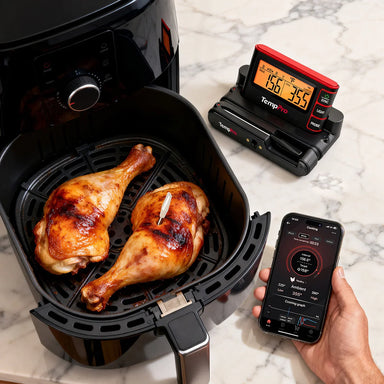
Lo más difícil del char siu es que no puedes descuidarlo, porque el glaseado azucarado se quema en segundos, pero cada vez que abres el horno para comprobarlo, la temperatura baja y se interrumpe la caramelización. Un termómetro de carne inalámbrico TempPro TempSpike Plus TP970 resuelve ambos problemas a la vez. Insertarás la sonda sin cables una sola vez, cerrarás el horno y lo monitorearás todo desde tu teléfono:
- Observa el aumento de temperatura interna en tiempo real: Sin abrir la puerta del horno, sin adivinar.
- Configura alarmas en la aplicación según tus objetivos: Una a los 145°F para recordarte barnizar, otra a la temperatura de retiro para que nunca te pases y acabes con carne seca y fibrosa.
- Controla la temperatura del horno (ambiental) junto a la carne: Podrás detectar si tu horno ajustado a "475°F" está realmente funcionando a 430°F, que es la diferencia exacta que quema el glaseado y seca el cerdo.
- Aléjate para preparar el arroz o poner la mesa: Con un alcance de hasta 180 metros, recibirás una notificación en el momento en que tu char siu alcance la temperatura ideal.
La sonda TempSpike Plus está diseñada precisamente para este tipo de cocción a alta temperatura, manejando el calor del horno y la parrilla con facilidad. Por lo tanto, el mismo termómetro TempPro que perfecciona tu char siu también sirve para tus asados, carnes ahumadas y pavo navideño.

Verifica antes de cortar: el termómetro de lectura instantánea TempPro TP620
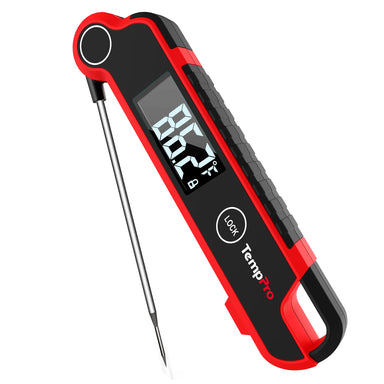
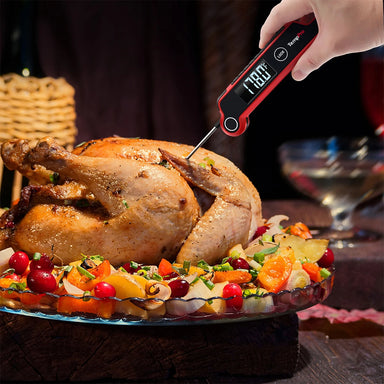
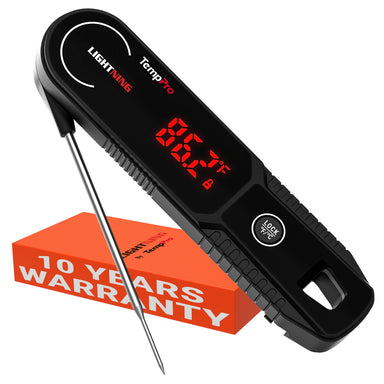
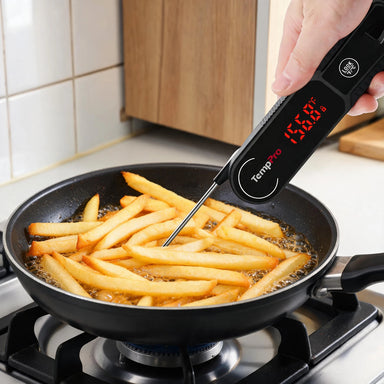
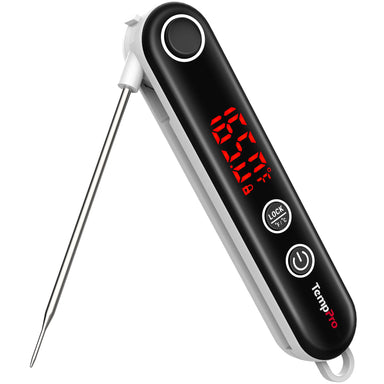
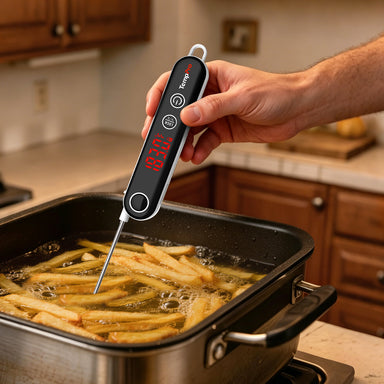
Una sonda fija se coloca en un solo lugar. Pero las tiras de char siu pueden cocinarse de forma desigual, y lo último que quieres es cortar y encontrar un centro frío y poco hecho. Ahí es donde un termómetro de lectura instantánea rápido se gana su lugar. Antes de retirar el cerdo, realiza una comprobación rápida en varios puntos con un termómetro de lectura instantánea TempPro TP620. Lee en 2–3 segundos con una precisión de ±0.9°F, por lo que confirmas que la parte más fría de la carne ha alcanzado tu objetivo. Sonda para monitorear, lectura instantánea para verificar: juntos eliminan cualquier incertidumbre.

Obtén el set completo por menos
El char siu recompensa la precisión, y la precisión es exactamente lo que TempPro está diseñado para brindarte. Para disfrutar de la experiencia completa con manos libres, combina el termómetro de carne inalámbrico TempSpike Plus TP970 con el termómetro de carne de lectura instantánea TP620. La sonda inalámbrica monitorea tu cocción de principio a fin, y la lectura instantánea confirma cada tira antes de cortar. Juntos son todo lo que necesitas para perfeccionar el char siu, los asados festivos, la barbacoa y las cenas cotidianas; además, son un regalo ideal para el cocinero de tu vida. (Consejo: TempPro suele ofrecer ambos como un set con descuento).


Comentarios
También te puede interesar


Productos recomendados