Cómo elegir el termómetro y el higrómetro para reptiles


 288 Comments


Para los cuidadores de reptiles, el verano presenta un conjunto único de desafíos. El uso de unidades de aire acondicionado interiores elimina naturalmente la humedad del aire, creando un ambiente interior sorprendentemente árido. Por el contrario, las intensas olas de calor exterior pueden atrapar aire estancado y húmedo en habitaciones sin un control climático adecuado.
Los reptiles son ectotérmicos, lo que significa que dependen completamente de su entorno externo para regular su temperatura corporal y sus niveles de hidratación. Cuando las condiciones de su habitación interior cambian, el microclima dentro de su terrario cambia con ellas.
Para asegurar que sus mascotas prosperen durante estos meses calurosos, manejar el equilibrio entre el calor y la humedad es absolutamente primordial. Desglosaremos exactamente por qué el control ambiental es tan importante en este momento, qué características buscar en un termómetro e higrómetro para reptiles, y destacaremos una herramienta innovadora que simplifica increíblemente la gestión del hábitat en verano.
Por qué el control de la temperatura y la humedad es importante para los reptiles
A diferencia de los mamíferos, los reptiles no pueden sudar para refrescarse ni jadear eficazmente para eliminar el exceso de calor sin perder cantidades peligrosas de humedad corporal. Cada función fisiológica que poseen, desde digerir su desayuno hasta mudar su piel, está impulsada por el ambiente.
El factor temperatura
Los reptiles son ectotérmicos, lo que significa que no pueden producir su propio calor corporal. En la naturaleza, se mueven entre zonas soleadas para tomar el sol y áreas sombreadas y frescas para regular su temperatura. En cautiverio, eres responsable de crear ese gradiente térmico.
La mayoría de los reptiles requieren una temperatura constante entre 21 y 29 °C (70 y 85 °F), con áreas para tomar el sol que superan los 38 °C (100 °F). Por ejemplo:
- Los dragones barbudos prosperan con una zona para tomar el sol de 35-41 °C (95-105 °F) y una zona más fresca de 24-29 °C (75-85 °F).
- Los geckos leopardo prefieren un extremo cálido de alrededor de 28-32 °C (82-90 °F) y un lado más fresco de 20-24 °C (68-75 °F).
- Las pitones bola necesitan temperaturas que oscilan entre 25 y 33 °C (78 y 92 °F) en todo el recinto.
Sin un monitoreo preciso, podrías crear sin saberlo condiciones demasiado calientes (arriesgando un sobrecalentamiento) o demasiado frías (impidiendo una digestión y función inmunológica adecuadas).
El factor humedad
Si la temperatura es la columna vertebral de la salud de los reptiles, la humedad es el héroe anónimo. El control de la humedad para reptiles es tan importante como el control de la temperatura, pero a menudo se pasa por alto.
Diferentes especies tienen requisitos de humedad muy diferentes:
- Los geckos crestados requieren una humedad del 60-80 %.
- Los geckos leopardo (habitantes del desierto) solo necesitan una humedad del 20-40 %.
- Las pitones bola prefieren una humedad del 50-60 %.
- Las serpientes de leche se desarrollan bien con una humedad del 40-60 %.
Cuando los niveles de humedad son demasiado altos, corres el riesgo de moho, crecimiento de hongos e infecciones cutáneas en tu mascota. Cuando la humedad es demasiado baja, los reptiles pueden desarrollar afecciones respiratorias, tener dificultades para mudar correctamente o deshidratarse.
Uno de los problemas más comunes que enfrentan los propietarios de reptiles es la muda retenida, parches de piel vieja que no se desprenden después de la muda. Esta condición casi siempre está relacionada con niveles de humedad inadecuados y puede conducir a problemas de salud graves como la pérdida de dedos, la podredumbre de la cola e infecciones oculares.
Al dominar el control de la humedad para reptiles, no solo los haces sentir cómodos, sino que también estás prolongando activamente su vida útil. Muchos cuidadores implementan una caja de humedad especializada para reptiles (un escondite localizado lleno de musgo húmedo) para dar a sus mascotas un impulso voluntario de microclima, pero no puedes manejar lo que no mides. Por eso, invertir en el mejor termómetro e higrómetro para reptiles es la decisión más importante que tomarás para su cuidado esta temporada.
Qué buscar en un termómetro e higrómetro para reptiles
Si visitas una tienda de mascotas o exploras mercados en línea, encontrarás cientos de dispositivos de monitoreo climático. Sin embargo, los aparatos domésticos estándar o los discos de plástico analógicos baratos rara vez son suficientes para mascotas exóticas delicadas. Para encontrar el mejor higrómetro para reptiles, asegúrate de que el dispositivo cumpla con los siguientes requisitos de rendimiento:
Alta precisión y tasas de actualización rápidas
Los reptiles reaccionan rápidamente a los cambios ambientales. Necesitas un medidor de humedad digital para reptiles equipado con sensores electrónicos de grado industrial suizos o altamente sensibles. Busca un dispositivo que actualice sus lecturas cada pocos segundos y que ofrezca una tolerancia de precisión de 1.0 ℉ para la temperatura y 2 % para la humedad relativa (HR).
Usabilidad en múltiples ubicaciones (capacidad inalámbrica y Bluetooth)
Los terrarios requieren un "gradiente térmico": un lado cálido para tomar el sol y un lado fresco para descansar. Para monitorear esto con precisión, tradicionalmente necesitabas llenar el tanque con múltiples cables y sondas. Los dispositivos inalámbricos o con Bluetooth modernos te permiten verificar tanto el clima ambiental interior como las zonas específicas dentro del recinto de forma remota, eliminando el desagradable enredo de cables en los que a los reptiles les encanta trepar y tirar.
Registro de datos claro y seguimiento de tendencias
La cría se basa en patrones. Una sola lectura instantánea no te dirá si la humedad bajó a niveles peligrosos mientras estabas en el trabajo o si la temperatura se disparó a medianoche. Los dispositivos que se sincronizan con aplicaciones de teléfonos inteligentes para graficar datos históricos te permiten visualizar patrones durante días, semanas o meses, ayudándote a ajustar tus horarios de nebulización a la perfección.
Alertas inteligentes instantáneas
No puedes mirar un terrario las 24 horas del día. Si una bombilla de calor se quema o un sistema de nebulización falla mientras estás fuera, necesitas saberlo de inmediato. El estándar premium para un termómetro e higrómetro moderno para reptiles incluye notificaciones push personalizables fuera de rango que se envían directamente a tu teléfono.
¿Qué termómetro e higrómetro para reptiles se pueden usar?
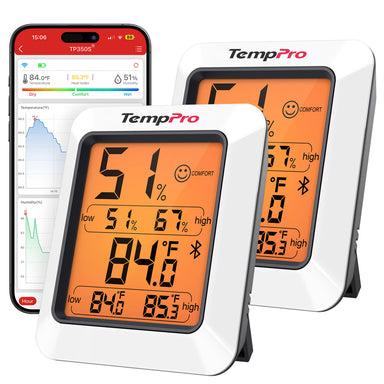
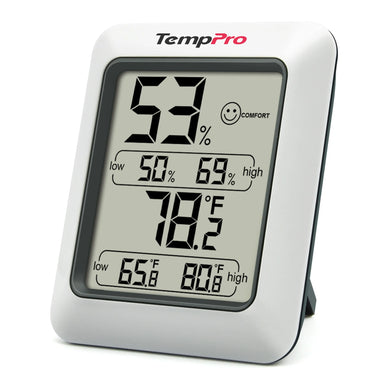
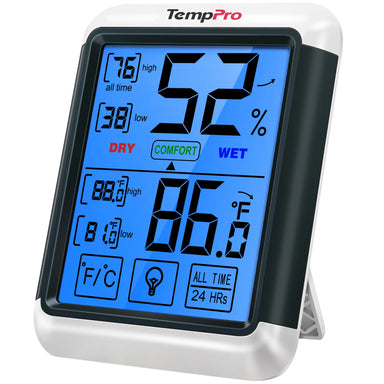
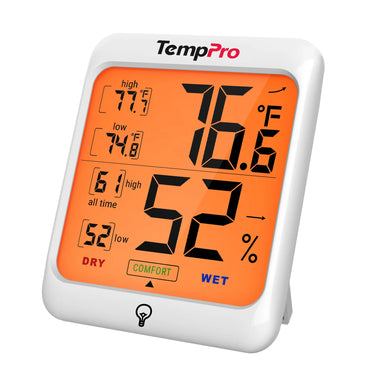
Al comparar todas estas características esenciales, un dispositivo destacado cierra perfectamente la brecha entre el monitoreo del clima interior diario y la cría de reptiles de alta gama: el TempPro TP357 Bluetooth Indoor Hygrometer & Thermometer.
Aunque se comercializa ampliamente como un monitor de clima interior, su ingeniería avanzada lo convierte, sin duda, en una de las herramientas más confiables para los propietarios de reptiles que buscan monitorear las condiciones ambientales alrededor de sus salas de reptiles o dentro de configuraciones más grandes y bien ventiladas.
Características principales:
- Rango extendido de Bluetooth de 260 pies: No necesitas acercarte a la jaula para revisar a tu mascota. Puedes monitorear el clima desde tu cama, tu sofá o incluso desde el jardín.
- Alertas instantáneas en tu smartphone: A través de una aplicación dedicada y fácil de usar, puedes preestablecer umbrales exactos altos y bajos tanto para la temperatura como para la humedad. Si la habitación desciende por debajo del 30 % de humedad o supera los 35 ℉, la aplicación envía inmediatamente una notificación a tu teléfono.
- Sensores de alta precisión: El TempPro TP357 proporciona un seguimiento en tiempo real de alta precisión, actualizándose cada 10 segundos para que nunca tengas dudas.
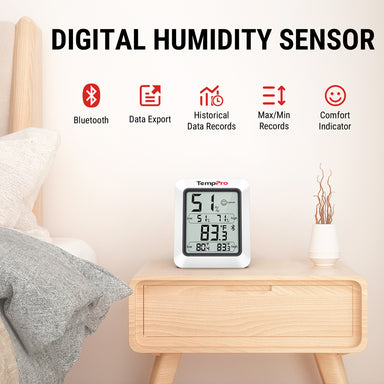
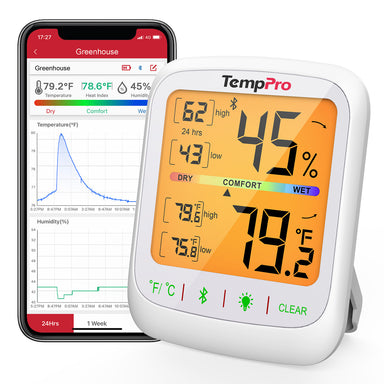
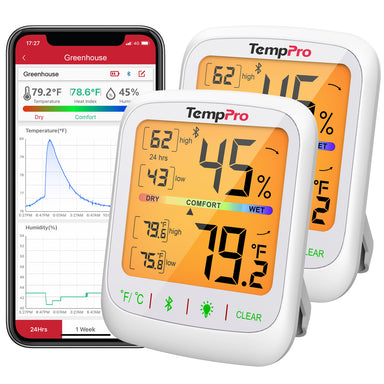
- Pantalla compacta con indicadores de confort: La unidad cuenta con una pantalla LCD nítida que muestra números grandes junto con iconos faciales visuales intuitivos (Seco/Confort/Húmedo) basados en los rangos interiores objetivo.
- Almacenamiento inteligente de datos: Registra los máximos y mínimos históricos, graficándolos bellamente a lo largo del tiempo para que puedas auditar cómo tu aire acondicionado o ventiladores de habitación afectan el entorno de tu reptil.
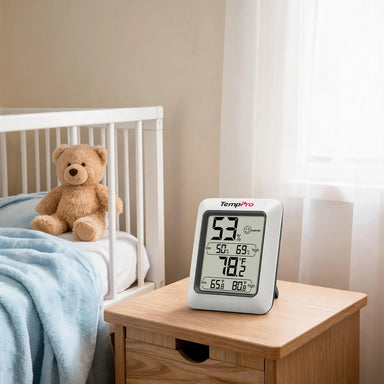
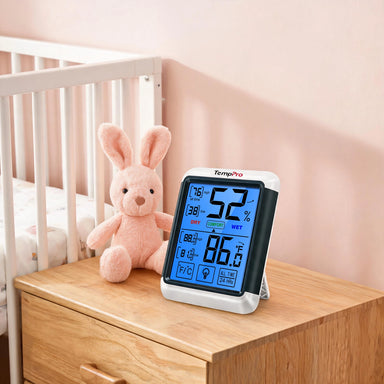
- Diseño compacto y versátil: El TempPro TP357 es pequeño, liviano y está diseñado para una fácil colocación. Puede sostenerse por sí solo, adherirse con un imán o montarse en la pared. Esta versatilidad significa que puedes colocarlo exactamente donde sea necesario, ya sea dentro de un vivario, en el lateral de un terrario o cerca de tu caja de humedad para reptiles.

El dispositivo funciona con una sola pila alcalina con una longevidad impresionante, y la configuración tarda solo unos minutos.
Por qué el TempPro TP357 es ideal para tu sala de reptiles
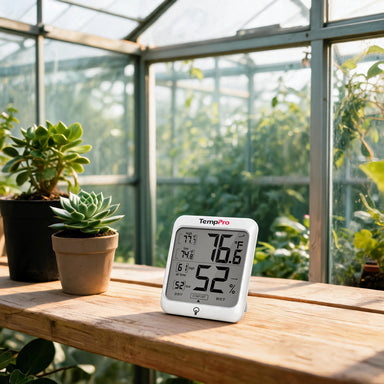
Al colocar el TempPro TP357 en tu sala de reptiles o cerca de la malla del recinto, creas un sólido sistema de alerta temprana.
Eliminando el estrés de las revisiones constantes
Si constantemente abres las puertas del terrario para revisar un medidor de dial barato y anticuado, dejas escapar humedad preciosa y estresas a tu animal. El alcance Bluetooth de 260 pies del TempPro TP357 te permite monitorear sin esfuerzo el clima base de la habitación desde cualquier lugar de la casa.
Salvaguardando el proceso de muda
Si tienes especies como pitones bola o geckos crestados, mantener una zona de humedad ambiental estable es fundamental. Al rastrear las curvas de datos históricos en la aplicación TempPro, puedes ver exactamente cuándo tu aire acondicionado interior está secando más el aire (generalmente a media tarde). Esto te indica con precisión cuándo rociar el recinto una vez más o cuándo refrescar el musgo húmedo dentro de tu caja de humedad para reptiles.
Perfecto para diferentes tipos de recintos
Ya sea que tu reptil viva en un terrario de vidrio, un vivario de madera, un recinto de PVC o una mesa para tortugas abierta, el TempPro TP357 se adapta perfectamente. Su tamaño compacto y sus múltiples opciones de montaje significan que puedes colocarlo en cualquier lugar: en el extremo frío, en el extremo cálido o dentro de una caja de humedad.

Consideraciones finales
Un terrario hermoso y funcional es más que solo vidrio, madera y un hermoso paisaje. Es un ecosistema delicadamente equilibrado. No dejes la salud de tu mascota al azar o a herramientas baratas e imprecisas.
Invertir en un termómetro e higrómetro premium para reptiles, mientras complementas el diagnóstico de tu habitación con una herramienta inteligente avanzada como el higrómetro interior Bluetooth TempPro TP357, te brinda un control total sobre tu entorno. Obtendrás tranquilidad al saber que, ya sea que estés dormido, trabajando o relajándote en otra habitación, tu reptil está seguro, hidratado y perfectamente cómodo en su propio oasis tropical o refugio desértico.


Comentarios
También te puede interesar


Productos recomendados