8 errores que hay que evitar al comprar higrómetros digitales


 288 Comments


Muchos propietarios comprenden la importancia de monitorear las condiciones climáticas interiores. Ya sea que se trate de veranos calurosos y húmedos o de calefacción artificial seca en invierno, controlar la calidad del aire de su hogar es esencial. Para ello, necesita un higrómetro fiable, un dispositivo que mide los niveles de humedad en su espacio interior.
Sin embargo, no todos los monitores de humedad son iguales. Muchas personas terminan comprando un dispositivo que no satisface sus necesidades porque caen en trampas comunes de compra.
Veamos los principales errores que comete la gente al comprar un higrómetro digital, qué buscar en su lugar y cómo un dispositivo inteligente puede ayudarle a lograr un ambiente doméstico perfectamente equilibrado.
Por qué es importante monitorear la temperatura y humedad interiores
Antes de analizar los errores de compra, es importante comprender por qué el equilibrio de su clima interior es tan vital para su salud, comodidad y mantenimiento del hogar.
Protegiendo su salud:
El aire demasiado seco (por debajo del 30% de humedad relativa) puede secar los conductos nasales, la garganta y la piel, haciéndolo más vulnerable a virus, irritación respiratoria y eccema. El aire demasiado húmedo (por encima del 60%) promueve el crecimiento de moho, ácaros del polvo y alérgenos.
Prevención de moho y daños a la propiedad:
La alta humedad puede provocar condensación en las ventanas, papel tapiz que se despega, pisos de madera deformados y daños estructurales por moho. Por el contrario, el aire extremadamente seco puede hacer que los muebles de madera y los instrumentos musicales se agrieten.
Mejorar la calidad del sueño:
Dormir en una habitación demasiado calurosa, demasiado fría o mal ventilada provoca noches de insomnio. Mantener un clima equilibrado le ayuda a conciliar el sueño más rápido y a permanecer dormido por más tiempo.
Según las agencias de protección ambiental, el nivel ideal de humedad interior debe mantenerse entre el 40% y el 50%. Lograr este equilibrio comienza con la elección de la herramienta de monitoreo adecuada.
Principales errores a evitar al comprar un higrómetro
Si desea comprar un higrómetro que realmente le ayude a gestionar la calidad del aire de su hogar, asegúrese de evitar estos cinco errores comunes de compra:
Priorizar el precio sobre la precisión del sensor
El error más común es comprar el dial analógico más barato o el sensor digital genérico disponible. Los modelos económicos a menudo utilizan sensores de baja calidad que pueden tener un error de 5% a 10% de HR (humedad relativa) o incluso más. Si su higrómetro marca 45% cuando la humedad real es un 58% húmedo, podría pasar por alto las señales de advertencia tempranas del crecimiento de moho. Busque siempre dispositivos con sensores de alta precisión, como los sensores de fabricación suiza, que ofrecen una fiabilidad de precisión de humedad del 2%.
Pasar por alto la calibración
La calibración es el proceso de ajustar su higrómetro para asegurar que sus lecturas coincidan con las condiciones reales. Muchos compradores no se dan cuenta de que incluso los higrómetros nuevos pueden llegar con una calibración inexacta. Algunos vienen precalibrados de fábrica, pero esa calibración puede variar con el tiempo, especialmente si el dispositivo se cae o se expone a condiciones extremas.
Peor aún, algunos higrómetros económicos no se pueden calibrar en absoluto, lo que los hace prácticamente inútiles una vez que comienzan a desviarse. Un revisor en Amazon señaló que su higrómetro "murió en solo unos pocos meses" y que "antes de morir, las lecturas eran un 20% más bajas" que los instrumentos precisos. Otro cliente descubrió que su higrómetro estaba leyendo un 11% demasiado alto después de menos de dos años de uso.
Qué buscar en su lugar: Elija un higrómetro que venga precalibrado de un fabricante de confianza y que ofrezca la opción de recalibración si es necesario. Los dispositivos de alta calidad mantienen su precisión a lo largo del tiempo sin necesidad de ajustes constantes. Busque productos con estabilidad a largo plazo, un factor clave que diferencia a los higrómetros baratos de los fiables.
Ignorar la "tasa de actualización"
Las condiciones del aire cambian constantemente, especialmente cuando enciende el aire acondicionado, abre una ventana o utiliza un humidificador. Los higrómetros baratos solo pueden actualizar sus lecturas cada pocos minutos o incluso cada hora. Si desea realizar ajustes en tiempo real en su clima, necesita un dispositivo con una tasa de actualización rápida de 10 segundos o menos.
Elegir el rango de medición incorrecto
No todos los higrómetros miden el mismo rango. Algunos solo miden del 20% al 90% de HR, mientras que otros miden del 10% al 99% de HR. Si compra un higrómetro con un rango limitado y el ambiente de su hogar se encuentra fuera de ese rango, obtendrá lecturas inexactas o ninguna en absoluto.
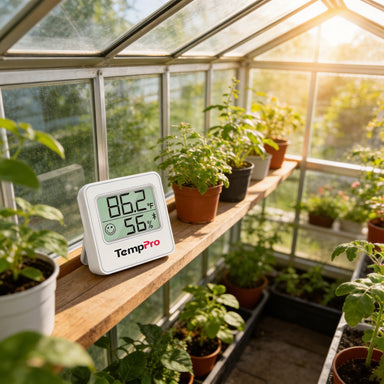
Para uso doméstico típico, querrá un higrómetro que cubra del 20% al 90% de HR como mínimo. Pero si vive en un clima particularmente seco, tiene un invernadero o necesita monitorear las condiciones en un sótano o baño, considere un dispositivo que mida del 10% al 99% de HR para una cobertura total.
Qué buscar en su lugar: Verifique el rango de humedad antes de comprar. Asegúrese de que coincida con su entorno. También verifique el rango de temperatura, especialmente si planea usar el higrómetro en espacios que se ponen muy fríos o muy calientes.

Comprar un dispositivo sin conectividad inteligente/remota
Un higrómetro básico requiere que usted se pare físicamente frente a la pantalla para leerlo. Pero, ¿qué pasa si quiere monitorear la habitación del bebé mientras está abajo, verificar la humedad del sótano desde la sala de estar o vigilar su invernadero? Comprar un dispositivo no conectado significa que tiene que caminar constantemente por la casa para revisar diferentes habitaciones. Optar por un higrómetro con Bluetooth resuelve este problema al enviar datos climáticos en tiempo real directamente a su teléfono inteligente.
Ignorar las alarmas y notificaciones inteligentes
Un higrómetro solo es útil si actúa sobre los datos que proporciona. Si una tubería gotea o su deshumidificador se llena mientras duerme o está fuera de casa, una pantalla estándar no le ayudará. Un higrómetro inteligente con alertas push basadas en aplicaciones notificará instantáneamente a su teléfono en el momento en que su clima interior se salga de los límites de seguridad preestablecidos, lo que le permitirá reaccionar antes de que ocurra el daño.
Olvidar el seguimiento del historial de tendencias
Saber la temperatura y la humedad en este momento es excelente, pero comprender las tendencias a largo plazo es la forma de realizar mejoras reales en la eficiencia de la climatización de su hogar. Sin el registro de datos históricos, no sabrá si su humedad aumenta por la noche o cómo afecta su aire acondicionado a la habitación durante un ciclo de 24 horas. Busque dispositivos que ofrezcan al menos unos meses de almacenamiento de datos gratuito y capacidades de exportación a través de una aplicación complementaria.
Olvidar la colocación
Puede comprar el higrómetro más preciso del mundo, pero si lo coloca en el lugar equivocado, sus lecturas no tendrán sentido.
Los errores de colocación comunes incluyen:
- Colocar el higrómetro cerca de ventanas o puertas, donde las corrientes de aire distorsionan las lecturas.
- Colocarlo directamente a la luz solar, lo que calienta el dispositivo y afecta las mediciones de humedad.
- Posicionarlo demasiado cerca de rejillas de aire acondicionado, calentadores o humidificadores, donde las condiciones no son representativas de la habitación.
- Montarlo demasiado alto o demasiado bajo, la humedad puede variar significativamente a diferentes alturas en una habitación.
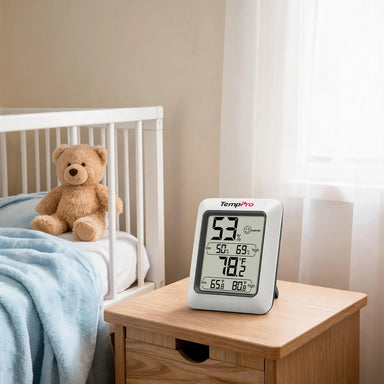
Qué buscar en su lugar: Elija un higrómetro que sea fácil de posicionar correctamente. Las características como un imán incorporado o un soporte le permiten colocarlo a la altura y ubicación correctas. Para las habitaciones de bebés, coloque el dispositivo a la misma altura que la cuna del bebé. Para habitaciones generales, colóquelo a la altura del pecho, lejos de ventanas y rejillas de ventilación.
¿Qué termómetro higrómetro interior puede usar?
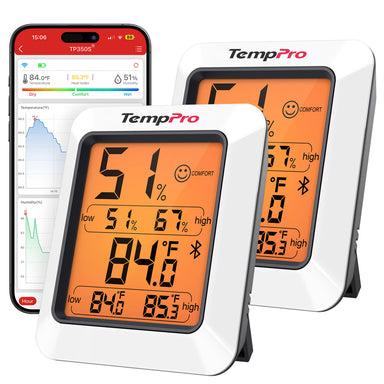
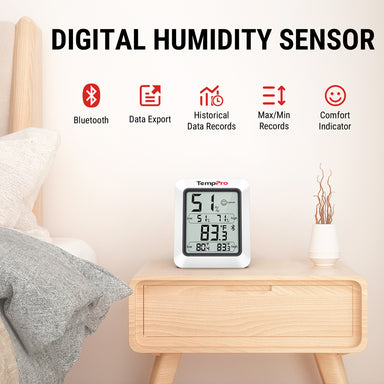
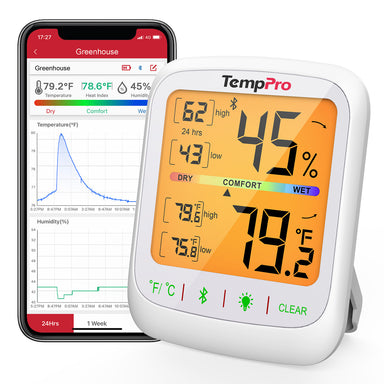
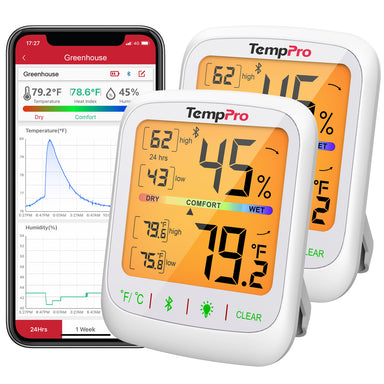
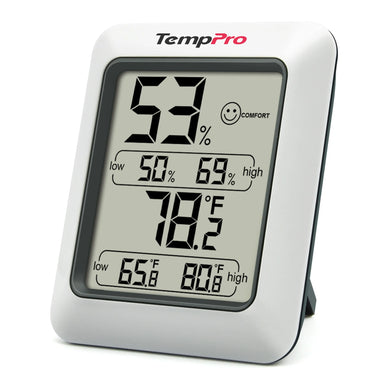
Si desea evitar estos errores y asegurar un dispositivo de monitoreo premium y altamente preciso, el Termómetro Higrómetro de interior Bluetooth TempPro TP358 es una elección excepcional. Diseñado con componentes de primera calidad, ofrece funciones inteligentes que facilitan la gestión de la calidad del aire interior de su hogar.
Características clave del TempPro TP358:
- Sensores de alta precisión: El TempPro TP358 está equipado con sensores de alta precisión. Ofrece una precisión de nivel profesional de 0.9℉ para la temperatura y 2% para la humedad.
- Frecuencia de actualización de 10 segundos: No más esperas. El TempPro TP358 actualiza sus lecturas cada 10 segundos, proporcionándole datos ambientales altamente sensibles y en tiempo real.
- Bluetooth 5.0 de 260 pies: Utilizando una conexión Bluetooth 5.0 certificada, puede monitorear sus condiciones interiores desde una distancia de hasta 260 pies (80 metros). Puede revisar fácilmente su sótano, bodega, habitación del bebé o ático desde su sofá o cama.
- Notificaciones inteligentes de la aplicación: Usando la aplicación complementaria gratuita, puede personalizar sus rangos de confort de temperatura y humedad deseados. Si el aire se vuelve demasiado seco o demasiado húmedo, la aplicación enviará instantáneamente una notificación push a su teléfono inteligente.
- Hasta 2 años de exportación de datos: Analice las tendencias climáticas históricas durante 24 horas, 1 semana o hasta 1 año. Esta función de registro de datos le ayuda a identificar problemas de HVAC o a rastrear qué tan bien funciona su humidificador.
- Pantalla LCD retroiluminada con reloj: La pantalla grande y fácil de leer muestra la temperatura actual, el nivel de humedad, la hora y el día de la semana. También cuenta con un indicador de confort de aire Seco/Cómodo/Húmedo para que pueda evaluar el ambiente de su habitación de un vistazo. Toque el botón de retroiluminación para leer la pantalla claramente en la oscuridad.
- Opciones de montaje versátiles: Con un soporte de mesa incorporado, respaldo magnético y un orificio para colgar en la pared, puede colocar el TempPro TP358 donde más lo necesite.

Cómo configurar el clima interior perfecto
Una vez que tenga su TempPro TP358, puede usarlo para mantener un ambiente de vida óptimo siguiendo estos consejos prácticos:
Para aumentar la humedad (si las lecturas caen por debajo del 30%):
Utilice un humidificador de vapor frío: Esto es especialmente útil durante los meses secos de invierno o cuando el aire acondicionado de verano elimina demasiada humedad del aire.
Incorpore plantas de interior: Las plantas liberan naturalmente humedad al aire a través de la transpiración, lo que ayuda a aumentar suavemente la humedad interior.
Para disminuir la humedad (si las lecturas superan el 50%):
Use un deshumidificador o aire acondicionado: Su sistema de aire acondicionado deshumidifica naturalmente el aire. Para áreas húmedas persistentes como sótanos, se recomienda encarecidamente un deshumidificador dedicado.
Utilice extractores de aire: Siempre encienda los extractores de aire del baño y la cocina mientras se ducha o cocina para evitar la acumulación localizada de humedad.
Consideraciones finales
No permita que sensores imprecisos o la falta de funciones inteligentes le impidan gestionar el entorno de su hogar. Al elegir un dispositivo de alta precisión y conectado como el Termómetro Higrómetro de interior Bluetooth TempPro TP358, obtiene la precisión, las alertas inteligentes y las herramientas de seguimiento de tendencias que necesita para mantener a su familia sana y su hogar cómodo durante todo el año.


Comentarios
También te puede interesar


Productos recomendados