¿Por qué los métodos de cocina de los años 80 superarán a las cocinas inteligentes en 2026?


 288 Comments


La década de 1980 fue salvaje: casetes, parrillas en el patio trasero, el pollo asado de mamá y el amanecer de la revolución del microondas. Las familias comían juntas. Los cocineros confiaban en sus instintos. Y cada plato, ya fuera salado o ligeramente quemado, tenía alma.
Avanzamos rápidamente hasta 2026, y vivimos en una cocina manejada por algoritmos. Los refrigeradores inteligentes rastrean las fechas de vencimiento, los hornos se conectan a Wi-Fi y tu teléfono vibra para decirte que tu pollo podría estar listo. Sin embargo, de alguna manera, la comida tiene un sabor más insípido.
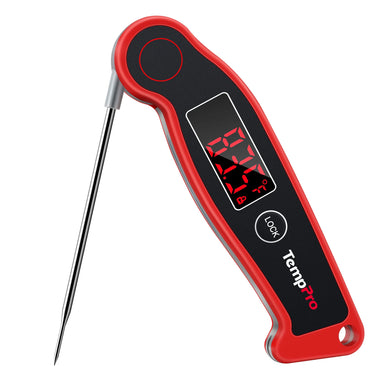
En toda Europa y América del Norte, se está gestando una rebelión silenciosa. Chefs, padres e incluso veinteañeros que crecieron con aplicaciones de entrega de comida están redescubriendo herramientas de cocina manuales: cucharas de madera, sartenes de hierro fundido y termómetros analógicos como el termómetro de carne de lectura instantánea TempPro TP02S.
Esta es la verdad: el verdadero sabor no proviene del software. Proviene de la sal, el humo y la sensatez.
La forma de los 80: cocinar a mano, no con una aplicación
En la década de 1980, "cocinar de forma inteligente" significaba recordar descongelar la cena antes del trabajo.
Todo lo demás, como el tiempo, la temperatura y el condimento, se hacía a ojo.
Sin embargo, ese "ojo" era en realidad experiencia. Nuestros padres no necesitaban una aplicación que les dijera que un bistec medio cocido debía alcanzar los 57 °C; aprendieron haciéndolo. Y cuando querían un artilugio, era algo práctico, como un simple termómetro de lectura instantánea.
Ahí es donde el TempPro TP02S se siente como una máquina del tiempo de la mejor manera posible.
Es un termómetro de carne digital sencillo y sin florituras que te da una lectura en 4-7 segundos con una precisión de ±0,5 °C, lo suficientemente rápido como para mantener el ritmo de la cocina manual.
Sin emparejamiento. Sin Wi-Fi. Sin "actualización de firmware requerida". Simplemente desliza la sonda de acero inoxidable de 13,5 cm en tu bistec, pan o caramelo, y observa cómo aparece el número.
Es exactamente lo que solía usar tu padre, solo que mejor.

La ecuación del sabor: Calor + Paciencia = Magia
Cuando se observan los libros de cocina de los años 80, hay una cosa que destaca: el calor lento y deliberado. Ya fuera el rosbif, el ziti al horno o el pan de masa madre casero, todo dependía de respetar la temperatura.
Los "hornos inteligentes" actuales a menudo se exceden o corrigen en exceso, lo cual es excelente para la comodidad, no para el carácter. El sabor real se desarrolla en el margen del control manual, esa dulce zona donde las reacciones de Maillard se activan (alrededor de 140 °C) y los azúcares se caramelizan justo antes de quemarse.
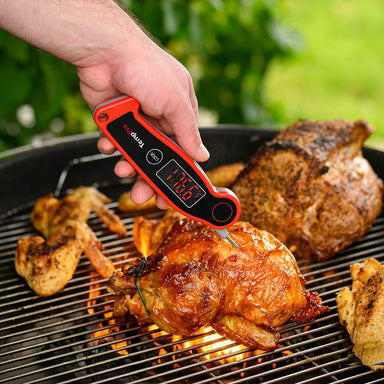
Ahí es donde una herramienta como el TP02S brilla. Con su amplio rango de -50 °C a 300 °C, cubre todo, desde la comprobación de almíbar hasta la medición de la temperatura interna de un pavo entero. Y la sonda extralarga mantiene tus manos a salvo de llamas abiertas o aceite hirviendo, algo que ni siquiera la freidora de aire más llamativa puede reemplazar.
Consejo profesional de la vieja escuela: no confíes en el dial de tu horno. Estudios del Good Housekeeping Institute del Reino Unido muestran que hasta el 25% de los hornos domésticos tienen una desviación de 11 °C en la calibración. Una comprobación rápida con un termómetro de sonda restaura instantáneamente la precisión y la confianza.
Por qué los panaderos de verdad están volviendo a lo básico
Desplázate por Instagram y lo verás en todas partes: hombres horneando masa madre.
No es una moda hípster, sino un movimiento.
Hornear pan conecta el cuerpo y la mente de una manera que los "mezcladores inteligentes" no pueden. Sientes cómo la masa cambia de textura, hueles cómo la levadura se activa y aprendes de nuevo la paciencia.
La temperatura lo es todo en este proceso. La levadura muere por encima de 59 °C y prospera entre 24 °C y 35 °C. Si lo haces mal, tu pan se desmorona. Si lo haces bien, tendrás una subida perfecta, una corteza crujiente y motivos para presumir durante días.
Por eso, los panaderos modernos están abandonando los aparatos Bluetooth por instrumentos fiables y táctiles como el TempPro TP02S. Es lo suficientemente pequeño como para sujetarlo a tu delantal, lo suficientemente duradero como para probar temperaturas de caramelo o café, y lo suficientemente rápido como para usarlo entre amasados.

Dato curioso sobre la repostería: Según un estudio de 2022 del European Bread Institute, una precisión de temperatura de solo ±1°C puede mejorar la consistencia de la masa hasta en un 30%. El TP02S te da ±0,5°C, una precisión con la que los panaderos de los años 80 solo podían soñar.
La ciencia de la cocina sencilla
Hay algo profundamente humano en cocinar solo con las manos, los sentidos y unas pocas herramientas fiables. Cuando eliminas el ruido, las notificaciones, las aplicaciones y las recetas de IA, te quedas con lo que realmente importa: el control.
El TP02S está diseñado bajo ese principio. Su apagado automático conserva la vida útil de la batería después de 10 minutos de inactividad, y su orificio para colgar y la cubierta de la sonda facilitan su almacenamiento junto a tu sartén de hierro fundido favorita.
Cuando fríes, asar a la parrilla, templar chocolate o revisar el aceite para pollo frito, no quieres desplazarte por los menús. Quieres una lectura que te diga al instante si tu aceite está listo entre 175 °C y 190 °C, y si tu bistec ha alcanzado ese jugoso punto medio. Las cocinas inteligentes prometen comodidad. Pero a veces, la comodidad mata la curiosidad.
Cocinar sin pensar demasiado
Los psicólogos han empezado a llamarlo "cocina por agotamiento tecnológico". Un estudio de 2024 del Journal of Culinary Behavior encontró que los cocineros caseros que usan menos electrodomésticos conectados reportan una mayor satisfacción al cocinar y niveles de estrés más bajos que aquellos que usan configuraciones totalmente automatizadas.
¿Por qué? Porque la cocina práctica ofrece un estado de fluidez, ese estado meditativo de concentración donde el tiempo desaparece. Es la misma calma que obtienes cuando revuelves una salsa, rocías un asado o verificas la temperatura al tacto y por confirmación, no por algoritmo.
Por eso, las herramientas de cocina de la vieja escuela se están agotando de nuevo. Los termómetros de carne como el TP02S unen la intuición y la ciencia. No distraen; confirman. Te permiten confiar en tus instintos mientras te respaldan con precisión.
Y cuando cocinas de esa manera, concentrado, sin prisas, seguro, terminas con algo que ninguna "cocina inteligente" puede replicar: comida que sabe viva.

Donde lo retro se encuentra con la resiliencia
La década de 1980 no fue perfecta (véase: laca para el cabello y verduras enlatadas), pero tenían algo claro: la resiliencia.
Las comidas no se trataban de optimización; se trataban de reunirse, improvisar y apañarse.
Un aparato roto no arruinaba la cena. Cogías una sartén, un poco de mantequilla y te ponías a trabajar.
Ese es el espíritu que encarna el TempPro TP02S. Está diseñado para durar, con una sonda de acero inoxidable que no se corroe, una batería que dura mucho tiempo y una practicidad instantánea, ya sea que estés elaborando cerveza, haciendo yogur o asando a la parrilla bajo la lluvia.
Piénsalo como el equivalente culinario de una camioneta clásica: sencilla, resistente y siempre lista para trabajar.
Reglas de cocina de los años 80 que todavía funcionan
- Confía en el calor, no en el tiempo. Cada horno miente. La temperatura dice la verdad.
- Sazona con audacia. La sal nunca fue el enemigo; la pereza sí.
- No apures el descanso. Deja reposar la carne después de cocinarla, el calor residual la subirá otros 2-5 °C.
- Cocina en compañía. Las comidas saben mejor cuando se comparten, no cuando se entregan a domicilio.
- Mantén tus herramientas simples. Si tardas más en configurar tu dispositivo que en sellar tu bistec, no te está ayudando.
El TP02S encaja perfectamente con esa quinta regla: un solo botón, un solo propósito y resultados impecables.
Un retorno al sabor real
No es la nostalgia lo que impulsa este movimiento, sino el sabor. Los ahumadores, las sartenes de hierro fundido y los termómetros de sonda están de vuelta porque nos devuelven el control del desarrollo del sabor.
La sal carameliza, el humo añade complejidad y la temperatura precisa aporta armonía a todo. Eso es lo que hizo que la cocina de los años 80 fuera honesta. Y es lo que la está haciendo atractiva de nuevo.
Así que la próxima vez que tu horno inteligente pierda el Wi-Fi a mitad del asado, recuerda esto: todo lo que necesitas es una sartén, un poco de calor y un TempPro TP02S para devolverle el alma a tu cocina.
Preguntas frecuentes sobre TempPro TP02S
P1: ¿Qué hace que el TempPro TP02S sea diferente de los termómetros inteligentes?
Omite las aplicaciones y el Wi-Fi para una simplicidad instantánea, una lectura de 4 a 7 segundos, una precisión de ±0,5 °C y una sonda larga de acero inoxidable que funciona tanto para carne como para líquidos y dulces.
P2: ¿Qué tan larga es la sonda?
La sonda de 13,5 cm mantiene tus manos a salvo del aceite caliente, el caramelo o las llamas de la parrilla, perfecto para freír o hacer barbacoas.
P3: ¿Puedo usarlo para hornear y hacer pan?
Absolutamente. Es uno de los favoritos entre los fabricantes de masa madre y dulces, ya que lee con precisión entre -50 °C y 300 °C.
P4: ¿Requiere calibración o aplicaciones?
No se necesita calibración ni emparejamiento. Simplemente inserta, lee y listo. Se apaga automáticamente después de 10 minutos para ahorrar batería.
P5: ¿Es seguro para líquidos?
Sí. La sonda de acero inoxidable es apta para alimentos y segura para leche, aceite, almíbar o incluso para preparar café.
P6: ¿Cómo se guarda?
El TP02S incluye una cubierta protectora para la punta y un orificio para colgarlo, por lo que es fácil de guardar o colgar en un gancho en tu cocina.
Reflexión final: la sensatez sobre la inteligencia
En la carrera hacia la comodidad, hemos olvidado que cocinar no es un problema que resolver, sino una experiencia que saborear. El Termómetro de Carne de Lectura Instantánea TempPro TP02S es una rebelión contra la sobreautomatización. Te ofrece la tecnología justa para mantener la precisión y la libertad suficiente para sentirte vivo en la cocina de nuevo. A veces, la sensatez se parece al humo que sale de un bistec, a la sal en los dedos y al suave pitido de un sencillo termómetro de alimentos que te dice: Lo lograste.
Comentarios
También te puede interesar


Productos recomendados