Comment faire griller du poisson sans qu'il ne se désagrège


 288 Comments


Il est incroyablement facile de supposer que la cuisson du poisson au gril est une tâche simple, et la plupart des gens ne pensent jamais qu'il pourrait y avoir diverses raisons pour lesquelles leur repas pourrait s'effondrer. Cependant, beaucoup d'entre nous ont ressenti la frustration de voir un magnifique morceau de poisson grillé se déchirer complètement au moment de le servir.
Alors, pourquoi cela arrive-t-il exactement ? La réponse réside en fait dans la compréhension de la science de base qui sous-tend le fonctionnement des protéines. La plupart des types de viande contiennent du tissu conjonctif, qui fournit l'intégrité structurelle nécessaire pour maintenir les fibres de viande ensemble. Lorsque vous faites cuire ces viandes, les protéines se contractent. Cela provoque le rétrécissement des fibres et leur rapprochement continu. La perte d'humidité se produit également très rapidement.
Une fois que la température interne dépasse le seuil optimal pour ce type de viande spécifique, ces protéines commencent à se resserrer et les tissus conjonctifs se décomposent. À ce stade, les protéines raccourcissent encore plus et finissent par se rompre. La vitesse de cette contraction protéique dépend de quelques facteurs différents. Ceux-ci incluent l'état initial de contraction de la matière première, la vitesse à laquelle les protéines se dénaturent pendant la cuisson et le degré de rétention d'humidité dans les fibres musculaires.

Poisson trop cuit ou pas assez cuit
Une combinaison de poisson trop cuit et de poisson pas assez cuit peut produire une consistance feuilletée frustrante et difficile à gérer.
- Un morceau de poisson trop cuit devient structurellement faible en raison d'une perte d'humidité excessive, ce qui le fait s'effriter facilement.
- Inversement, un morceau de poisson pas assez cuit a tendance à être collant en raison d'une évaporation incomplète de l'humidité de sa surface.
À cause de ces deux extrêmes, atteindre une température interne appropriée dans un laps de temps limité est absolument crucial.
Atteindre la bonne température interne
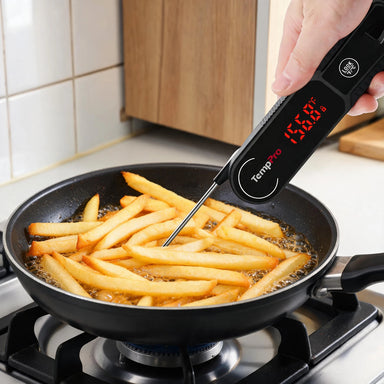
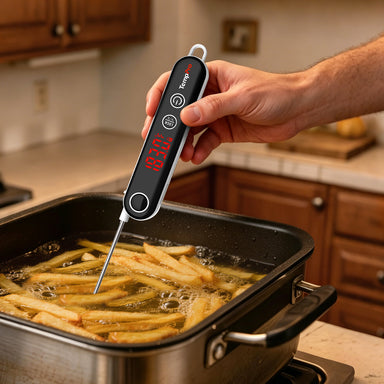
Il existe plusieurs façons d'atteindre une bonne température interne sans compter sur des indices visuels peu fiables comme les changements de couleur ou de texture. La meilleure option est d'utiliser un thermomètre à lecture instantanée. Cet outil mesure avec précision les températures internes très rapidement. Une autre alternative consiste à utiliser un temps de cuisson plus long à feu doux, bien que cette méthode nécessite une surveillance continue pour éviter une surcuisson.
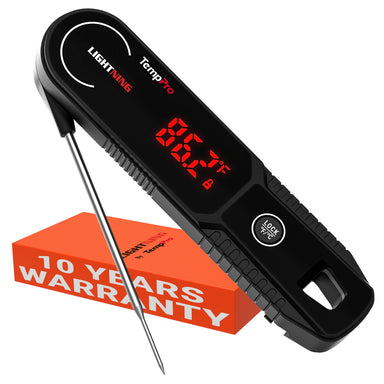
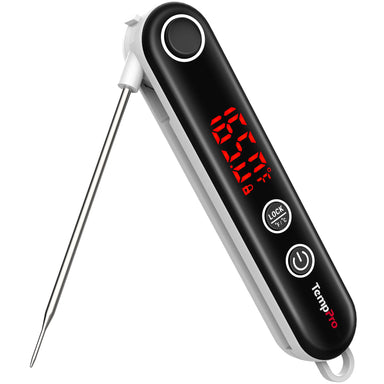
C'est précisément pourquoi je recommande fortement le thermomètre à lecture instantanée TempPro TP620. Griller des fruits de mer est un processus délicat, et avoir un thermomètre fiable et ultra-rapide comme le TempPro TP620 élimine toutes les incertitudes pour atteindre la température interne parfaite.

Une autre solution est d'opter pour un temps de cuisson plus long à feu doux, bien que cette méthode nécessite une surveillance continue pour éviter une surcuisson. Quelle que soit la méthode choisie, la précision est de mise pour mesurer les températures internes. Une fois que la température interne optimale est atteinte, le poisson cuit doit être immédiatement retiré de la source de chaleur. Laisser votre poisson exposé à la chaleur directe après avoir atteint cette température cible entraînera une perte continue d'humidité. Cela dessèche le poisson et, au final, lui donne une mauvaise texture.
Choisir le bon poisson
Comme je l'ai mentionné plus tôt, atteindre la bonne température interne est la clé pour éviter que votre poisson ne se défasse sur le gril. Pour vous donner un peu plus de sécurité contre l'échec, vous pouvez choisir des espèces de poisson spécifiques en fonction de leurs caractéristiques naturelles. Certaines espèces de poisson ont tendance à bien conserver leur structure lorsqu'elles sont soumises à une chaleur élevée, tandis que d'autres espèces sont beaucoup plus sujettes à se défaire.
Par exemple, le saumon, le thon, l'espadon et le mahi-mahi sont généralement considérés comme plus « fermes » que le tilapia ou la morue. Cette fermeté les rend relativement plus faciles à griller. Cependant, quelle que soit l'espèce choisie, tous les poissons doivent être manipulés avec précaution lors de la cuisson.
Préparation adéquate avant la cuisson au gril
Choisir un poisson structurellement solide est une excellente chose, mais il est tout aussi important de bien le préparer avant de le placer sur le gril.
Une bonne préparation comprend la garantie que votre gril a atteint sa pleine température de fonctionnement. Vous devez également appliquer une fine couche d'huile sur la surface de votre poisson et sur les grilles de votre gril. Ce faisant, vous réduisez la friction entre les aliments et le métal. Cela augmente la probabilité que votre poisson se détache proprement des grilles du gril.
De plus, vous devez vous assurer que l'excès d'humidité est éliminé de votre poisson avant la cuisson. L'excès d'humidité peut entraîner la formation de vapeur pendant la cuisson. Cette vapeur peut empêcher la formation d'une croûte ou d'une saisie adéquate sur votre poisson, augmentant ainsi le risque que votre poisson adhère aux grilles.
La plus grosse erreur : retourner trop tôt
Bien que la mise en œuvre des méthodes ci-dessus augmente considérablement votre taux de réussite, il reste un dernier obstacle que la plupart des individus rencontrent. Cet obstacle est de retourner prématurément le poisson lorsqu'il touche les grilles du gril pour la première fois.
Retourner votre poisson avant qu'il n'ait développé une intégrité structurelle suffisante entraînera toujours des dommages. Le développement de l'intégrité structurelle d'un morceau de poisson est fonction de la création d'une croûte suffisante à sa surface, qui sert de barrière protectrice. Une fois qu'une croûte se forme à la surface d'un morceau de poisson, il peut se soutenir grâce aux manipulations ultérieures, comme le retournement, sans subir de dommages.
Par conséquent, il est impératif de laisser votre poisson développer une intégrité structurelle avant de tenter de le manipuler. Pour y parvenir, il faut de la patience, car il faut du temps pour qu'une croûte se forme. Afin d'établir une croûte adéquate, vous devez laisser votre poisson complètement seul pendant environ 3 à 4 minutes. Vous pouvez également attendre qu'il développe suffisamment de force pour se soutenir par la manipulation.
Retournement et finition
Une fois que votre poisson a développé une intégrité structurelle, vous devez utiliser une grande spatule ou des pinces pour retourner délicatement votre poisson et exposer le côté opposé à la chaleur. Veillez à ne pas perturber la formation d'une croûte supplémentaire lorsque vous effectuez cette action.
Enfin, vous devez continuer à surveiller attentivement la température interne à mesure que vous approchez de la fin de la cuisson. Gardez votre TempPro TP620 à portée de main pour vérifier le centre du filet ! Une fois que vous avez atteint le niveau de cuisson désiré, retirez votre poisson cuit du feu. Laissez-le refroidir et reposer pendant quelques secondes avant de servir. Le repos permet la redistribution des jus dans tout le poisson cuit, ce qui contribue grandement à la texture globale.

Résumé
Pour résumer la leçon d'aujourd'hui, minimiser le contact avec votre nourriture est essentiel. Être patient en attendant que l'intégrité structurelle de votre poisson se développe, maintenir une surface de gril chaude et surveiller continuellement la température interne sont tous des aspects très importants pour réussir à préparer un délicieux poisson grillé sans qu'il ne se désagrège.

FAQ
Q1. Pourquoi le poisson colle-t-il au gril ? Le poisson colle lorsque le gril n'est pas assez chaud ou lorsqu'il est retourné trop tôt avant qu'une bonne croûte ne se forme.
Q2. À quelle température le poisson doit-il être cuit ? La plupart des poissons sont meilleurs entre 52°C et 57°C, selon la texture désirée.
Q3. Comment retourner le poisson sans le casser ? Utilisez une large spatule et attendez que le poisson se détache naturellement du gril avant de le retourner.
Q4. Ai-je besoin d'un thermomètre pour le poisson ? Oui. Le poisson cuit rapidement, et même une petite différence de température peut affecter la texture et la structure.
Q5. Qu'est-ce qui rend le TempPro TP620 utile pour griller du poisson ? Tout comme son prédécesseur, ses lectures rapides d'une seconde et sa haute précision vous aident à retirer le poisson au bon moment avant qu'il ne surcuise.
Q6. Dois-je griller le poisson avec la peau ? Oui, si possible. La peau aide à maintenir le poisson ensemble et fournit une barrière entre la chair et le gril.
Q7. Combien de temps le poisson doit-il reposer après la cuisson ? Un court repos de 2 à 3 minutes est suffisant pour permettre aux jus de se déposer sans surcuire davantage.
Q8. Puis-je griller du poisson délicat comme le tilapia ? Oui, mais cela demande un soin supplémentaire, un huilage adéquat et une surveillance étroite de la température pour éviter qu'il ne se désagrège.


Commentaires
Vous aimerez peut-être aussi


Produits recommandés