Comment savoir si la viande est insuffisamment cuite ?


 288 Comments


Vous vous tenez devant la cuisinière, une spatule à la main, fixant ce blanc de poulet ou ce steak haché. Il semble cuit à l'extérieur. Mais une petite voix dans votre tête vous demande : « Est-ce qu'il est bien cuit ? » Vous ne voulez pas servir quelque chose qui pourrait rendre votre famille malade. Vous voulez des repas nourrissants et parfaitement cuits, pas un voyage aux urgences.
La viande pas assez cuite n'est pas seulement une question de goût, elle peut présenter de réels risques pour la santé, en particulier pour les enfants, les personnes âgées et toute personne ayant un système immunitaire affaibli. Le défi est que la viande ne « semble » pas toujours cuite, et la couleur seule peut être trompeuse. Alors, comment savoir ?
Dans ce guide, nous allons passer en revue des méthodes réelles et pratiques pour savoir si la viande n'est pas assez cuite, en utilisant des situations de cuisson quotidiennes. Nous présenterons également un outil de cuisine fiable qui élimine entièrement les conjectures, afin que vous puissiez cuisiner en toute confiance à chaque fois.
Quels sont les risques de la viande pas assez cuite ?
Pour un cuisinier amateur passionné, « pas assez cuite » est plus qu'un problème de texture. Les protéines animales crues ou pas assez cuites peuvent abriter des bactéries et des parasites nocifs. Si les adultes peuvent se remettre d'une intoxication alimentaire, les enfants et les personnes âgées sont beaucoup plus vulnérables aux complications des agents pathogènes d'origine alimentaire.
Comment savoir si la viande n'est pas assez cuite
Apprendre à savoir si la viande n'est pas assez cuite est votre première ligne de défense. En maîtrisant cette compétence, vous vous assurez que les protéines restent juteuses et nutritives sans présenter de risque pour la santé digestive de votre famille.
Vérifications visuelles et de texture
Avant d'aborder la méthode la plus précise, passons en revue ce que vous pouvez voir et sentir. Ces indices sont utiles, mais ils ne devraient jamais être votre seul test.
Test de couleur
- Poulet et dinde : la volaille cuite en toute sécurité ne doit pas présenter de rose dans la partie la plus profonde de la viande. Les jus doivent être clairs, pas rouges ou roses. Cependant, sachez que certains poulets entièrement cuits, en particulier la viande plus foncée comme les cuisses, peuvent conserver une légère teinte rosée près de l'os en raison des pigments naturels.
- Bœuf haché : le bœuf haché bien cuit devient brun partout. Si vous voyez du rouge ou du rose au centre, c'est qu'il n'est pas assez cuit. Cependant, les steaks hachés pré-préparés peuvent parfois brunir avant d'atteindre les températures internes de sécurité.
- Porc : le porc sûr peut avoir une légère coloration rose. L'ancienne règle « cuisez-le jusqu'à ce qu'il soit blanc » conduit souvent à une viande sèche et dure.

Test de texture
- Appuyez sur la viande avec votre doigt ou une fourchette. La viande pas assez cuite est molle, douce et trop élastique. La viande bien cuite offre une résistance ferme.
- Pour le poulet et la dinde, une fourchette doit s'enfoncer facilement, et la viande doit s'effilocher légèrement plutôt que d'être caoutchouteuse.
- Pour les steaks et les côtelettes de bœuf, le « test du doigt » (comparer la fermeté de la viande à la base charnue de votre pouce) peut donner une estimation approximative, mais cela demande de l'expérience.
Le problème avec ces méthodes
Les tests visuels et de texture sont subjectifs. Les conditions d'éclairage, le type de viande et même votre propre vue peuvent vous tromper. Des études ont montré que même les cuisiniers expérimentés se trompent sur la cuisson par la couleur seule jusqu'à 25 % du temps. C'est un repas sur quatre qui pourrait potentiellement servir de la viande pas assez cuite à votre famille.
Donc, même si ces indices vous aident à savoir quand commencer à tester plus attentivement, ce ne sont pas des réponses fiables à la question de savoir comment savoir si la viande n'est pas assez cuite.
Couper et inspecter
Si vous n'avez pas encore de thermomètre à viande, la méthode la plus fiable et la moins technologique consiste à faire une petite entaille dans la partie la plus épaisse de la viande et à inspecter le centre.
- Retirez la viande du feu et placez-la sur une planche à découper propre.
- Utilisez un couteau propre pour couper la partie la plus épaisse, en inclinant la coupe pour pouvoir voir clairement le centre.
- Recherchez les signes de cuisson spécifiques à chaque type de viande (tels que décrits ci-dessus). Pour le poulet, assurez-vous qu'aucune partie n'est brillante, translucide ou rose et crue.
- Si vous voyez des zones insuffisamment cuites, remettez la viande sur le feu immédiatement.
Les inconvénients
Cette méthode fonctionne, mais elle présente des inconvénients majeurs. Premièrement, couper la viande libère de précieux jus, rendant votre repas plus sec et moins savoureux. Deuxièmement, vous devez sacrifier la présentation, ce qui n'est pas idéal lorsque vous cuisinez pour des invités ou que vous dressez un beau dîner de famille. Troisièmement, vous ne pouvez vérifier qu'un seul endroit ; le reste de la viande pourrait être cuit différemment.
C'est une méthode d'urgence pratique, mais elle n'est pas idéale pour la cuisine quotidienne. Vous méritez une solution qui garde votre viande juteuse, préserve la présentation et vous donne une réponse instantanée sans deviner.
Utiliser un thermomètre à viande à lecture instantanée
Le moyen le plus sûr et le plus précis de savoir si la viande est bien cuite est de vérifier sa température interne. Chaque type de viande a une température minimale de sécurité à laquelle les bactéries nocives sont éliminées.
Les bactéries sont tuées à des températures spécifiques. Lorsque vous mesurez la température interne à la partie la plus épaisse de la viande, vous ne devinez pas, mais vous obtenez un fait scientifique. Si le chiffre atteint ou dépasse la température interne minimale de sécurité recommandée par l'USDA, votre viande est propre à la consommation, quelle que soit sa couleur ou sa texture.
Voici les températures cibles de sécurité pour les viandes courantes (directives de l'USDA) :
- Poulet, dinde et autres volailles, et volailles hachées : 165 °F (74 °C)
- Bœuf, bison, veau, chèvre, porc et agneau (steaks, côtelettes, rôtis) : 145 °F (63 °C) avec un repos de 3 minutes
- Bœuf, bison, veau, chèvre, porc et agneau (viande hachée et saucisse) : 160 °F (71 °C)
- Poisson et fruits de mer : 145 °F (63 °C)
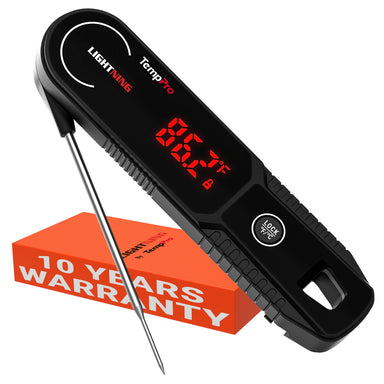
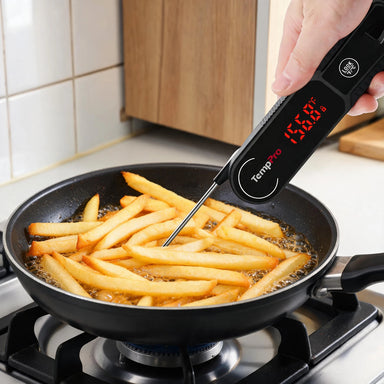
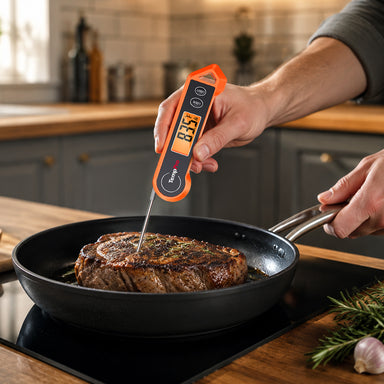
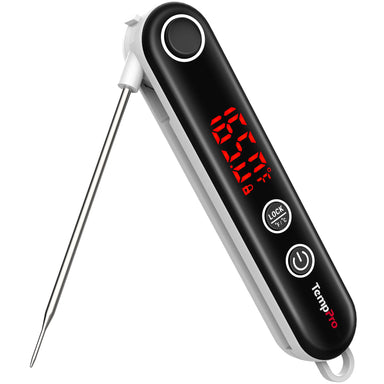
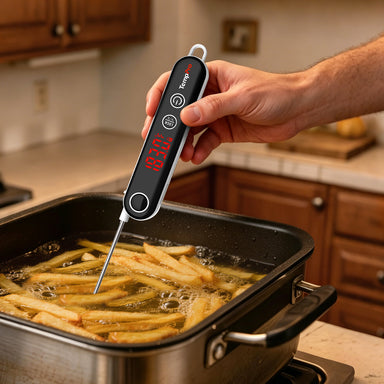
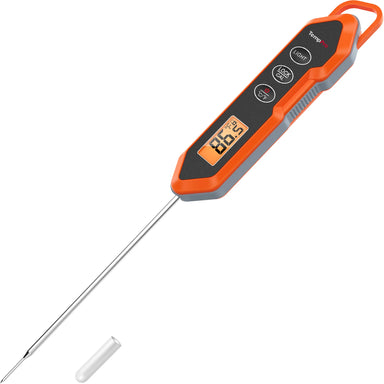
C'est là qu'un thermomètre à viande à lecture instantanée devient un outil indispensable dans votre cuisine. Le thermomètre à viande à lecture instantanée TempPro TempSwift Elite TP620 est conçu spécifiquement pour les cuisiniers amateurs qui veulent la sécurité sans complication. Au lieu de deviner ou de couper les aliments, vous insérez simplement la sonde dans la partie la plus épaisse de la viande et obtenez une lecture précise en 1 seconde.
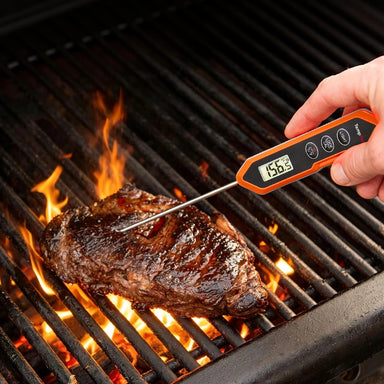
Lorsque vous faites des grillades à l'extérieur, rôtissez au four ou poêlez du poulet un soir de semaine chargé, vous pouvez rapidement mesurer la température de la viande.
Caractéristiques principales :
- Lecture ultra-rapide : Lorsque vous êtes au-dessus d'un gril chaud ou d'un four ouvert, vous ne voulez pas attendre. Le TP620 vous donne une lecture précise en quelques secondes.
- Haute précision : Les lectures sont précises à moins d'un degré Fahrenheit, vous pouvez donc faire confiance au chiffre que vous voyez. Avec une précision de ±0,9˚F (±0,5˚C), vous n'avez jamais à vous demander si la température interne est suffisamment proche.
- Étanche IP65 : vous pouvez le laver sous l'eau courante sans vous soucier d'endommager l'électronique.
- Mise en veille/réveil par détection de mouvement : Il économise la batterie en s'éteignant lorsque vous le posez et en se réveillant au moment où vous le ramassez.
- Grand écran rotatif automatique : Que vous soyez gaucher ou droitier, ou que vous atteigniez un four sombre, l'écran rétroéclairé pivote automatiquement afin que vous puissiez le lire sous n'importe quel angle.

Comment utiliser le TempPro TempSwift Elite TP620 pour savoir si la viande n'est pas assez cuite
Utiliser correctement le thermomètre à viande à lecture instantanée TempPro TempSwift Elite TP620 est tout aussi important que d'en posséder un. Suivez ces étapes chaque fois que vous cuisinez de la viande :
Étape 1 : Cuisez votre viande normalement jusqu'à ce qu'elle semble presque cuite. Utilisez vos indices visuels et de texture comme guide approximatif.
Étape 2 : Insérez la sonde dans la partie la plus épaisse de la viande pour mesurer la température de la viande. Évitez de toucher l'os, les poches de graisse ou la surface de cuisson. L'os conduit la chaleur différemment et donnera une fausse lecture.
Étape 3 : Retirez la viande du feu lorsqu'elle atteint la température cible et laissez-la reposer 5 minutes.
Réflexions finales
Cuisiner pour votre famille est un acte d'amour. En maîtrisant la façon de savoir si la viande est insuffisamment cuite, vous protégez cet amour des risques de maladies d'origine alimentaire. Adoptez la tranquillité d'esprit qui vient de la précision. Que vous soyez débutant ou que vous cuisiniez depuis des décennies, la transition de la supposition à la cuisson basée sur la température transformera votre expérience culinaire.
Le thermomètre à viande à lecture instantanée TempPro TempSwift Elite TP620 vous aide à cuisiner en toute sécurité, avec confiance et de manière constante, afin que chaque repas que vous préparez pour votre famille soit à la fois délicieux et sûr.


Commentaires
Vous aimerez peut-être aussi


Produits recommandés