Comment maîtriser la cuisine au feu de camp : conseils, outils et techniques


 288 Comments


Il y a une raison pour laquelle les gens se souviennent des repas cuisinés en plein air bien après avoir oublié ce qu'ils ont mangé mardi dernier. C'est peut-être la fumée, la compagnie, ou simplement la façon dont la cuisine au feu de camp vous oblige à ralentir et à être attentif. Quelle que soit la raison, cuisiner sur un feu rassemble les gens d'une manière qu'une cuisinière ne parvient jamais tout à fait à faire.
Cuisiner au-dessus d'un feu de camp n'est pas la même chose que les autres formes de cuisson en extérieur. La chaleur varie, le vent a son propre programme, et votre brûleur est un tas de braises incandescentes qui changent à chaque minute. Ce guide couvre les outils à emporter, les techniques à apprendre et quelques idées de repas pour vous aider à démarrer.
Ce qui rend la cuisine au feu de camp différente
Lorsque vous cuisinez à l'intérieur, vous avez des cadrans, des minuteries et des chiffres fiables. Mais lorsque vous cuisinez sur un feu ouvert, cela change complètement. Vous devez maintenant faire face aux flammes changeantes, à la couleur des braises et peut-être même à une spatule de fortune faite d'un bâton. C'est une expérience culinaire complètement différente, et elle récompense la patience plus que la rapidité.
Les bases de la cuisine sur feu ouvert
Même si cela n'en a pas l'air, un feu de camp a ses zones. Les flammes sont chaudes et imprévisibles, et conviennent bien mieux pour faire bouillir de l'eau que pour cuisiner. La vraie cuisine se fait sur les braises, les tisons incandescents qui restent une fois les flammes apaisées. Ces braises constituent une source de chaleur beaucoup plus stable et n'enduisent pas vos aliments de suie comme le fait une flamme ouverte.
Une règle à retenir : si les braises sont encore orange vif, elles sont généralement trop chaudes pour la plupart des aliments. Donc, selon votre plat, vous devrez attendre 10 à 15 minutes jusqu'à ce qu'elles soient recouvertes de cendres grises pour créer une surface de cuisson beaucoup plus stable et uniforme. Apprendre à les lire de cette manière est probablement la compétence la plus utile en cuisine au feu de camp.

Pourquoi la cuisine au feu de camp nécessite un ensemble de compétences spécifique
Il n'y a pas de thermostat ici. Vous vous ajustez en rapprochant ou en éloignant les aliments de la chaleur, en déplaçant les braises avec un long bâton, ou simplement en attendant un peu plus longtemps que vous ne le pensez. La direction du vent compte aussi, car une rafale peut pousser les flammes vers vos aliments ou votre visage sans prévenir. Rien de tout cela n'est difficile à apprendre. Il suffit d'un ou deux voyages avant que cela ne devienne évident et ne ressemble moins à des conjectures et plus à une routine.
Une fois que vous êtes à l'aise avec la lecture du feu, avoir les bons outils à portée de main rend tout le reste plus facile.
Outils importants pour la cuisine au feu de camp
Avoir de bons outils de cuisine de campement fait la différence entre batailler avec le dîner et réellement apprécier le processus de préparation d'un repas en plein air.
Équipement essentiel pour cuisiner en camping
Quelques articles valent la peine d'être emportés chaque fois que vous partez cuisiner en camping :
- Une poêle en fonte, qui retient la chaleur uniformément et peut supporter un contact direct avec les braises
- Des pinces et une spatule à long manche, pour que vos mains restent à une distance sécuritaire de la chaleur
- Une grille de cuisson qui s'adapte à votre foyer
- Du papier d'aluminium épais pour les repas en papillote
- Des gants résistants à la chaleur pour manipuler les ustensiles de cuisine chauds ou ajuster les braises
- Des broches à rôtir ou des brochettes en métal pour tout ce que vous voulez tenir directement au-dessus des flammes
Rien de tout cela ne doit être coûteux. La plupart des campeurs constituent leur équipement complet sur plusieurs saisons plutôt que d'acheter tout en une seule fois, ajoutant des pièces au fur et à mesure de leurs besoins.
Pourquoi un thermomètre fiable doit figurer sur cette liste
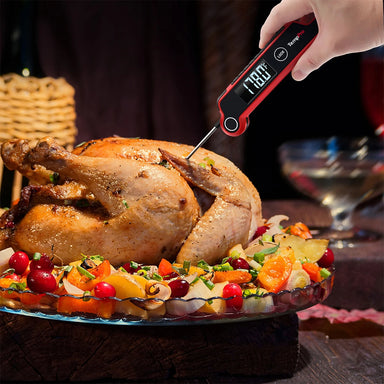
Juger de la cuisson en regardant un morceau de poulet éclairé uniquement par la lumière du feu est vraiment difficile, et couper la viande pour vérifier ne fait que laisser s'échapper les jus avant que vous ne soyez prêt à servir. L' USDA note que la sécurité alimentaire en camping dépend fortement de la cuisson de la viande et de la volaille à une température interne sûre, car les options de réfrigération et de réchauffage sont limitées une fois que vous êtes loin de chez vous.
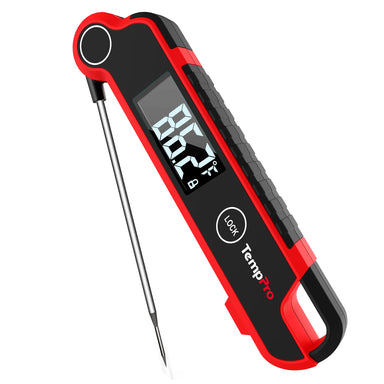
C'est là qu'un thermomètre à sonde sans fil gagne sa place dans votre sac, vous permettant de consulter votre téléphone au lieu de retirer les aliments du feu toutes les quelques minutes pour vérifier. Maintenant, l'étape suivante consiste à apprendre à gérer le feu lui-même.
Conseils de cuisine au feu de camp pour débutants
Si vous débutez, voici les conseils de cuisine au feu de camp que les campeurs expérimentés ont tendance à répéter à tous ceux qui veulent bien les écouter.
Allumer le bon feu
Commencez petit. Une structure gérable en tipi ou en cabane en bois construite avec du petit bois sec s'enflamme plus rapidement et brûle plus proprement qu'un tas géant de bûches. Le bois dur sec brûle plus longtemps et vous donne des braises plus stables que le bois tendre, qui a tendance à brûler rapidement et à laisser moins de quoi cuisiner. Le National Park Service recommande de garder votre feu modeste et de le construire à l'intérieur d'un anneau de feu désigné, à la fois pour la sécurité et parce qu'un feu plus petit est simplement plus facile à cuisiner.
Gestion des zones de chaleur
Poussez des braises d'un côté de votre foyer et laissez l'autre côté plus bas et plus frais. Cela vous donne une zone chaude pour saisir et une zone plus douce pour les aliments qui doivent cuire sans brûler à l'extérieur. La plupart des cuisiniers de camp expérimentés déplacent leurs aliments entre ces zones plutôt que de les laisser au même endroit tout le temps.
Sécurité alimentaire lors de la cuisson au feu de camp
La viande crue doit rester séparée de tout ce que vous prévoyez de manger sans cuisson, y compris l'assiette ou la planche à découper que vous avez utilisée. Lavez-vous les mains ou utilisez un désinfectant pour les mains avant de manipuler les aliments, et ne comptez pas sur l'eau directement d'un ruisseau ou d'un lac à moins de l'avoir traitée au préalable. Le tableau des températures internes minimales sûres de FoodSafety.gov est également utile ici, car les chiffres ne changent pas simplement parce que vous cuisinez en plein air plutôt que dans votre cuisine.
Techniques de cuisine au feu de camp que tout cuisinier en plein air devrait connaître
Une fois que les bases vous semblent familières, ces techniques de cuisine au feu de camp couvrent la plupart de ce que vous voudrez préparer en extérieur.
Grillade directe
Placez une grille sur vos braises et cuisinez comme vous le feriez sur un barbecue ordinaire à la maison. Cela fonctionne bien pour les hamburgers, les saucisses et les légumes, tout ce qui cuit assez rapidement et ne craint pas un peu de carbonisation sur les bords.
Cuisson en papillote
Enveloppez les aliments et les assaisonnements dans plusieurs couches de papier d'aluminium et placez le paquet directement sur les braises. C'est une méthode tolérante car les aliments cuisent à la vapeur à l'intérieur de leur petit sachet, ce qui rend plus difficile de les dessécher ou de les brûler. Le poisson, les pommes de terre et le poulet se conservent bien cuits de cette manière.
Brochettes et bâtons à rôtir
Les hot-dogs, les guimauves, la viande coupée en dés ou les légumes se prêtent bien à être enfilés sur un bâton et tenus au-dessus des braises. C'est lent, c'est un peu social puisque chacun peut cuisiner son propre repas, et cela ne nécessite presque aucun équipement.
Cuisine à la cocotte et aux braises
Une cocotte en fonte posée directement sur les braises, parfois avec quelques braises supplémentaires empilées sur le couvercle, peut accueillir des ragoûts, du pain et même des pâtisseries que l'on n'attendrait pas normalement d'un camping. Ce type de cuisson en fonte sur feu de camp prend plus de temps à mettre en place que les autres méthodes ici, mais il ouvre la porte à toute une catégorie de recettes de camping en cocotte une fois que vous êtes à l'aise avec cela.
Avec ces techniques prêtes à l'emploi, il est temps d'en appliquer quelques-unes.
Repas faciles à essayer en camping
Une fois que vous maîtrisez une ou deux techniques, voici quelques plats de cuisine au feu de camp qui valent la peine d'être essayés lors de votre prochain voyage. Considérez-les moins comme des recettes strictes et plus comme un point de départ pour votre propre menu de camping.
Idées de petit-déjeuner : hachis de petit-déjeuner en papillote avec pommes de terre, poivrons et œufs cuits directement dans le papier d'aluminium. Bacon et œufs dans une poêle en fonte si vous préférez la simplicité. Des crêpes sur une plancha pour ceux qui en ont emporté une.
Idées de dîner : Saumon en papillote avec citron et herbes fraîches. Brochettes de poulet et de légumes cuites lentement sur les braises. Une marmite de chili mijotant dans une cocotte pendant que tout le monde finit d'installer le camp pour la nuit.
Dessert : Les classiques s'mores, bien sûr, mais aussi des bananes enveloppées dans du papier d'aluminium, farcies de chocolat et placées près des braises jusqu'à ce que tout devienne mou et fondant à l'intérieur de la peau. Ces types de recettes de feu de camp simples ont tendance à devenir des traditions de voyage plus rapidement que tout ce qui est cuisiné à la maison.
Des résultats parfaits à chaque fois : pourquoi le contrôle de la température est important
Même les personnes qui cuisinent en extérieur depuis des années retirent parfois la viande trop tôt ou la laissent trop longtemps, car juger de la cuisson à l'œil est difficile lorsque la lumière est mauvaise et que la chaleur est inégale.
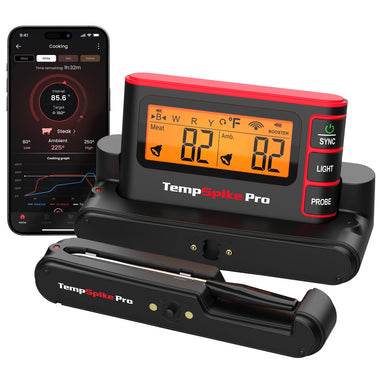
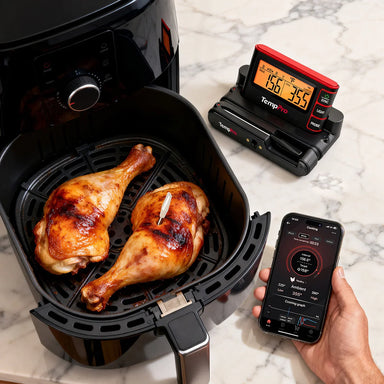
Un thermomètre sans fil comme le TempPro TempSpike Plus TP970 vous permet de surveiller les aliments sans rester au-dessus du feu, ce qui facilite grandement la cuisson tout en installant le camp ou en passant du temps avec votre groupe. C'est un thermomètre Bluetooth véritablement sans fil, il n'y a donc pas de câble reliant vos aliments à une unité de base à proximité, et la sonde fine résiste bien à une flamme ouverte, un grill ou un fumoir.
Une portée Bluetooth de 600 pieds signifie que vous pouvez vous éloigner pour monter une tente et recevoir quand même une alerte dès que votre plat est prêt, et la sonde se nettoie en quelques secondes grâce à sa conception étanche.

Quelles techniques et quels outils de cuisine au feu de camp vous conviennent le mieux ?
Chaque voyage ne nécessite pas la même configuration. Un week-end de camping en voiture avec un grand groupe pourrait nécessiter une cocotte et une glacière pleine d'ingrédients. Une randonnée rapide d'une nuit pourrait ne laisser de place dans votre sac qu'à une poêle et un rouleau de papier d'aluminium. Laissez la taille de votre groupe, la durée de votre voyage et le poids que vous êtes prêt à transporter guider le choix des outils et des techniques cette fois-ci.
Considérations finales
Cuisiner au feu impliquera toujours des essais et des erreurs, mais se présenter préparé, de la lecture des braises à la connaissance de vos zones de chaleur, est ce qui transforme un cuisinier stressé en un cuisinier détendu. C'est vraiment le secret : moins de temps à rester au-dessus du feu, plus de plaisir à en profiter avec tout le monde réuni.


Commentaires
Vous aimerez peut-être aussi


Produits recommandés