How to Cook a Yellowstone-Worthy cowboy Steak Over Fire


 288 Comments


A few pounds of bone-in ribeye, sizzling over a flame, is reminiscent of the Dutton ranch in Yellowstone. Flames shoot up from the grill grates, fat crackling from the coals, and smoke curls around nearly as large of a piece of beef as the plate.
And yet, despite how beautiful it all looks easy. Light some fires. Place a huge steak on them. Grill the steak and eat. Only, there is nothing quite as unpredictable as using a live flame instead of setting your kitchen stovetop to medium-high.
A live flame does not have a temperature gauge. One area could be blazing while another area is much cooler. When a large amount of beef fat drops onto the coals, flames will suddenly appear. Because of the size of a cowboy steak (typically many inches thick), you can achieve a deep, rich, caramelized crust while the interior still has considerable cooking left. Therefore, cooking over a live flame is more of a matter of learning to manage the heat, as opposed to adhering to a specific number of minutes.
Table of Contents
8 Easy Steps to Grill Cowboy Steak
Below are eight fundamental methods for cooking a cowboy steak worthy of Yellowstone.
Step 1. Choose a cowboy steak worthy of the title
To refer to something as a cowboy steak do not start with anything small. A cowboy steak is essentially a very thick cut of bone-in ribeye. The exposed rib bone lends to the ruggedness of the steak, while the massiveness allows for proper cooking over Fire. Find a good cut with good marbling throughout.
Marbling refers to the streaks of intramuscular fat within the muscle. These areas provide a great deal of flavor in both ribeyes and become especially critical when extreme temperatures occur during cooking. Massive cuts allow you time to generate a nice char on the outside without immediately overcooking the interior. While this is certainly not intended to resemble your average Tuesday night steak, go big.
Step 2. Start with a real wood or Charcoal Fire
As appealing as cowboy steak is in terms of the Fire itself, the type of fuel used is significant. Charcoal generates extreme amounts of heat while burning hardwood provides an added layer of smoke and that distinct smell associated with cooking over an open flame. Do not assume that simply having more flames means better steak.
Ultimately, you want consistent heat that you can count on rather than constantly battling flames all around the grill. Keep in mind, you are working with a massive piece of beef. Your steak may sit next to an open flame longer than a thin supermarket ribeye would take to cook.

Step 3. Divide your grilling space into two areas: hot & cool
This is likely the single most important lesson in live Fire cooking. Grill space should not be divided evenly throughout. Instead divide your grill space into at least two separate heat zones: One with intense heat and One with moderate heat.
Why? Fire is not static. Dripping fat from your ribeye can cause sudden eruptions of flames. The crust can develop faster than expected on the exterior. While your steak may look absolutely fine on the outside while still needing additional time to finish internally.
Having two heat zones affords you options. Consider your hot zone as the region where you create the crust and develop color on your steak.
Step 4. Season your steak as if you were a cowboy
High-end cowboys do not require their steak to hide behind complex flavors. Before you Season your steak Pat it thoroughly dry to remove moisture from the surface. Moisture on the surface can prevent the browning you are attempting to create.
Keep your seasoning basic. Salt and fresh black pepper can easily let your beef, smoke and Fire dominate your flavor profile. Season liberally since you are working with such a massive piece of beef. Once your steak is prepared and your Fire has reached stable levels and is manageable, you can proceed with cooking.
Step 5. Establish your deep, caramelized crust
Begin placing your cowboy steak directly above the hotter portion of your Fire. Instantly you will know it has begun. The exterior will begin to sear, the fat will begin melting and smoke will rise as melted fat drips onto your coals.
At this point your cowboy steak will begin to visually define itself. However, do not confuse high flames with browning. Should fat produce severe flareups which result in charring of your steak, remove it briefly.
Live Fire cooking requires interaction. Adjust and turn or reposition your steak as needed to produce a deep, caramelized crust across all surfaces being grilled. Next think about the interior. Since this steak is so massive, it may visually appear done on the outside while indicating a vastly different reality internally.
Step 6. Monitor steak temperature using a meat thermometer
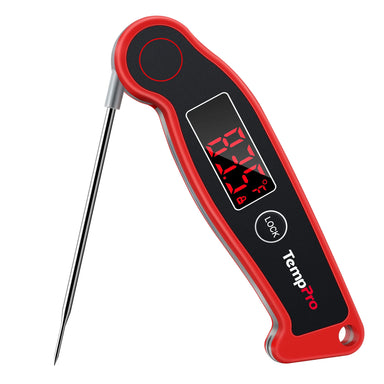
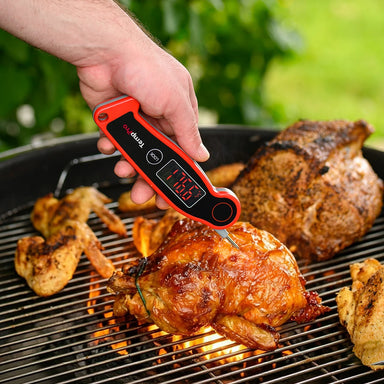
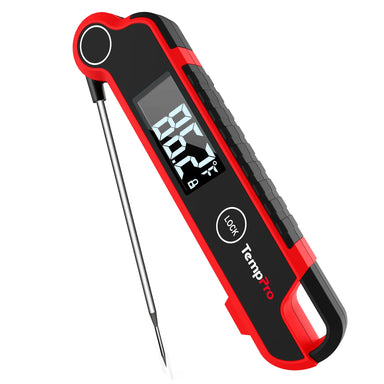
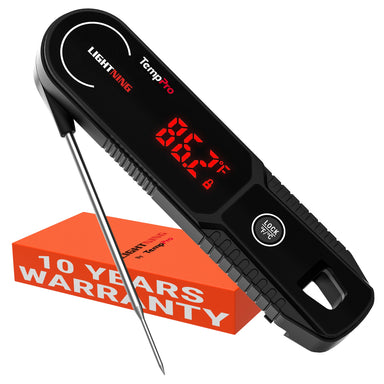
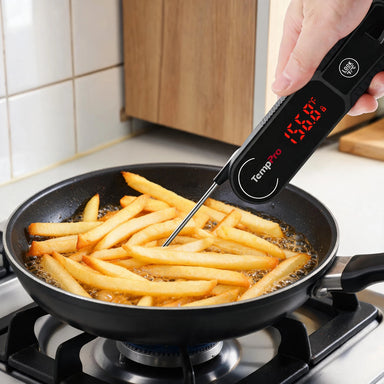
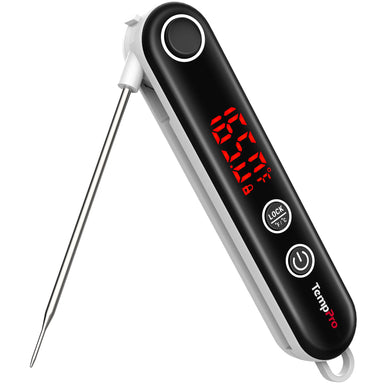
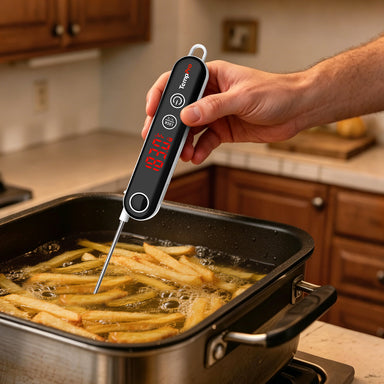
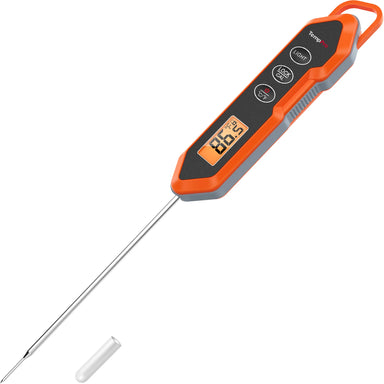
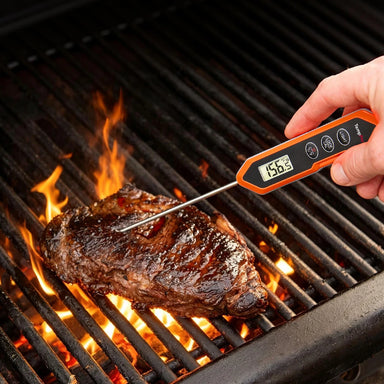
Because an open flame produces no consistency in heat and temperature, relying solely upon visual inspection cannot be relied upon for determining internal temperature. In these situations, utilize the TempPro TempSwift PLUS TP19H Instant-Read Meat Thermometer to monitor the steak temperature during the cooking.
The TempSwift PLUS TP19H delivers internal temperature readings within 1-second response time with ± 0.9 °F accuracy, allowing you to measure internal temperature quickly without removing your steak from the heat source for extended periods of time.
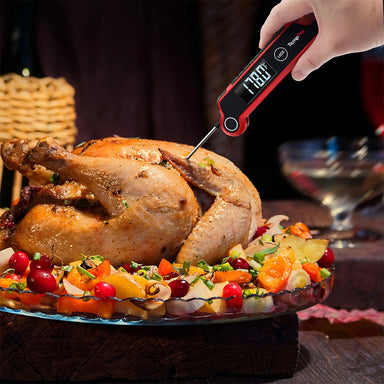
TempSwift PLUS TP19H includes a 4-inch food grade stainless steel probe specifically designed for larger thicker cuts like the cowboy steak. Insert your probe into a large chunky area of the steak making sure to avoid contact with bone.
Additionally, TempSwift PLUS TP19H contains an auto-rotating back-lit display that aids in viewing displays in low light conditions outdoors near an open flame once daylight fades.

Step 7. Utilize multiple heat zones vs firing up the whole Fire
Creating two heat zones ultimately pays off here. Should you have created the crust you desire however the center still needs additional cooking time, transfer your steak towards cooler sections. You do not need to continue blasting that nicely browned crust with intense heat. Allow continued development of the center under milder heat.
Check your steak using the TempSwift PLUS TP19H as you get closer to reaching your internal temperature. Due to TempSwift PLUS TP19H delivering internal temperature readings in approximately 1 second you can perform quick checks and immediately focus on controlling the flame.
TempPro TempSwift PLUS TP19H also has a lock feature that freezes readings on the screen after you remove the probe while motion-sensing sleep/wake helps save battery life when you set it aside between measurements.
FAQs About Cooking Cowboy Steak
What is a cowboy steak?
A cowboy steak is a thick bone-in ribeye, typically featuring an exposed section of rib bone. Its size and thickness make it particularly well suited to high-heat grilling and live-fire cooking.
Why should you create two heat zones?
Two zones give you greater control. The hotter section can develop browning and crust, while the cooler section lets the thick interior continue cooking without constantly exposing the exterior to maximum heat.
Why shouldn't you rely only on cooking time?
Live fires vary in intensity, and steaks differ in thickness and starting temperature. Two steaks cooked for the same amount of time can therefore develop differently. The TempPro TempSwift PLUS TP19H measure internal temperature of the steak in 1 second response time with ±0.9°F accuracy, making it useful for quickly checking a steak while cooking over fire.
Where should you insert the thermometer into a cowboy steak?
Insert an instant-read meat thermometer into a thick section of the meat and avoid direct contact with the bone. The TempPro TempSwift PLUS TP19H includes a 4-inch food-grade stainless steel probe, which is useful for reaching into substantial cuts such as cowboy steaks.


Comments


Recommended Products