How to Grill Brazilian Picanha the Star of Your Next Cookout


 288 Comments


The beauty of Brazilian-style picanha lies in the simplicity of preparation, especially when compared to other cuts of meat. A decent Piece of beef, some coarse salt, and serious heat will result in one of the most unforgettable steaks at any Cookout. The real star of this show is the thick fat cap. When cooked correctly, the fat cap creates a perfectly browned exterior, while the beef itself remains moist and tender.
Table of Contents
8 Easy Steps to Grill Brazilian Picanha
Simple as these ingredients are, achieving that perfect crust requires skill and practice. Here are the 8 key steps to prepare traditional Brazilian picanha at home.
Step 1: find your cut
Picanha is typically found near the top sirloin cap and is easily identifiable by the layer of fat that covers about half of it. Don’t trim off that layer of fat. It’s that layer of fat that gives picanha such a unique taste and texture. Depending upon your local butcher, you might find picanha referred to as sirloin cap, rump cap, or coulotte.
Step 2: keep things simple
As you look through various recipe books or online forums discussing picanha, you’ll notice many cooks recommend using a vast array of spices. Not here. Traditional Brazilian-style picanha is often kept as simple as possible. Coarse salt does most of the work here. That’s intentional. The fat and beef flavors have a lot to offer already; grilling adds yet another level of smokiness. Sometimes, less really is more.
Step 3: get serious about heat
Picanha absolutely loves heat. Make sure your grill is properly heated prior to adding your picanha. Additionally, try setting up multiple areas with varying levels of heat on your grill. This will allow you to get that initial crust and then transfer the picanha to a cooler spot if the outside browns faster than the inside cooks. As you gain experience with thicker steaks, this little trick can make cooking them much more manageable.

Step 4: work on those layers of fat
Just like your beef, those layers of fat need to cook too. To achieve the perfect browning and rendering of fat, expose the fat cap to sufficient heat so that it begins to melt and turn golden-brown. Be careful though when you’re burning fat drippings onto scorching hot coals, you could end up with huge flare-ups. So, be prepared to move your picanha when you feel there’s potential for flames to engulf it entirely. All you want to do is achieve browned, melted fat and nice charring, not burn that exterior.
Step 5: get that crust without burning out the middle.
When your picanha gets close to extreme heat, things start to happen rapidly. On the outside, it can develop a seriously dark crust while remaining largely undercooked internally. This can be deceiving visually because you cannot judge whether the beef is fully cooked by merely glancing at its surface. In addition, since every Piece of picanha varies in size and thickness, never assume they will all be done at the same time. Instead, begin checking each Piece individually once you reach your ideal doneness.
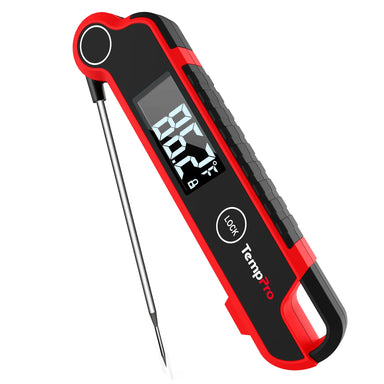
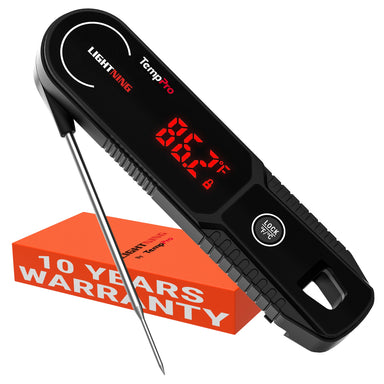
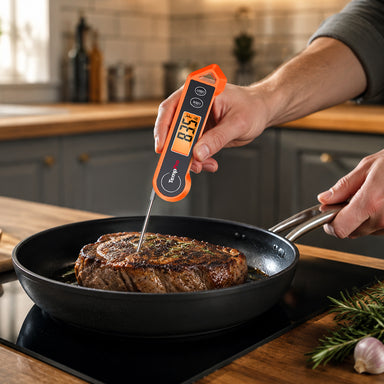
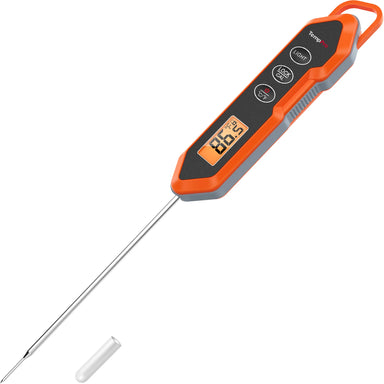
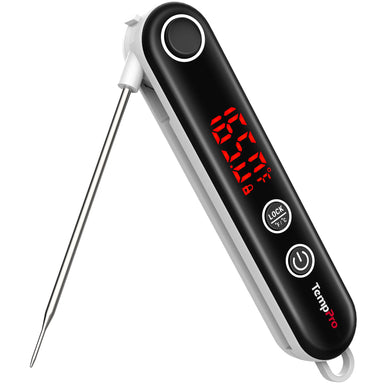
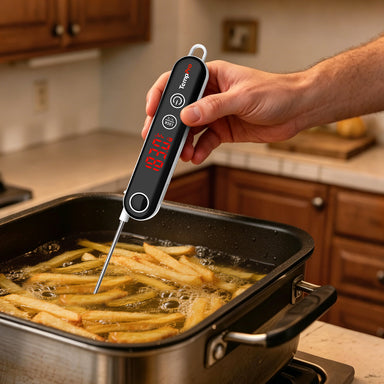
Step 6: check temperature using the TempPro TempSwift ELITE TP19
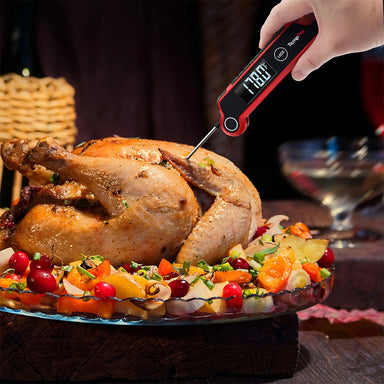
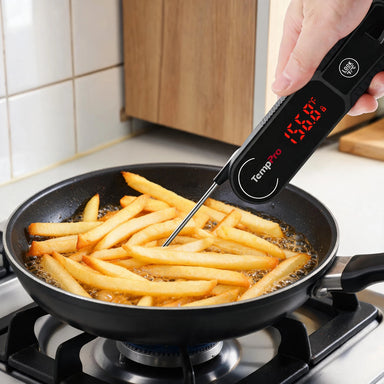
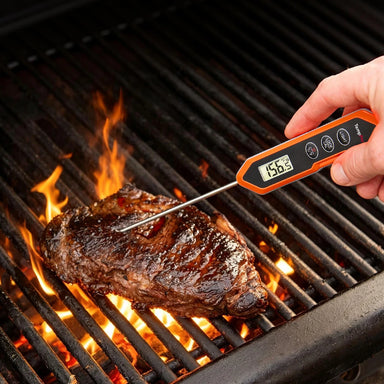
For anyone who plans on working directly above a very hot grill, it’s highly recommend using the TempPro TempSwift ELITE TP19 Instant-Read Meat Thermometer. It is designed to provide accurate digital readouts in just 0.5 second with ±0.9°f (±0.5°c) precision. Insert the food-grade thermocouple probe provided by TempPro into the thickest portion of the beef and you can immediately check what’s taking place within without having to keep your hand hovering over the grill. Its temperature lock feature allows you to lock-in your current reading and safely move the thermometer away from the grill before reviewing the results on the large 2” backlit display that is capable of rotating 180 degrees to accommodate viewing angles from multiple directions.

Step 7: pull steaks based upon temperature
While cooking times are excellent starting points for determining the optimal length of time to cook individual pieces of picanha, they should never be considered absolute measurements. Variables such as picanha thickness, grill temperature, and placement contribute significantly toward overall cooking time.
Use the TempSwift ELITE TP19 to continuously monitor each Piece as it approaches your desired internal temperature. If one Piece still has a ways to go, leave it alone. Conversely, if another Piece has achieved your ideal internal temperature, pull it off the grill.
The TempSwift ELITE TP19 features automatic power-on functionality which occurs when opening its probe and also can be activated via pick-up while asleep, providing you with quick access to repeat temperature checks throughout a chaotic Cookout environment. Additionally, its rugged IP65-rated design allows for ease of cleaning when your grilling is complete.
Step 8: Rest & slice before serving
After removing your picanha from the grill, allow it sufficient time to Rest before slicing and serving the beef. Carefully cut slices perpendicular to the grain direction so that you receive tender bites.
Do not cover up your finished steak with sauce. The richly grilled exterior combined with rendered fat and moist interior is all you need to attract people to your dish. Place sliced picanha in the center of your dining table and let everyone serve themselves.
FAQs about Grilling Brazilian Picanha
What is picanha?
Picanha is a beef cut from the top sirloin cap that's especially popular in Brazilian barbecue. One of its defining characteristics is the thick fat cap covering one side.
Should you remove the fat cap from picanha?
Typically, no. The fat cap is an important part of picanha's flavor and grilling characteristics. Allow it to render and brown during cooking.
Does Brazilian picanha need a marinade?
Not necessarily. One of the appeals of Brazilian-style picanha is its simplicity, with coarse salt often playing a major role in seasoning.
Why use the TempPro TempSwift ELITE TP19 for picanha?
The TempPro TempSwift ELITE TP19 provides readings in 0.5 second with ±0.9°F accuracy, making it useful for quickly checking several pieces of beef over a hot grill without relying solely on cooking time or exterior color.
Conclusion
Picanha demonstrates that memorable outdoor cooking does not necessarily involve complex recipes. Follow these steps: use the right cut. Preserve that fat cap. Season simply. Employ strong but controlled heat. Rely solely on visual cues for determining when the meat is cooked.
TempPro offers instant internal temperature readings through their TempSwift ELITE TP19 Instant-Read Meat Thermometer which enables monitoring individual pieces versus relying on mere estimates based on crust color or cooking duration.


Comments
Recommended Products