Tailgate Cooking: How to Cook Meat Safely in Parking Lots


 288 Comments


When we say "tailgating" sounds simple, we mean it. You get some meat into a cooler, toss a portable grill in the car, add a flimsy old folding chair and you're all set. For a little bit, you'll probably feel like you've got everything under control. Then someone will ask the one question that immediately kills the party atmosphere: "Hey...is that chicken done?" and suddenly, nobody has anything to say. Everybody is staring at the grill. Somebody will shake their head. And somebody else will say, "I think so." and just like that, all confidence is lost. You've entered the world of parking lot cooking, where confidence abounds; expectations are relatively low; and food safety is largely determined by pure luck.
Your 1st Worst Enemy: Guessing Whether Your Meat is Done
You don't even notice many of the benefits you enjoy while cooking at home. A refrigerator to keep your meat cold, a sink to wash, adequate light, and clean surfaces. None of these exist at a tailgate. All you get is a cooler that's only supposed to be cool enough, one pair of tongs to handle every piece of meat you have, and a grill that cooks unevenly. Now, throw in wind, smoke, distractions, and someone claiming that "it looks fine," and you have the makings of disaster.
The worst enemy of people who attempt to cook during a tailgate is making guesses about whether their meat is done. People generally rely on non-specific checks such as: "it looks brown", "it's been long enough", or "I flipped it twice". That is NOT cooking, that is playing roulette. While playing roulette may occasionally result in good fortune i.e., cooked meat, when it does fail, it ruins the whole experience. And under-cooked chicken is particularly hazardous, since it poses serious health risks.
Color Does Not Equal Doneness
Many people believe that color indicates the doneness of their meat. It does not. Chicken can appear very lightly pink and be perfectly safe to consume. Pork can look well-cooked and be too far below a safe minimum internal temperature. The problem gets worse at a tailgate because your ability to see what is cooking is highly variable. Between the sun shining directly down upon you, various shadows created by the grill cover and/or nearby objects, smoke obscuring your view of the grill surface, and grease creating an opaque film over the grill surface, everything appears "good enough". Therefore, if you solely rely on color to determine whether your meat is done, you are not checking, but you are guessing. And guesswork is how people regret their food choices after the fact.

Time is Not Reliable
Timing is also not a reliable indicator. Some smart aleck always suggests "add 5 minutes". But what is "5 minutes"? How do you know what your grill temperature is at any given moment? Grill temperatures fluctuate continuously depending on wind direction/velocity, the quantity of fuel remaining in the tank, and how frequently you lift/lower the lid on the grill. Furthermore, two pieces of identical burger meat placed side-by-side on a grill will cook at entirely different rates. Time is merely a rough estimate, not a reliable indicator of whether your meat is cooked.
Temperature Provides Real Answers
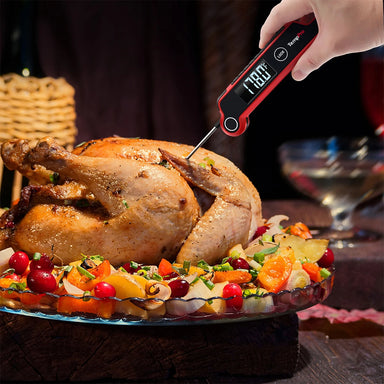
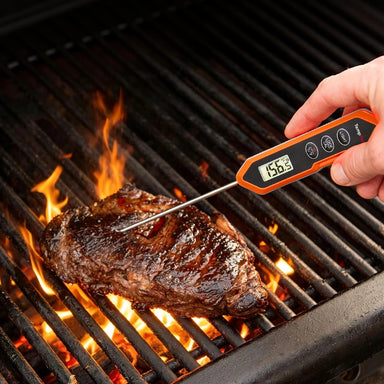
Temperature provides actual data about what's occurring inside your meat, but not just what it looks like on the exterior. With temperature as your guide, all aspects of cooking become predictable. Chicken should achieve 165 degrees Fahrenheit. Burgers should achieve 160 degrees Fahrenheit. Pork should achieve 145 degrees Fahrenheit. Steak is dependent upon individual preference, but must still be monitored for temperature. These numbers represent the difference between having confidence and expressing concerns regarding whether others will be adversely affected by consuming your culinary creations.
Why Temperature Matters More During Tailgating
During a tailgate event, temperature becomes more significant due to lack of options for correcting mistakes. At home, errors can usually be corrected. At a tailgate event, they cannot. There is no secondary course to prepare, no kitchen available to assist with corrections, and minimal opportunity to recover from incorrect assumptions made during food preparation. If your food does not meet expectations — you either serve questionable meat or eat nothing.
Another Often-Overlooked Issue: Cross-Contamination
Cross-contamination occurs much more frequently than most people would care to admit. Raw chicken is grilled; then cooked chicken returns to the same plate as the raw chicken. The same tongs are utilized for each item being grilled. In one swift action, all previously accomplished tasks have been rendered obsolete. To rectify this situation, simply ensure that cooked items never return to plates that had contact with raw meats; utilize multiple plates whenever feasible; and refrain from utilizing the same utensils for both raw and cooked foods. It is elementary yet represents perhaps the greatest source of error among those preparing food at tailgates.
Which Tool Can Eliminates Guesswork?
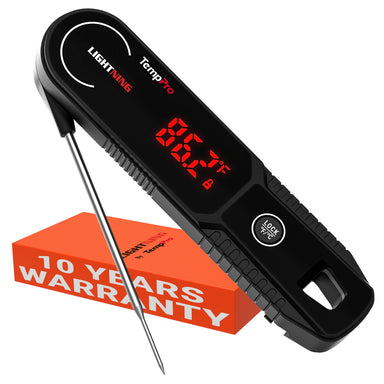
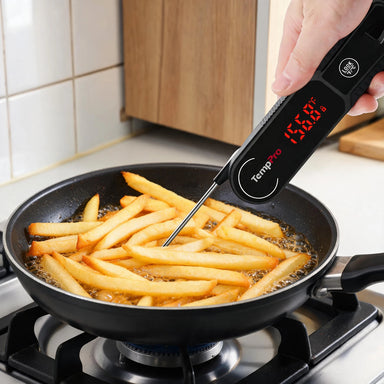
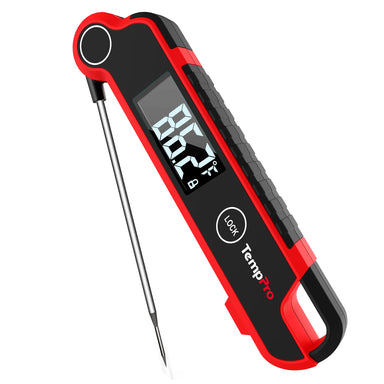
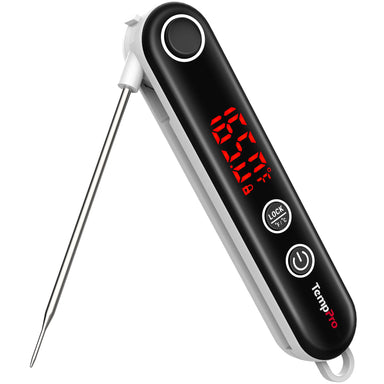
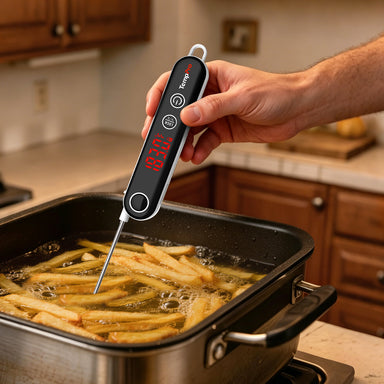
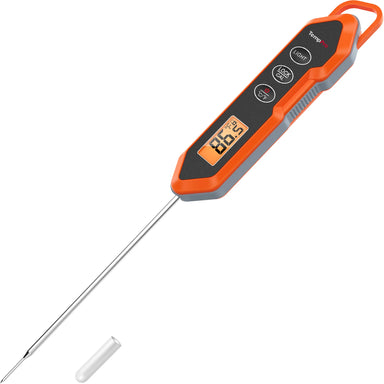
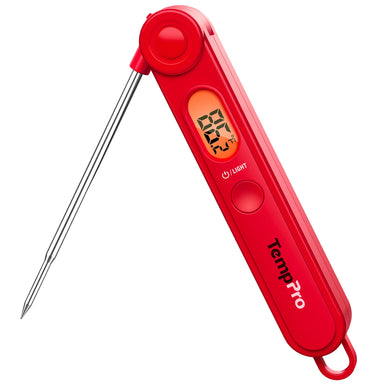
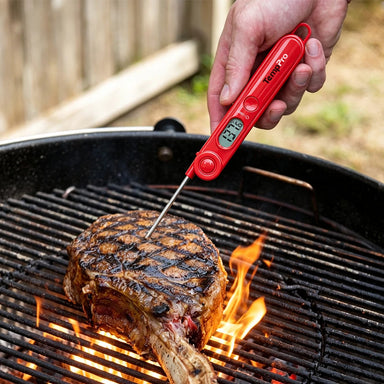
Although the primary concern was determining which steps needed to be taken in order to prevent errors related to under-cooked meat obtaining accurate readings of internal temperatures became increasingly difficult in the midst of chaos. That is why the TempPro TempSwift Elite TP19 Instant-Read Meat Thermometer greatly alleviates pressure associated with the aforementioned difficulties. Rather than speculating about whether your meat is cooked, you simply measure its internal temperature. The TempPro TP19 yields accurate temperature readings within ±0.9° F in approximately one-second intervals. As such, rather than spending your time ponderously questioning the status of your meat, you obtain rapid feedback regarding its internal temperature status. Speed matters during tailgating events as each additional minute spent cooking your meat significantly increases the likelihood of overcooking it.

Why the TempPro TP19 Works Well for Tailgating Events
The TempPro TP19 was developed for real-world applications. The rotating display ensures readability from any angle regardless of how obtrusively you lean over a congested grill area. The motion-sensing on/off feature eliminates the need to press buttons, merely lift it to activate/deactivate. Additionally, it is fully water-resistant, allowing you to rapidly clean it when necessary. Lastly, a strong magnetically-backed base ensures secure fastening to your grill unit, minimizing loss during chaotic situations. Each detail mentioned above contributes toward increasing probability of utilizing the device effectively during critical moments.
Immediate Results Occur After Stopping Guesswork
As soon as you begin checking internal temperatures rather than continuously attempting to gauge visual cues indicating whether your meat is done, substantial differences emerge almost immediately. You no longer second-guess yourself when determining whether or not to remove items from the grill. You no longer rely on untrustworthy indicators. You no longer waste juices as you continually cut into meat while waiting for visual confirmation. Your chicken remains juicy, your steaks retain juices, and your pork remains tender. Regardless of whether you employ similar ingredients and cooking techniques, your overall results are significantly improved due to eliminating guesswork.
A Simple Kitchen Tool Produces Better Results
Having a straightforward process helps alleviate anxiety caused by unpredictable variables at play during tailgating events. Store raw meat products in refrigerated units until ready for grilling. Grill using consistent heat as often as possible. Measure internal temperatures rather than relying on subjective opinions or unreliable indicators. Remove the finished product when internal temperature reaches acceptable limits. Allow the removed product to sit for several seconds prior to serving. That is it. No slicing through meat, no reliance on guesswork, and no hope for success.

FAQ about Cook Meat Safely in Parking Lots
Q1. How do you cook meat safely at a tailgate?
Keep it cold before cooking, cook to proper internal temperature, and avoid cross contamination.
Q2. What temperature should chicken be at a tailgate?
165°F internal temperature.
Q3. Can you rely on color to check meat?
No. Color is unreliable, especially outdoors.
Q4. Do I need a meat thermometer for tailgating?
If you want safe and consistent results, use a meat thermometer will be better.
Q5. How do I avoid food poisoning at a tailgate?
Cook meat fully, avoid cross contamination, and don't guess meat doneness.
Conclusion
Ultimately, tailgating events are not about food alone, but they are about an enjoyable experience watching games with friends without stressing about whether your decision-making skills as a chef will negatively impact the collective enjoyment experienced by all attendees.


Comments

Recommended Products