Why Some Burgers Stay Juicy and Others Dry Out


 288 Comments


A burger looks like the simplest thing you can cook. Grind some beef, shape a patty, put it on the grill. Yet two people can start with the same meat and the same heat, and one ends up with a juicy, flavorful burger while the other gets something dry and crumbly.

The difference usually has little to do with seasoning or the cut of beef. It comes down to what happens to the temperature inside the patty, and whether you catch it at the right moment.
What Keeps a Burger Juicy
Juiciness is really about moisture retention. As ground beef cooks, the proteins tighten and start pushing water out while the fat slowly melts. When those two processes stay in balance, the patty holds onto enough moisture and rendered fat to stay tender. Once the water leaves, though, it never comes back.
And the single biggest factor controlling how fast that water leaves is internal temperature.
Why Guessing Fails
Most cooks judge doneness by eye. They cut into the middle to check the color, count on grill marks, or simply go by time. None of these hold up in practice. Color is a poor indicator of actual doneness, and cooking time swings wildly with patty thickness and grill heat. Pressing the patty to feel its firmness is even worse, because every press squeezes out the very juices you are trying to keep.
Even experienced grillers miss the window this way. The margin is just too narrow to hit by feel.
The 160°F Sweet Spot
Ground beef needs to reach 160°F internally to be safe to eat. That number matters in both directions. Pull the burger early and it is undercooked. Let it climb even a few degrees past 160°F and the moisture loss becomes noticeable in every bite.

So the goal is not to get close to 160°F. The goal is to land on it.
The Overcooking Trap
The most common mistake is leaving burgers on the grill a little longer for extra safety. Those extra minutes push the internal temperature well past the ideal point, and they cost more than most people realize.
Carryover cooking makes it worse. After you take a burger off the heat, its internal temperature keeps rising for a short while. If you are not tracking the temperature, you have no way of knowing the patty blew past 160°F while it was resting on the plate.
Take the Guesswork Out
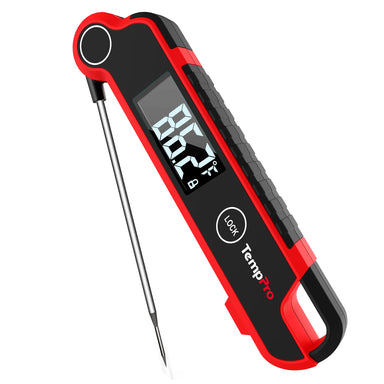
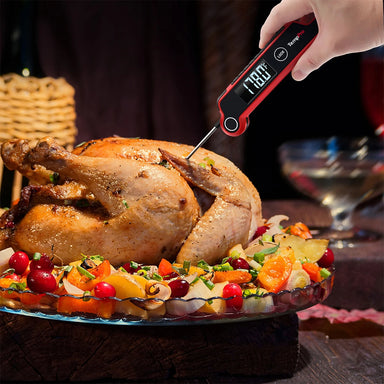
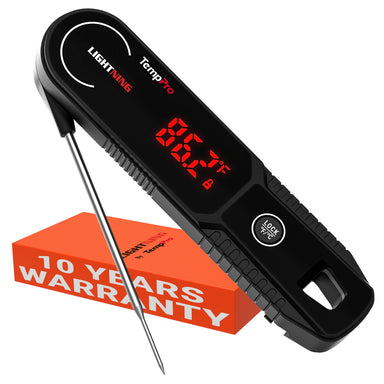
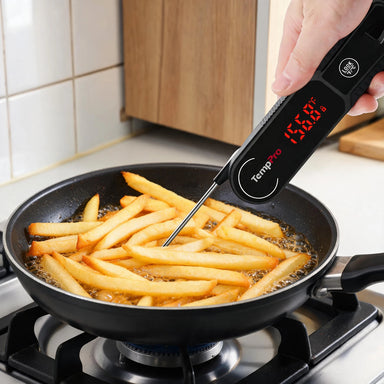
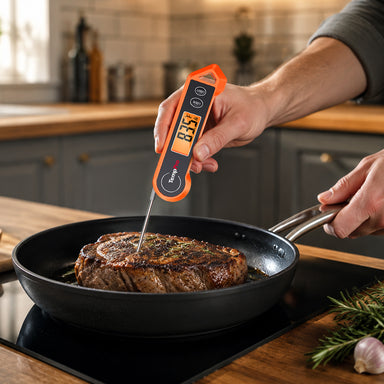
This is exactly the problem an instant read thermometer solves. The TempPro TP18S instant read meat thermometer gives you a reading in two to three seconds, so you can check a burger without leaving it parked over the heat while you wait.
Its thermometer sensor is accurate to within 0.9°F across a range of 14 to 572°F, which is more than enough precision to land inside that narrow window where a burger is both safe and juicy. The 4 inch food grade probe reaches the center of the patty, which is where the reading actually matters.
A few thoughtful details make it easier to use at the grill. You can hold the reading on screen after pulling the probe out, so there is no need to hover over the heat to read it. The large backlit display stays legible in bright sun or in the dark, and the probe folds away with a magnetic back and a hang hook for storage. It also supports recalibration, so the accuracy holds up season after season.
The end result is simple. You know when your burger is done instead of wondering.

Getting It Right Every Time
Good technique starts before the grill is even hot. Shape your patties loosely, because compacting the meat too much makes the final texture dense and dry. Preheat the grill or pan fully so the burgers cook evenly from the moment they go on.
Once the burgers are cooking, leave them alone. Do not press down with the spatula, and flip only once. Every press pushes juice out, and constant flipping just makes the patty cook unevenly.
As they get close to done, start checking the internal temperature rather than waiting for them to look finished. For lightning-fast and accurate readings, we recommend using the TempPro TP18S Instant-Read Meat Thermometer. Pull them off the heat the moment they hit 160°F, then give them a short rest before serving. Resting is the step most people skip, but it lets the juices redistribute through the meat instead of spilling out at the first bite. A couple of minutes is all it takes.

FAQs About Juicy Burgers
Q1. Why do burgers dry out so easily?
As the internal temperature rises, the proteins in ground beef tighten and push moisture out of the meat. Past about 155°F this happens very quickly.
Q2. What temperature should burgers be cooked to?
Ground beef should reach 160°F for safety, but should not go meaningfully past it. That is where the texture starts to suffer.
Q3. Should I press burgers while cooking?
No. Pressing forces the juices out and is one of the fastest ways to end up with a dry patty.
Q4. How do I know when a burger is done without cutting it?
A thermometer is the only reliable way. It tells you the exact internal temperature without letting any moisture escape.
Q5. What makes the TempPro TP18 useful for burgers?
Its two to three second response time and 0.9°F accuracy let you pull burgers off the heat at exactly the right moment, before carryover cooking takes them past 160°F.
Q6. Does resting burgers make a difference?
Yes. A short rest lets the juices redistribute through the patty, which improves both texture and flavor.
Q7. Can I cook burgers by time instead of temperature?
Time is a rough guide at best. It shifts with patty thickness, starting temperature, and grill heat, so it cannot tell you when the inside is actually done.
Q8. What fat ratio is best for juicy burgers?
An 80/20 blend of 80 percent lean to 20 percent fat is the classic choice for burgers with good moisture and flavor.


Comments


Recommended Products