Why Thin Meat Overcooks Fast and How to Fix It


 288 Comments


Thin cuts of meat are not hard to cook. The trouble is that they give you almost no room for error. A thick roast heats slowly, so you have minutes to react. A thin cutlet can shoot past your target temperature in seconds, and once it does, there is no walking it back.
The reason comes down to mass. Thin cuts have very little of it, so heat races from the surface to the center almost instantly. There is no cool core acting as a buffer. The whole piece reaches temperature at once, keeps absorbing heat, and quickly overshoots.
Moisture raises the stakes. A thin cut holds only a small amount of water to begin with. Once it passes its ideal range, that moisture escapes fast, and you are left with meat that feels dry and tight even if you only cooked it a little too long.

The Carryover Effect
Meat keeps cooking after it leaves the heat. Warmth stored in the outer layers keeps moving inward, and the internal temperature climbs even with the pan turned off. This is called carryover cooking, and it matters far more for thin cuts than thick ones.
With a thick roast, the center still has a long way to climb, so a few extra degrees barely register. A thin cut is already close to its final temperature when you pull it, so the same carryover pushes it well past the mark. A chicken breast taken off the heat at 165°F can easily drift above 170°F while it rests.
The fix is simple. Pull thin cuts about five degrees before they hit your target, and let carryover do the rest.
Why Guessing Fails
Most home cooks judge doneness by look or by the clock. Both work well enough on thick cuts, and both fall apart on thin ones.
The problem is speed. By the time the outside browns the way you expect, the inside has often already passed its ideal range. Timing is no more reliable, because it depends on heat level, pan material, and the exact thickness of the cut, none of which stay the same from one meal to the next.
Cutting into the meat to peek is not the answer either. Every slice releases juice and interrupts the cooking, which only pushes you toward the dry result you were trying to avoid.
Cook by Temperature, Not by Time
Temperature is the one signal that does not lie. Instead of waiting for a visual cue that shows up too late, you watch the number and step in before the meat overheats. With thin cuts, where the window for adjustment is measured in seconds, that early warning is the difference between juicy and overdone.
This only works if your reading is both fast and accurate. A slow thermometer defeats the purpose, because the meat can overshoot in the time it takes the number to settle.
A Thermometer Built for Speed
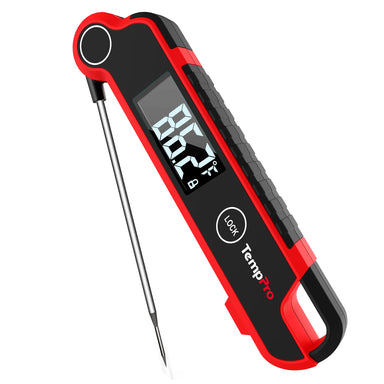
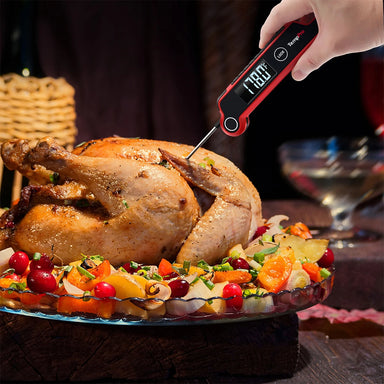
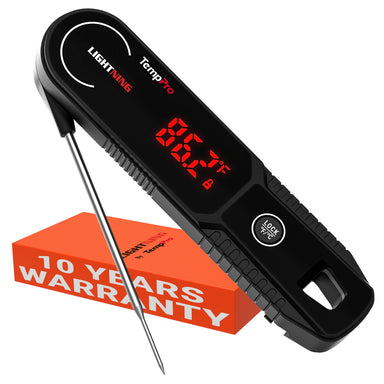
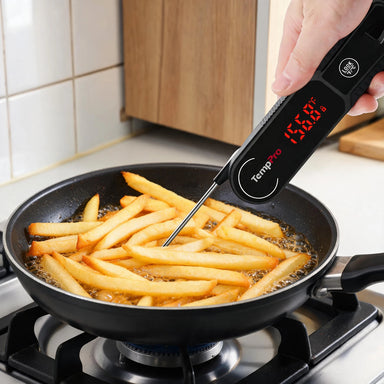
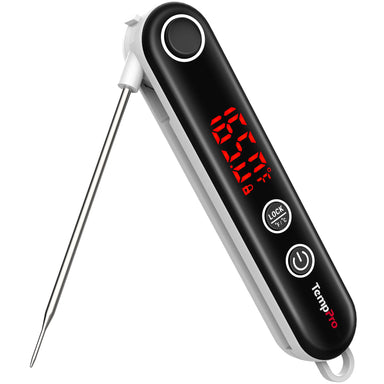
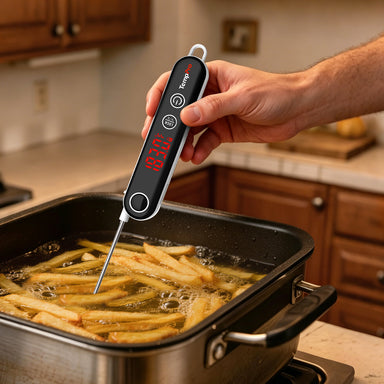
That is where a good instant-read thermometer earns its place. The TempPro TP19H is built for exactly this kind of high-heat, low-margin cooking. It settles on a reading in about three to four seconds, so you get an honest internal temperature before a thin cut has time to climb past your target.

Speed is only useful if the number is right, and the TempPro TP19H reads to within ±0.9°F. When a few degrees separate perfect from overcooked, that accuracy carries real weight.
The rest of the design keeps up with the pace of the cooking. The 1.75 inch backlit screen rotates automatically, so the reading stays right-side up whether you are leaning over a griddle or reaching across a grill. Motion sensing wakes the unit the moment you pick it up, so there is no button to fumble for with your hands full. The IP65 waterproof body rinses clean under the tap, and a magnetic back lets you park it on the hood of the grill between checks.
For consistency over the long run, a temperature lock freezes the reading so you can step away from the heat to look at it, and the probe can be recalibrated whenever you want to confirm it is still spot on.
None of this adds steps to your cooking. It simply puts the one number that matters in front of you at the moment you need it.
A Simple Game Plan
Once you are cooking by temperature, the routine for thin cuts is short.
Start with a fully preheated surface. Thin cuts react instantly to heat, so an evenly hot pan or grill gives you a clean sear without a long stay over the flame.
Check the temperature earlier than feels necessary. Thin cuts move fast, and the first reading is usually closer to done than you expect.
Pull the meat three to five degrees below your final target, and let carryover finish the job.
Give it a short rest. Even a minute or two lets the juices settle back into the meat and improves the texture.
Then slice against the grain. With cuts like flank or skirt steak especially, cutting across the muscle fibers makes each bite noticeably more tender.
Target Temperatures
Cooking to a set of known numbers takes the guesswork out entirely. In each case, pull the meat a few degrees early to leave room for carryover.
Beef: 130 to 135°F for medium rare, or 140 to 145°F for medium.
Chicken: cook to a safe minimum of 165°F. Pull it around 160°F and let carryover carry it the rest of the way while the meat stays moist.
Pork: 145°F, which balances food safety with a juicy result.
The Takeaway
Thin cuts are among the most commonly overcooked proteins in any kitchen, and there is no good reason for it. A narrow timing window and a lack of temperature control are what tip them past the point of no return, and both are easy to solve.
Once you understand carryover and start cooking to a number instead of a look, thin cuts stop being a gamble. Consistency builds confidence, and that confidence shows up in everything else you cook.
A reliable instant-read thermometer is what turns all of this into a habit. With the TempPro TP19H reading to ±0.9°F in about three to four seconds, you always know the moment to pull a thin cut, so a great result stops being luck and starts being routine.

FAQs
Why do thin cuts overcook faster than thick cuts?
Thin cuts have less mass, so heat travels through them quickly. The internal temperature rises fast, leaving little time to adjust.
How early should I take thin meat off the heat?
Pull it about five degrees below your target. Carryover cooking will bring it up to the level you want without pushing it too far.
Is high heat bad for thin cuts?
High heat is great for searing, but it needs close attention. Without temperature control, it makes overcooking much easier.
Why does my thin steak turn out tough?
It is almost always overcooked. Even a small step beyond the ideal temperature drives out moisture and firms up the texture.
Do I really need a thermometer for thin cuts?
It is well worth it. Thin cuts cook quickly and leave very little room for guessing, so a reliable reading keeps you in control.
What makes the TempPro TP19H a good fit for thin cuts?
Its three to four second response time and ±0.9°F accuracy let you read the temperature in real time and react before the meat overshoots.
Can I still get a good sear without overcooking?
Yes. Use high heat briefly and keep an eye on the internal temperature so the center stays within your target range.
Does resting matter for thin cuts?
It does. A short rest lets the juices redistribute and gives you a better final texture.


Comments

Recommended Products