El secreto para un pulpo a la parrilla perfectamente tierno


 288 Comments


El pulpo a la parrilla tiene fama de ser impredecible, y la razón es simple. La mayoría de la gente lo trata como cualquier otra carne, y el pulpo no sigue esas reglas. Si dominas la técnica, obtendrás algo ahumado, tierno y lleno de sabor. Si te equivocas, básicamente estarás masticando una banda elástica.

Mucho tiene que ver con la expectativa. Asumimos que la comida se dora, se ablanda y pierde su crudeza de forma predecible a medida que se cocina. Algunos ingredientes se niegan a cooperar, y el pulpo es el ejemplo más claro. Una vez que entiendes por qué, y una vez que conoces los dos o tres números que realmente importan, todo el proceso deja de parecer una apuesta y comienza a parecer una receta que puedes repetir.
Por qué el pulpo se vuelve duro
El pulpo está lleno de tejido conectivo, principalmente en forma de colágeno. El colágeno es lo que le da estructura a un animal, manteniendo unidas las fibras musculares y todo firme. Esa firmeza es precisamente el problema en la parrilla. Cuando el colágeno recibe calor intenso demasiado rápido, se contrae y se vuelve quebradizo, por lo que en el momento en que lo muerdes, se desgarra en lugar de ceder. Por eso, muchos cocineros caseros retiran el pulpo de la parrilla solo para descubrir que han hecho algo con la textura del cuero.
Sin embargo, si se le da a ese mismo colágeno calor bajo y húmedo y suficiente tiempo, hace lo contrario. Se derrite lentamente en gelatina, y la gelatina es lo que hace que un bocado de pulpo se sienta sedoso en lugar de elástico. Todo el truco está en persuadirlo para que se derrita antes de que la parrilla entre en juego.
La solución en dos pasos
El error más común es poner el pulpo crudo directamente en la parrilla. Asar a la parrilla solo hace bien un trabajo, que es aplicar calor intenso a la superficie para crear color, carbonizado y sabor. Lo que no puede hacer es darle al colágeno el tiempo lento y paciente que necesita para descomponerse. Si te apresuras, ninguna cantidad de carbonizado salvará la textura.
La solución es cocinar el pulpo en dos etapas, y es útil tener claro para qué sirve cada una. Primero se cocina lenta y suavemente, y esta etapa existe solo para lograr la ternura al convertir ese colágeno en gelatina. En la práctica, esto significa un suave hervor a fuego lento entre 190 y 200 °F, nunca un hervor fuerte que haga rebotar los tentáculos y los vuelva a tensar. Distinguir esos dos estados a simple vista es más difícil de lo que parece, por lo que un termómetro de lectura instantánea rápido como el TempPro TP03H es útil por primera vez, confirmando que el agua se mantiene cerca de 195 °F en lugar de llegar a un hervor completo. Un pulpo de 2 a 3 libras generalmente necesita de 45 a 60 minutos antes de estar listo, y sabrás que está listo cuando un cuchillo se desliza en la parte más gruesa sin apenas resistencia.
Solo entonces lo llevas a la parrilla para darle color, carbonizado y ahumado. Como el interior ya está tierno cuando llega al fuego, ya no tienes que preocuparte de que se endurezca. Lo único que queda por manejar es el tiempo de cocción. Si lo dejas demasiado tiempo, se seca; si lo sacas demasiado pronto, te perderás el carbonizado que buscabas.
Deja que la temperatura te guíe
Cada etapa requiere un tipo de calor diferente. Durante la cocción lenta, deseas un hervor suave y constante para que el colágeno se derrita mientras las proteínas circundantes se tensan lo menos posible. En la parrilla, la prioridad cambia. Ahora quieres un color rápido sin sobrecalentar y secar el interior tierno que acabas de crear.
El problema es que nada de esto es visible, y solo el reloj no te dirá dónde estás. El pulpo varía enormemente de tamaño, por lo que uno pequeño podría estar tierno en 30 minutos, mientras que uno grande necesita más de una hora, y no hay dos parrillas que emitan el mismo calor. La temperatura atraviesa todo eso. Mantener el líquido de cocción a fuego lento en lugar de hervir es la diferencia entre sedoso y gomoso, y saber cuándo las piezas a la parrilla están simplemente calientes te evita que les quites la humedad. Por eso, la forma más confiable de cocinar pulpo es dejar de mirar el reloj y comenzar a medir lo que realmente está sucediendo, y es donde un termómetro de lectura instantánea rápido y preciso se gana su lugar junto a la parrilla.
La herramienta adecuada
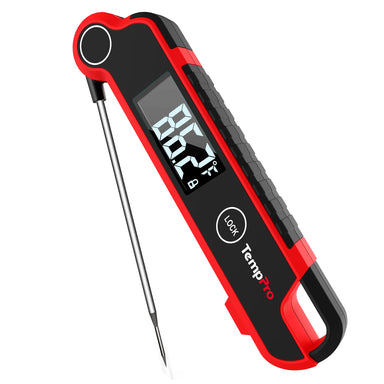
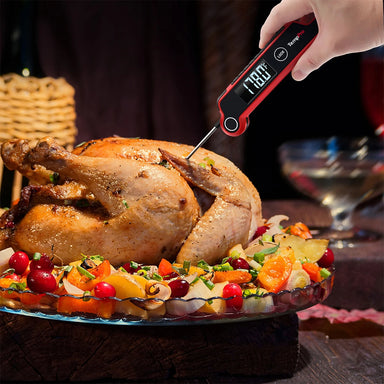
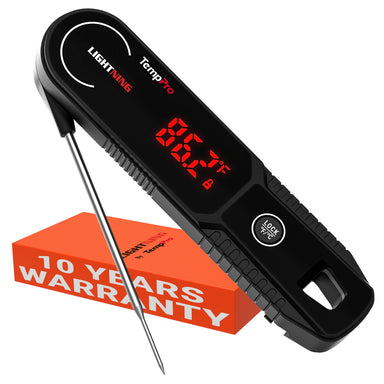
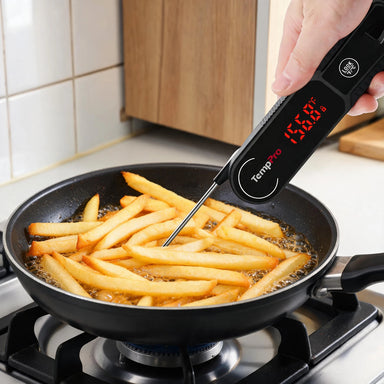
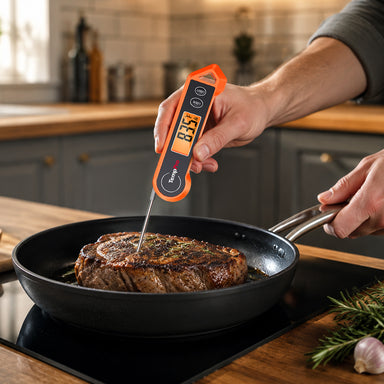
El Termómetro de Carne de Lectura Instantánea TempPro TP03H elimina las conjeturas de ambas etapas. Te da una lectura en tres o cuatro segundos, por lo que puedes verificar el hervor o el interior sin quedarte sobre el calor o dejar la tapa abierta el tiempo suficiente para perder temperatura.
La precisión es donde realmente vale la pena. Con lecturas dentro de 0.9°F, puedes distinguir un suave hervor a 195°F de un hervor intenso a simple vista, y trabajas con números reales en lugar de esperar lo mejor. La sonda de acero inoxidable de 4 pulgadas llega a la parte más gruesa de un tentáculo, y un bloqueo de temperatura mantiene la lectura después de sacar la sonda, para que no tengas que entrecerrar los ojos en una pantalla a través de una nube de humo. La pantalla LCD retroiluminada permanece fácil de leer, ya sea que estés asando al mediodía o terminando la cena mucho después del anochecer.
También está diseñado para una cocina real. Una clasificación de impermeabilidad IPX6 significa que puedes enjuagarlo bajo el grifo, lo que mantiene la sonda limpia y el mantenimiento sencillo. Una sonda plegable, una parte trasera magnética y un gancho incorporado le permiten guardarse plano en un cajón o pegarse a la parrilla al alcance de la mano. Una función de calibración lo mantiene preciso durante años de uso en lugar de dejar que se desvíe después de una temporada, y TempPro lo respalda con una garantía de tres años. En resumen, el TempPro TP03H convierte la parte más difícil del pulpo a la parrilla, saber el momento exacto para detenerse, en algo que simplemente se puede leer en una pantalla.

Guía paso a paso
Aquí está todo el proceso de principio a fin.
- Limpiar y preparar el pulpo a tu gusto.
- Sumergirlo en agua o caldo a fuego lento, alrededor de 190 a 200°F (88-93°C), usando el TempPro TP03H para confirmar que el líquido está a fuego lento en lugar de hirviendo. Cocinar lentamente hasta que un cuchillo se deslice en la parte más gruesa sin resistencia, generalmente de 45 a 60 minutos. Esta es la etapa que convierte el colágeno en gelatina.
- Dejar enfriar el pulpo, cortarlo en trozos y dejar reposar unos minutos para que las fibras se relajen.
- Calienta tu parrilla lo más que puedas.
- Coloca los trozos en la rejilla caliente y cocínalos brevemente, volteándolos a menudo, hasta que se doren, generalmente de dos a cuatro minutos en total.
- Verifica con el TempPro TP03H que las piezas estén simplemente calientes cuando terminen, tibias en lugar de hirviendo.
- Una vez que tengan el color deseado, retíralas de la parrilla antes de que se sequen.
- Sirva de inmediato, mientras la textura está en su mejor momento.
Cómo saber si está listo
Hay dos momentos clave para saber si la cocción es la adecuada. El primero es al final de la cocción lenta. La sonda del TempPro TP03H, o un cuchillo de pelar, debe deslizarse en la parte más gruesa de un tentáculo con casi ninguna resistencia, como lo haría a través de una patata hervida. Si todavía ofrece resistencia, el colágeno no ha terminado de derretirse y necesita más tiempo en la olla. El segundo es en la parrilla, donde se está terminando el pulpo en lugar de cocinarlo. Se desea que la superficie esté bien dorada con algunos bordes carbonizados y el interior simplemente caliente antes de retirarlo. Pasado ese punto, solo se está cambiando humedad por color.
En resumen
El pulpo a la parrilla perfectamente tierno no es cuestión de suerte o de algún secreto que solo los chefs conocen. Se trata de dos etapas en el orden correcto y suficiente control sobre el calor para lograr el acabado. Mantén ese hervor suave hasta que un cuchillo se deslice limpiamente, respeta la parrilla y retira las piezas en el momento en que estén carbonizadas y calientes, y el pulpo gomoso será cosa del pasado. Si quieres eliminar las conjeturas de ese tramo final, ten a mano un TempPro TP03H. Te dirá el momento exacto para retirar el pulpo del fuego, y se ganará su lugar en el cajón para todo lo demás que cocines después.

Preguntas Frecuentes
P1. ¿Por qué mi pulpo está gomoso?
Porque no se hirvió a fuego lento el tiempo suficiente para derretir el colágeno, o se cocinó demasiado a fuego alto en la parrilla.
P2. ¿Necesito hervir el pulpo antes de asarlo a la parrilla?
Necesitas ablandarlo primero, pero con un hervor suave en lugar de uno fuerte. Ese paso es esencial para la textura correcta.
P3. ¿Cuánto tiempo debo asar el pulpo?
Solo de dos a cuatro minutos, lo suficiente para carbonizarlo sin secarlo.
P4. ¿Puedo cocinar pulpo solo en la parrilla?
Puedes, pero es mucho más difícil controlar la ternura sin la cocción lenta previa.
P5. ¿Por qué es importante la temperatura para el pulpo?
Porque tanto la cocción insuficiente como la excesiva provocan una textura dura, y la temperatura te mantiene en el punto óptimo en cada etapa.
P6. ¿Qué hace útil al TempPro TP03H aquí?
Sus lecturas rápidas y precisas te ayudan a mantener un hervor suave y a evitar la cocción excesiva durante la etapa final de asado.
P7. ¿Cómo sé cuándo el pulpo está listo?
Debe estar tierno al pincharlo después del hervor lento, y luego solo caliente y carbonizado en la parrilla.
P8. ¿Puedo guardar pulpo asado sobrante?
Sí, aunque se disfruta mejor recién hecho.


Comentarios
También te puede interesar


Productos recomendados