4 Lobster Cooking Tips to Avoid Tough Meat


 288 Comments


Why Lobster Turns Rubbery
Lobster has one of the smallest margins for error in the kitchen. It looks luxurious and feels like it should take real skill, but the cooking itself is simple. The challenge isn’t complexity, it’s precision. Lobster cooks fast, and the moment it passes a certain temperature its texture flips, going from tender and buttery to firm, tight, and rubbery in a matter of seconds.

The trouble is that the usual cues, shell color and cooking time, don’t actually tell you when it’s done. By the time lobster looks cooked, it’s usually already overcooked, which is why even experienced cooks struggle to get it right twice in a row. The line between perfect lobster and ruined lobster comes down to a few degrees, and once you learn to manage those, everything else falls into place.
Tip 1: Cook to Temperature, Not Time
Timing feels like the safe way to cook lobster, but it’s the least reliable. Lobsters vary in size, thickness, and starting temperature, so a fixed number of minutes that nails one will overcook or undercook the next. You end up with one perfect lobster and one ruined one, and no idea why.
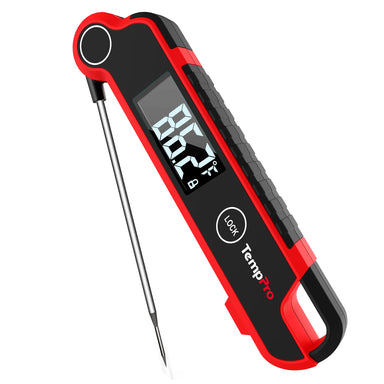
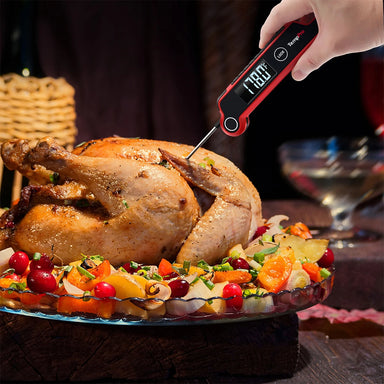
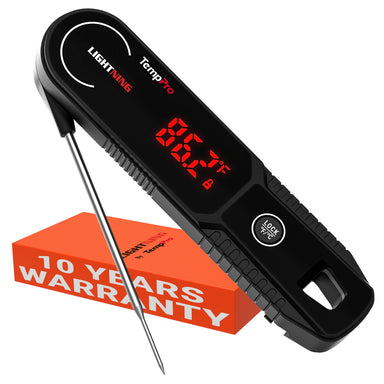
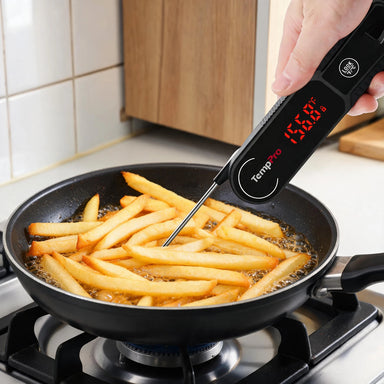
Cooking to temperature removes all of that guesswork, and lobster has a clear target: 135 to 140°F (57 to 60°C) for tender, delicate meat. Push past it and the proteins tighten and turn rubbery, and unlike a steak, there’s nothing to gain by taking it further. An instant-read thermometer like the TempPro TP710 Instant Read Meat Thermometer gives you that number in about three to four seconds with ±1.8°F accuracy, so you can catch that narrow window instead of guessing at it. That single reading is the difference between soft, sweet lobster and a tough, chewy disappointment.

Tip 2: Keep the Heat Steady, Not Extreme
How you apply heat matters as much as when you pull the lobster off. Dropping it into a violently rolling boil or over a screaming grill cooks the outer layers fast while the center lags behind, giving you uneven texture and a much higher chance of overcooking. With lobster, steady, moderate heat beats intense heat every time.
That’s also why it pays to watch the cooking environment, not just the meat. The TempPro TP710’s dual-probe setup lets you do both at once: the retractable probe takes quick internal readings while the wire probe keeps an eye on your water, grill, or oven, so you’re managing the whole process rather than reacting to problems after they show up. With lobster, consistency protects the texture in a way that intensity never will.
Tip 3: Pull It Early for Carryover
Lobster doesn’t stop cooking the second it leaves the heat. Residual heat keeps working its way inward, so if you wait until it hits your exact target before pulling it, it sails right past that number as it rests, and you’re back to rubbery.
The fix is simple: take it off a few degrees before your target and let carryover finish the job gently. It’s one of the smallest adjustments you can make and one of the most effective, protecting the texture with no extra effort at all.
Tip 4: Trust Your Readings
When a few degrees decide everything, the reading itself has to be right, both in how you take it and in how accurate your thermometer is. Fumbling for a measurement over boiling water or a hot grill is awkward, and leaving the lobster exposed to that heat while you squint at a display only works against you.
The TempPro TP710’s temperature lock helps here, holding the reading so you can insert the probe, capture the number, and step back to check it safely away from the heat. Its calibration function keeps those readings honest over time, and its waterproof, sturdy build holds up to repeated use without drifting out of accuracy. That reliability is what lets you reproduce a great result instead of just hoping for one.
Stop Guessing, Start Measuring
Most people treat lobster as a special-occasion dish, and that raises the stakes. They lean on timing, recipes, and visual cues and hope it all lines up, which it sometimes does and sometimes doesn’t. That inconsistency is the whole reason lobster feels so intimidating. Cook it by temperature and every part of the process becomes predictable: you know when it’s done, you know when to pull it, and you know exactly what texture you’ll get.
None of it takes elaborate technique. It takes precision: controlling the heat, respecting carryover, and measuring instead of guessing. The TempPro TP710 is what makes that easy, with fast, accurate readings, dual-probe monitoring, and the consistency to deliver the same result every time. Stop guessing and start measuring, and rubbery lobster becomes something you simply prevent, while perfectly cooked lobster becomes something you can count on.

FAQ
What temperature should lobster be cooked to?
Around 135 to 140°F for tender, non-rubbery meat.
Why does lobster become rubbery?
Because it’s overcooked and the proteins tighten too much.
Do I need a thermometer for lobster?
It’s not required, but it’s the most reliable way to avoid overcooking.
Can lobster keep cooking after it comes off the heat?
Yes. Carryover heat raises the temperature slightly after removal, so pull it a few degrees early.
What’s the biggest mistake when cooking lobster?
Relying on time instead of temperature, which leads to overcooking.


Comments


Recommended Products