How to Cook a Beef Roast with Yorkshire Pudding: 8 Steps


 288 Comments


A perfect Sunday roast has two defining moments that either make or break the entire experience: cutting into the beef, and seeing everyone reaching for the Yorkshire puddings.
For the beef, you want it to be tender, moist, and cooked to perfection. For the Yorkshire puddings, you want them to be puffed high, crispy at the edges and airy within. Unfortunately, there are vastly different techniques required to achieve the perfect roast beef and Yorkshire pudding.
Roast beef, specifically, demands a carefully monitored internal temperature to ensure optimal doneness. Yorkshire pudding, however, thrives in an extremely hot oven. To successfully present a perfectly roasted beef and perfectly puffed Yorkshire pudding on the table at the same time, you require far more than just following a timer.
Table of Contents
8 Essential Steps to Make beef Roast with Yorkshire Pudding
Below are eight key steps to achieving this ideal.
Step 1: select the appropriate cut of beef for your Sunday roast
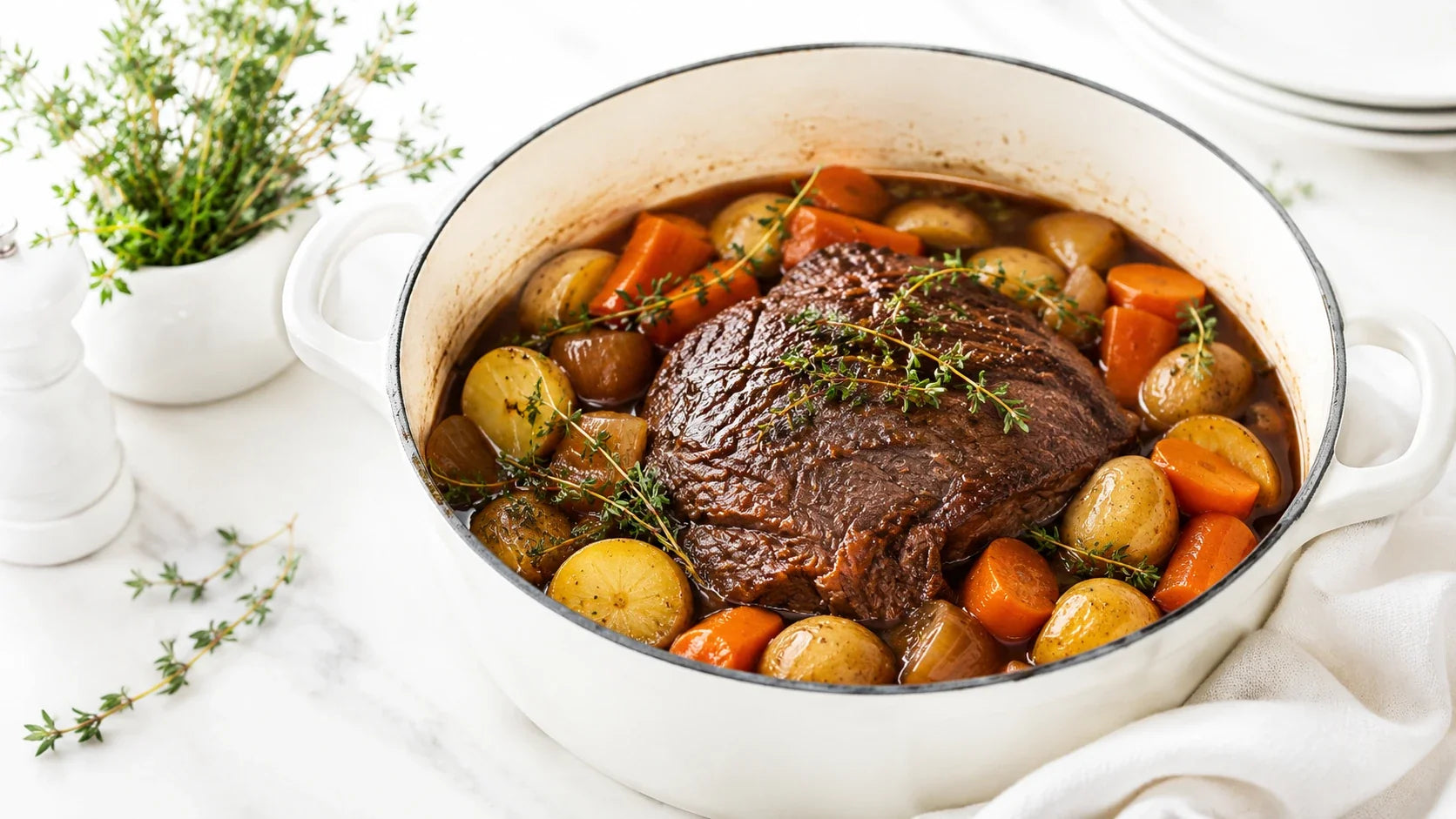
When selecting the cut of meat for your Sunday roast, you have to start at the butcher counter. Among popular Roasting cuts, you will find rib, sirloin, and topside. However, depending upon your budget and whether you prefer a richer, more marbled beef or leaner, you will likely select based upon which roast best suits your needs.
Regardless of selection, select a roast that has relatively even thickness. A roast with extreme unevenness will undoubtedly complicate the process of Roasting since less thick portions may reach your preferred level of doneness prior to the thickest portion of the roast.
In addition to thickness, small streaks (marbling) of fat throughout the beef add flavor and assist in creating a desirable texture to traditional roasts. Remove your selected roast from its packaging and thoroughly pat the surface dry. Once dry, season the roast thoroughly.
Step 2: prepare the Yorkshire pudding batter
Timing is crucial for Yorkshire pudding. Unlike most side dishes associated with Sunday dinner, Yorkshire pudding has limited preparation flexibility. Most Yorkshire pudding batters contain flour, eggs and milk. Combine all ingredients until relatively smooth. Prior to adding the batter to the oven allow sufficient time for it to Rest. This allows you ample time to prepare the remaining components of Sunday dinner.
Having the Yorkshire pudding batter already prepared in advance of adding it to the oven means you can focus solely on preparing your roast. Sunday dinner is significantly easier to manage when each dish has its own window of completion.
Step 3: get your oven completely preheated before adding your roast
Do not put an expensive roast in an oven that is merely warming up. Ensure your oven is completely preheated before adding your beef. Add your seasoned beef to a Roasting pan and if applicable face the fat toward the top of the pan. Depending upon your preferred recipe, add aromatic elements (onion, garlic, etc.) surrounding your beef. Some recipes start with a higher temperature to facilitate sear formation on the outer layers before lowering the temperature for the duration of the roast. Regardless of methodology employed, recognize that your oven's reading is not indicating the temperature at the heart of your beef. Therefore, internal temperature becomes critical.
Step 4: track internal temperatures of your roast
Tracking internal temperatures of your Sunday roast by mere minutes per pound may yield variable results.
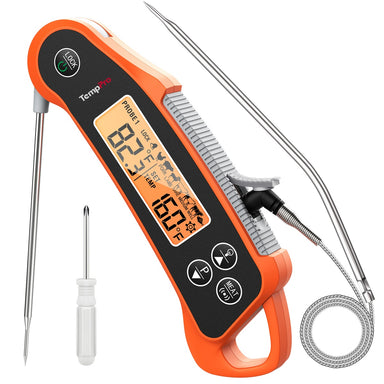
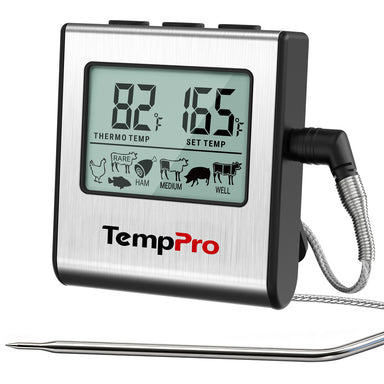
Factors including roast size and shape, initial temperature of your roast, and variations in your individual oven contribute factors affecting Roasting times. The TempPro TempSwift PLUS TP610 Leave-In Meat Thermometer offers two methods of tracking internal temperatures of your roast.
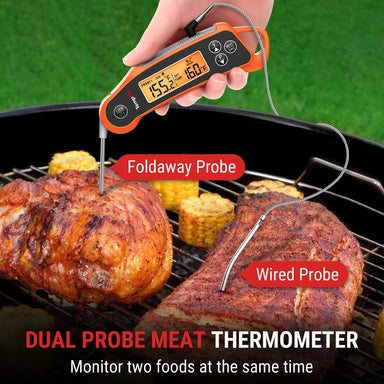
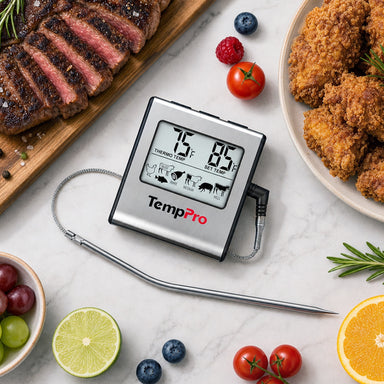
Prior to placing your beef in the oven, insert the wired leave-in probe into the thickest section of your roast, avoiding fat or bones as much as possible. You can leave this wire probe within your roast throughout the cooking process allowing you to continuously track its internal temperature without constantly opening your oven door.
The TempPro TempSwift PLUS TP610 also displays two simultaneous temperatures. Consequently, it is especially beneficial when you would like to gather as much insight as possible regarding what happens during an oven roast.

Step 5: allow internal temperature to dictate completion time of your roast
Internal temperature dictates completion time of your roast.
Consider cooking time as nothing more than guidance. The TempPro TempSwift PLUS TP610 tracks across a broad -58°F to 572°F temperature range with ±0.9°F precision. In addition to monitoring internal temperatures, it has a built-in temperature alarm. Enter a desired temperature and the food thermometer will alert you as your roast approaches that target temperature eliminating repeated opening of your oven door to assess doneness.
This aspect becomes particularly beneficial when simultaneously completing preparations for potatoes, vegetables, gravy, and Yorkshire pudding. Be aware that once removed from the oven your beef may continue to increase in temperature due to carry-over cooking, therefore consider carry-over cooking when determining removal of your specific roast. Allow your beef sufficient time to relax post-cooking before slicing.
Step 6: utilize foldable probe for a final temperature reading
Although its functionality is secondary to that of its companion wired leave-in probe, the second component of the tp610's dual-function design is useful for obtaining a rapid hand-held temperature reading.
Within approximately 1-3 seconds, its foldable instant-read probe will deliver readings enabling you to rapidly check interior temperatures at various locations throughout your roast without relocating your wire probe.
Utilizing a larger or irregularly-shaped piece of beef, utilize this feature to verify that you have achieved uniformity in interior temperatures. After you are confident that your roast is adequately cooked, allow it to relax. And now it is time for your Yorkshire puddings to assume dominance in your oven.
Step 7: increase oven temperature for Yorkshire pudding
Yorkshire pudding has absolutely no connection whatsoever to gently roasting beef in terms of ideal environmental conditions. As you wait for your beef to rest, prepare your Yorkshire pudding pan with fat according to your recipe and subject it to extreme heat in your oven.
Together, hot fat hot pan, and batter combine to form the dramatic rise and crispy crusts on Yorkshire puddings that you desire. With caution, pour your batter into the scorching hot pan and return it to your oven.
Resist temptation to repeatedly ope,n your oven door simply to inspect their status. You need to preserve an environment of extreme heat necessary for developing these enormous bubbles.

Step 8: ready to serve
Upon completion of letting your beef rest and developing a golden-brown color along with rising high above their pans, say your Yorkshire puddings, assemble every element of your meal.
Slicing your beef against the grain using a sharp carving knife assists in breaking down longer muscle strands thereby yielding a tenderer texture for each individual slice. Add your roast potatoes, vegetables, and gravy before positioning your Yorkshire puddings adjacent to each element.
FAQs about Cooking a beef Roast
What cut of beef is best for a Sunday roast?
Rib and sirloin offer plenty of richness, while leaner roasting cuts such as topside are also popular. The best choice depends on your budget and preferred balance of fat and lean meat.
Why didn't my Yorkshire puddings rise?
Insufficient oven heat, a pan or fat that wasn't hot enough, or repeatedly opening the oven can interfere with the rise. Make sure the oven and tin are thoroughly heated before adding your batter.

Why should roast beef rest before carving?
Resting gives the roast time after leaving the oven before it's sliced and also conveniently creates the window you need to increase the oven heat and bake your Yorkshire puddings.
Can the TempPro TempSwift PLUS TP610 stay in the beef while it roasts?
The wired leave-in probe is designed to remain in the food during cooking. The separate foldable probe is intended for quick instant-read checks.
Conclusion
The secret ingredient behind creating roast beef and Yorkshire pudding at precisely the same time during a single meal lies in recognizing that neither must be cooked at exactly the same time.
Provide roast beef with a controlled environment for cooking. Instead of relying on cooking time alone, utilize the TempPro TempSwift PLUS TP610 Leave-In Meat Thermometer for continuous monitoring of internal temperatures.
Remove your roast from the oven and permit it relaxation period. While those juices settle, switch your focus toward Yorkshire puddings and apply extreme oven heat for puff development.