¿Cuál es la humedad ideal para un dormitorio?


 288 Comments


¿Te despiertas con la garganta seca y áspera todas las mañanas? ¿O quizás notas la condensación goteando por las ventanas de tu dormitorio cuando hace frío? Tal vez tus alergias se disparan en cuanto entras en tu habitación, o tus muebles de madera empiezan a mostrar deformaciones extrañas.
Si algo de esto te suena familiar, es probable que tengas un problema con el nivel de humedad en tu dormitorio. Y aquí está la cuestión: la humedad en tu dormitorio no se trata solo de comodidad. Se trata de tu salud, la calidad de tu sueño e incluso el estado de tu casa.
En esta guía completa, responderemos a la pregunta que podrías hacerte: ¿cuál es un buen nivel de humedad para un dormitorio? Exploraremos por qué es importante, qué sucede cuando no es el adecuado y exactamente cómo crear el ambiente de sueño perfecto para ti y tu familia.
Por qué la humedad del dormitorio importa más de lo que crees
La humedad se refiere a la cantidad de vapor de agua en el aire. Si bien la mayoría de la gente piensa en la temperatura como el factor principal de comodidad, la humedad en el aire puede ser igual de impactante. Si el aire de tu dormitorio está demasiado seco o demasiado húmedo, puede afectar no solo el sueño, sino también tu salud, tus muebles e incluso la estructura de tu casa.
La humedad correcta para el dormitorio es esencial porque influye en:
- Calidad del sueño: El aire demasiado seco puede irritar la garganta y las fosas nasales, lo que dificulta la respiración y el sueño profundo. La alta humedad puede hacer que la habitación se sienta pegajosa e incómoda, lo que lleva a la inquietud.
- Salud: La baja humedad puede causar piel seca, hemorragias nasales y aumentar la susceptibilidad a resfriados e infecciones respiratorias. La alta humedad puede fomentar el moho, los ácaros del polvo y las bacterias, lo que es particularmente riesgoso para niños y personas con alergias.
- Comodidad: Los niveles adecuados de humedad ayudan al cuerpo a regular la temperatura de manera eficiente durante el sueño. Te sientes más fresco en climas cálidos y más cálido en invierno cuando la humedad está equilibrada.
Los riesgos de la baja humedad en el dormitorio
Durante el invierno o en climas secos, el aire interior puede volverse excesivamente seco. Un nivel de humedad en el dormitorio por debajo del 30% generalmente se considera demasiado bajo. Los riesgos incluyen:
- Irritación de las vías respiratorias: El aire seco reseca las membranas mucosas, lo que puede aumentar el riesgo de resfriados e infecciones sinusales.
- Problemas de la piel: La baja humedad causa piel seca, labios agrietados y ojos con picazón.
- Interrupción del sueño: Las personas a menudo se despiertan con la garganta áspera o la nariz congestionada, lo que reduce la calidad general del sueño.
Los riesgos de la alta humedad en el dormitorio
Por el contrario, un nivel de humedad en el dormitorio superior al 60% también puede ser problemático. El exceso de humedad puede llevar a:
- Crecimiento de moho: La alta humedad crea el ambiente perfecto para las esporas de moho, que pueden empeorar las alergias y el asma.
- Ácaros del polvo y bacterias: Estos prosperan en condiciones húmedas, afectando a niños y adultos con sensibilidades respiratorias.
- Malestar durante el sueño: El aire pegajoso y húmedo dificulta que tu cuerpo se enfríe de forma natural, lo que provoca noches inquietas.
Mantener la humedad ideal en el dormitorio es un equilibrio: suficiente humedad para evitar la sequedad, pero lo suficientemente baja para evitar el moho y los alérgenos.
¿Cuál es un buen nivel de humedad para un dormitorio?
Los expertos generalmente recomiendan que la humedad óptima del dormitorio se sitúe entre el 40% y el 50%. Este rango se considera la humedad adecuada para el dormitorio, ya que equilibra la comodidad, la salud y la calidad del aire interior.
- Humedad objetivo para el dormitorio: 40-50%
- Mejor humedad para el dormitorio: El 45% se cita a menudo como el punto ideal, especialmente para familias con niños o personas con problemas respiratorios.
- Mejor nivel de humedad en el dormitorio en invierno y verano: Apunta a 40-50% durante todo el año, pero se pueden hacer pequeños ajustes dependiendo del clima y los cambios de temperatura estacionales.
Mantener esta humedad recomendada en el dormitorio reduce el riesgo de piel seca, irritación respiratoria y previene el crecimiento de moho. Para los padres, esto es especialmente importante porque el sistema inmunológico de los niños es más sensible a la mala calidad del aire.
Por qué TempPro TP358 es ideal para mantener la humedad del dormitorio
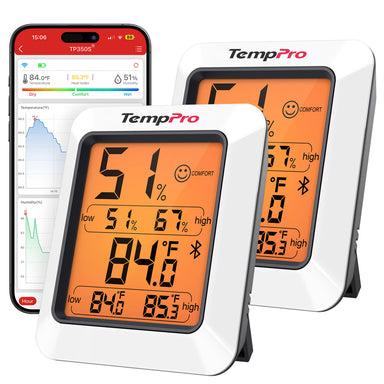
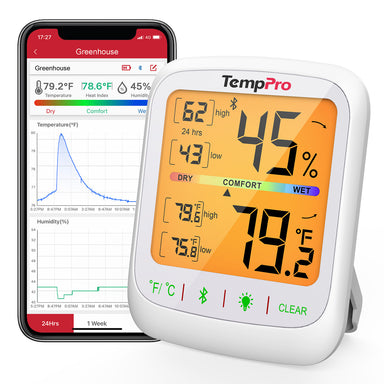
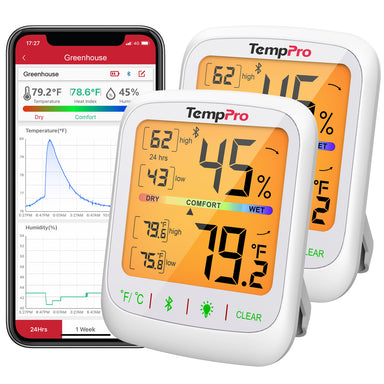
Para controlar la humedad óptima del dormitorio, necesitas mediciones precisas y actualizadas. El Termómetro higrómetro Bluetooth para interiores TempPro TP358 está diseñado para que esto sea simple y conveniente, especialmente para las familias que se preocupan por la calidad del aire.
Las características clave que hacen del TP358 una excelente opción incluyen:
Detección precisa de temperatura y humedad
El TP358 utiliza sensores incorporados para proporcionar lecturas precisas tanto de temperatura como de humedad. Esto te ayuda a ver si se está alcanzando la humedad objetivo para tu dormitorio y cómo cambian las lecturas durante el día y la noche.
Conexión Bluetooth y aplicación para smartphone
Puedes emparejar el dispositivo con tu teléfono a través de Bluetooth y ver el nivel de humedad en el dormitorio desde tu cama, el salón o incluso otra habitación. La aplicación normalmente muestra los valores actuales, las tendencias y el historial, para que puedas ver si el nivel de humedad de tu dormitorio es demasiado alto por la noche o demasiado bajo por la mañana.
Seguimiento de datos y alertas
Al rastrear los cambios a lo largo del tiempo, puedes comprender patrones como las caídas de humedad durante la noche en invierno o los picos después de las duchas o los días lluviosos. Puedes establecer rangos de alerta que coincidan con la humedad recomendada para tu dormitorio, por ejemplo, 40%-50%, para saber cuándo encender un humidificador o deshumidificador.
Múltiples opciones de colocación
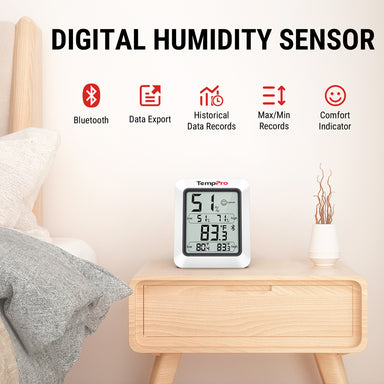
El TP358 es compacto y fácil de colocar en una mesita de noche, cómoda o pared. Esta flexibilidad facilita el monitoreo de la mejor humedad en el dormitorio sin desordenar tu espacio.

Cómo aumentar la baja humedad en el dormitorio
Si su monitor muestra que el nivel de humedad en el dormitorio está por debajo del 30%, puede tomar varias medidas para elevarlo hacia la humedad óptima para un dormitorio:
Usa un humidificador
Un humidificador de vapor frío o caliente suele ser la forma más efectiva de aumentar la humedad. Ajusta la salida y usa tu TP358 para mantener la mejor humedad en el dormitorio alrededor del 40%-50%. La mejor configuración del humidificador para el dormitorio es la que mantiene este rango sin crear condensación en ventanas o paredes.
Coloca cuencos con agua en la habitación
Poner un cuenco con agua cerca de un radiador, calentador o ventana soleada permite que la humedad se evapore lentamente en el aire. Esta es una forma suave de mejorar la humedad en los espacios del dormitorio si no tienes un humidificador.
Secar la ropa en interiores
Colgar la ropa recién lavada en un tendedero dentro de tu dormitorio puede liberar humedad a medida que se seca. Usa tu higrómetro para asegurarte de que el nivel de humedad en el dormitorio no suba demasiado.
Añadir plantas de interior
Algunas plantas de interior liberan humedad a través de sus hojas, aumentando ligeramente la humedad del dormitorio a la vez que mejoran el aspecto de tu espacio. Solo evita el exceso de riego, que puede aumentar el riesgo de moho.
Sella las corrientes de aire y mejora el aislamiento
En invierno, el aire exterior frío y seco que entra por las grietas alrededor de las ventanas y puertas puede reducir el buen nivel de humedad para el aire del dormitorio. Sellar las fugas puede ayudar a mantener la humedad y la temperatura más estables.
Con el TempPro TP358, puedes ver el efecto de cada uno de estos pasos y mantener la humedad ideal de tu dormitorio en el rango recomendado.
Cómo reducir la alta humedad en el dormitorio
Si su higrómetro digital muestra que el nivel de humedad en el dormitorio es superior al 60%, es posible que deba reducirlo para alcanzar la mejor humedad en el dormitorio:
Usa un deshumidificador
Un deshumidificador del tamaño de una habitación puede eliminar el exceso de humedad del aire, ayudándote a alcanzar rápidamente el rango óptimo de humedad en el dormitorio. Usa tu TP358 para evitar que baje demasiado.
Mejora la ventilación
Abre las ventanas cuando el clima lo permita, o usa extractores en baños y armarios cercanos. Un mejor flujo de aire reduce la humedad y ayuda a mantener la humedad recomendada en el dormitorio.
Evita secar la ropa en el dormitorio
Si la humedad de tu dormitorio ya es alta, secar la ropa en el interior la empeorará. Seca la ropa en un área separada o al aire libre cuando sea posible.
Mantén las puertas abiertas durante el día
Permitir que el aire circule entre las habitaciones puede evitar que se acumule humedad, especialmente en dormitorios pequeños.
Controla las fuentes de humedad
Busca fugas, paredes húmedas o alféizares mojados. Solucionar estos problemas ayuda a proteger tanto tu salud como tu hogar mientras buscas un buen nivel de humedad para la comodidad del dormitorio.
Una vez más, el TempPro TP358 te permite ver qué tan rápido surten efecto los cambios y si se ha alcanzado la humedad ideal para el dormitorio o si se necesitan más ajustes.

Al utilizar esta herramienta, puede gestionar activamente la humedad ideal del dormitorio y realizar ajustes informados con humidificadores, deshumidificadores o ventilación. Esto garantiza que su familia disfrute de una buena humedad en el dormitorio, lo que conduce a un mejor sueño, una piel más sana y menos problemas respiratorios.
Preguntas frecuentes sobre la humedad en el dormitorio
P1: ¿Puedo dormir cómodamente con un 30% de humedad?
Si bien algunas personas lo toleran, el 30% generalmente es demasiado bajo, lo que provoca piel seca, irritación nasal y sueño interrumpido.
P2: ¿Qué pasa si la humedad es superior al 60%?
La alta humedad fomenta el moho, los ácaros del polvo y las bacterias, que pueden ser perjudiciales, especialmente para niños o personas alérgicas.
P3: ¿Con qué frecuencia debo verificar la humedad?
El TP358 actualiza tanto la humedad como las lecturas de temperatura cada 10 segundos, puedes colocarlo en la pared, una mesita de noche o escritorio o en cualquier lugar donde puedas notarlo fácilmente en cualquier momento. Concéntrate en los cambios estacionales y los ajustes climáticos extremos.
P4: ¿Es el 45% de humedad en el dormitorio siempre el mejor?
Sí, el 40-50% es el rango óptimo. El 45% es un punto ideal que equilibra la comodidad, la salud y la seguridad del aire interior.
P5: ¿Puede la alta humedad causar moho incluso si no lo veo?
Absolutamente. El moho puede crecer dentro de las paredes, debajo de las alfombras y en los sistemas de climatización sin signos visibles. Por eso es tan importante el monitoreo si tu TP358 muestra constantemente un nivel alto de humedad en el dormitorio, investiga a fondo.
P6. ¿La humedad hace que una habitación se sienta más cálida o más fresca?
La alta humedad hace que las temperaturas cálidas se sientan más calientes porque el sudor no puede evaporarse eficientemente. La baja humedad hace que las temperaturas frescas se sientan más frías porque la humedad se evapora demasiado rápido de la piel. La humedad adecuada te ayuda a sentirte cómodo con ajustes de termostato ligeramente más bajos en invierno y ligeramente más altos en verano, ¡ahorrando energía!
Consideraciones finales
Comprender cuál es un buen nivel de humedad para un dormitorio es esencial para crear un ambiente seguro, cómodo y reparador. Mantener la humedad adecuada para el dormitorio entre el 40 y el 50% ayuda a prevenir la piel seca, los problemas respiratorios, el crecimiento de moho y las molestias al dormir.
El Termómetro Higrómetro Bluetooth para Interiores TempPro TP358 facilita, precisa y cómoda la monitorización. Al realizar un seguimiento tanto de la temperatura como de la humedad, puedes crear la mejor humedad en el dormitorio para tu familia, garantizando un ambiente de sueño más saludable y confortable.
Ya sea ajustando humidificadores, ventilando adecuadamente o simplemente verificando el nivel de humedad del dormitorio con regularidad, estas estrategias te ayudan a mantener la humedad ideal del dormitorio y a hacer de tu habitación un santuario verdaderamente reparador.


Comentarios
También te puede interesar



Productos recomendados